Nanyang Prefecture Government Office
⭐ 4.00
Northwest side of the intersection of Zhongjing Road and Jianshe Road, Wancheng District, Nanyang City, Henan Province, China
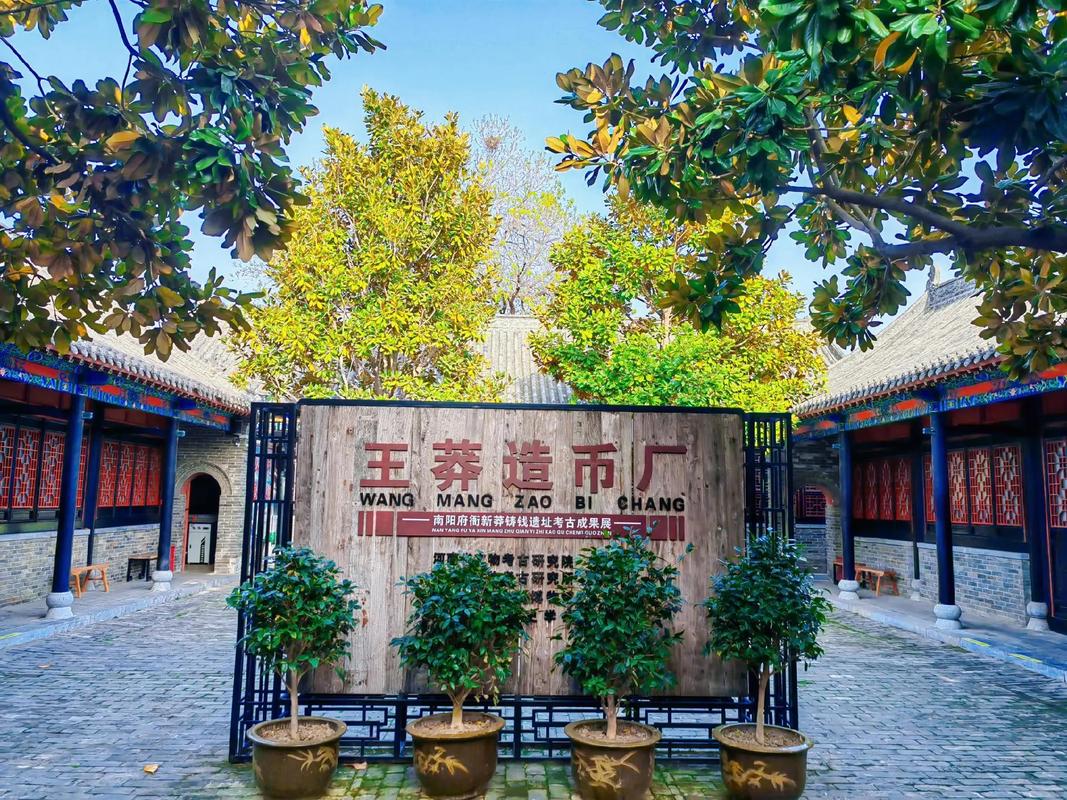 Established in 1271 during the Mongol-founded Yuan Dynasty and continuously used across the Ming, Qing, and Republican eras, Nanyang Prefecture Yamen offers a Chinese equivalent of a medieval European courthouse combined with a regional parliament—only with far longer continuous use. The compound served as the seat of imperial administration for one of the empire's most significant prefectures, witnessing regime changes from Mongol khans to Qing emperors. Designated a National Key Cultural Relics site, it remains the sole complete prefecture-level government building still standing in China, making it an irreplaceable window into how imperial China actually governed its vast territory at the local level.
Spanning roughly 36,000 square meters with over 140 Qing-era rooms, the compound follows the classical principle of "axial symmetry, civil on left, military on right, court in front, residence behind." Visitors pass through a screen wall and ceremonial gates before reaching the impressive main hall—the "Gonglian Hall," or Hall of Justice and Integrity—which uses a rare "reduced-pillar" construction technique to create a vast, column-free interior. Six flanking offices once housed the traditional ministries of Personnel, Revenue, Rites, War, Justice, and Public Works, mirroring the imperial cabinet structure in miniature.
The yamen is inseparable from one of China's most celebrated anti-corruption tales. During the Eastern Han Dynasty (around 184–222 CE), Prefect Yang Xu hung a fresh fish brought as a bribe outside his door, declaring it the only luxury he could afford. This "Hanging Fish" parable remains a touchstone of Chinese integrity culture. Seven historical steles are preserved here, including an edict from the Yongzheng Emperor, offering direct insight into imperial governance. The compound also retains underground prison cells and original interrogation instruments, providing a sobering glimpse of pre-modern Chinese justice.
Located at 100 Minzu Street in Nanyang's Wancheng District, the yamen sits in the heart of the city with excellent public transport access. Hours run 8:00–18:00 in summer (last entry 17:30) and 8:00–17:30 in winter, with Monday closures common. Admission is approximately 39 yuan, with free entry for seniors over 60, minors under 18, and military personnel with ID. Advance booking through official channels is recommended, as are guided tours—essential for understanding the site's historical layers. Allow 90 minutes to two hours for a complete visit, moving along the central axis from screen wall to third hall.
Far from overtouristed marquee sites, Nanyang Prefecture Yamen rewards travelers seeking depth over spectacle. After exploring, the surrounding old quarter comes alive in the evening with sizzling local specialties like braised pork and suan jiang mian (vinegar broth noodles). Comfortable flat shoes are advisable for the extensive stone paving, and visitors should respect photography restrictions—no flash or tripods allowed. For anyone curious how empires really functioned beyond the throne room, this quiet complex offers a complete, walk-through chapter of world administrative history that few European landmarks can match in scope or continuity.
Established in 1271 during the Mongol-founded Yuan Dynasty and continuously used across the Ming, Qing, and Republican eras, Nanyang Prefecture Yamen offers a Chinese equivalent of a medieval European courthouse combined with a regional parliament—only with far longer continuous use. The compound served as the seat of imperial administration for one of the empire's most significant prefectures, witnessing regime changes from Mongol khans to Qing emperors. Designated a National Key Cultural Relics site, it remains the sole complete prefecture-level government building still standing in China, making it an irreplaceable window into how imperial China actually governed its vast territory at the local level.
Spanning roughly 36,000 square meters with over 140 Qing-era rooms, the compound follows the classical principle of "axial symmetry, civil on left, military on right, court in front, residence behind." Visitors pass through a screen wall and ceremonial gates before reaching the impressive main hall—the "Gonglian Hall," or Hall of Justice and Integrity—which uses a rare "reduced-pillar" construction technique to create a vast, column-free interior. Six flanking offices once housed the traditional ministries of Personnel, Revenue, Rites, War, Justice, and Public Works, mirroring the imperial cabinet structure in miniature.
The yamen is inseparable from one of China's most celebrated anti-corruption tales. During the Eastern Han Dynasty (around 184–222 CE), Prefect Yang Xu hung a fresh fish brought as a bribe outside his door, declaring it the only luxury he could afford. This "Hanging Fish" parable remains a touchstone of Chinese integrity culture. Seven historical steles are preserved here, including an edict from the Yongzheng Emperor, offering direct insight into imperial governance. The compound also retains underground prison cells and original interrogation instruments, providing a sobering glimpse of pre-modern Chinese justice.
Located at 100 Minzu Street in Nanyang's Wancheng District, the yamen sits in the heart of the city with excellent public transport access. Hours run 8:00–18:00 in summer (last entry 17:30) and 8:00–17:30 in winter, with Monday closures common. Admission is approximately 39 yuan, with free entry for seniors over 60, minors under 18, and military personnel with ID. Advance booking through official channels is recommended, as are guided tours—essential for understanding the site's historical layers. Allow 90 minutes to two hours for a complete visit, moving along the central axis from screen wall to third hall.
Far from overtouristed marquee sites, Nanyang Prefecture Yamen rewards travelers seeking depth over spectacle. After exploring, the surrounding old quarter comes alive in the evening with sizzling local specialties like braised pork and suan jiang mian (vinegar broth noodles). Comfortable flat shoes are advisable for the extensive stone paving, and visitors should respect photography restrictions—no flash or tripods allowed. For anyone curious how empires really functioned beyond the throne room, this quiet complex offers a complete, walk-through chapter of world administrative history that few European landmarks can match in scope or continuity.