Zhujiajiao Ancient Town
⭐ 4.00
Zhujiajiao Ancient Town, Zhujiajiao Town, Qingpu District, Shanghai, China
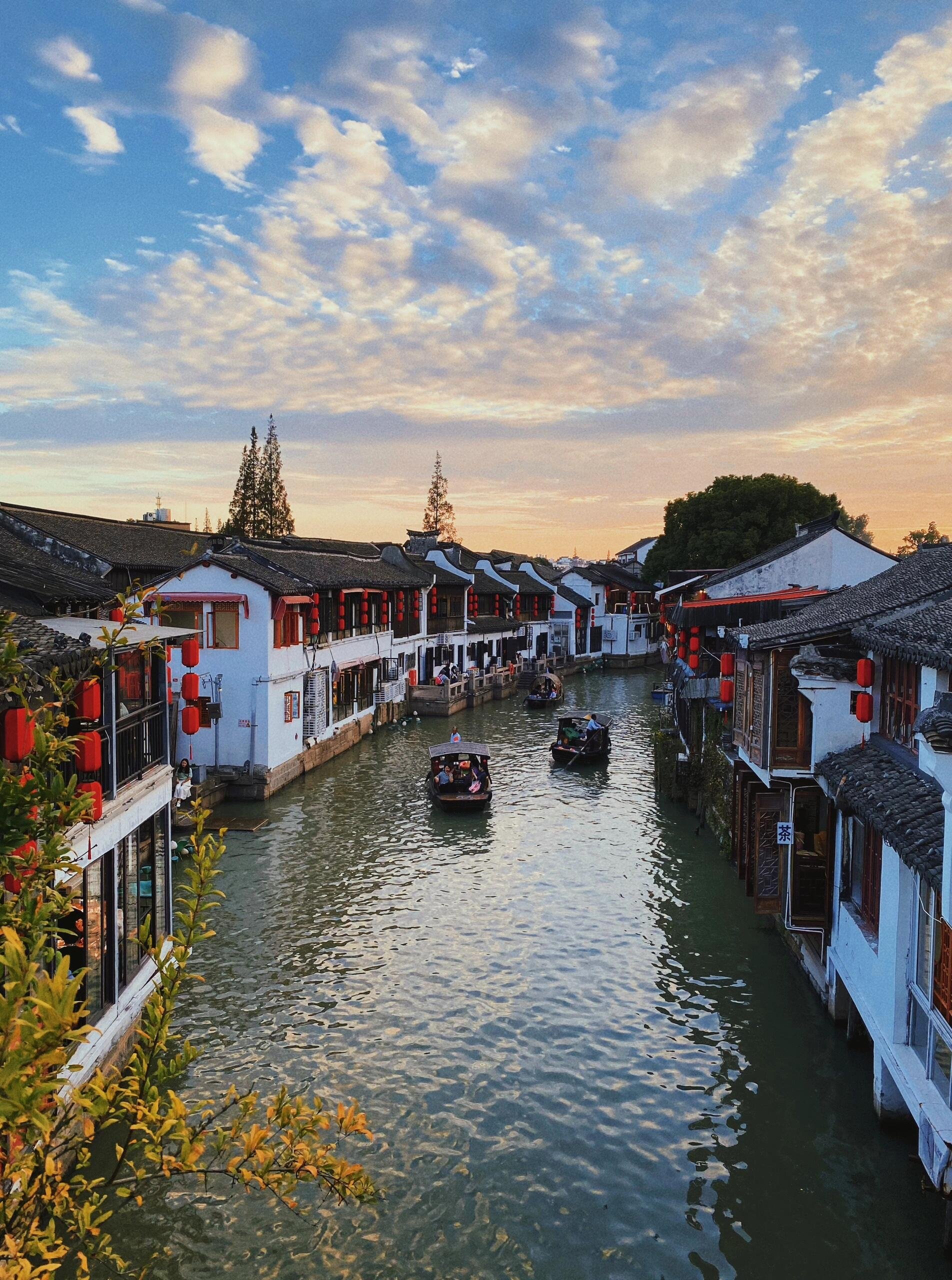 Zhujiajiao traces its origins to a modest Three Kingdoms–era settlement (roughly contemporary with the late Roman Empire), blossoming into a thriving market town by the Song and Yuan dynasties before being formally chartered during the Wanli reign of the Ming. By the late Qing, it had become the foremost commercial hub of Shanghai's hinterland, a status immortalized in the saying "three rival towns cannot match a single corner of Zhujiajiao." Walking its lanes today feels like stepping into a Chinese painting from the age when Venice and Florence were still defining Renaissance Europe—yet here, trade flowed along canals rather than canals connecting oceans.
The town's layout is a textbook example of Jiangnan vernacular planning: a roughly two-square-kilometre core organized around the Caogang River, with nine parallel waterfront streets laced by 36 bridges in the classic "water alongside road, canal beside house" pattern reminiscent of Bruges or Strasbourg, though pressed into a much denser footprint. North Street, the longest surviving Ming-Qing thoroughfare, still bristles with original shopfronts, while the five-arch Fangsheng Bridge—stretching 70.8 metres, the largest of its kind in Shanghai—offers the definitive panoramic view of grey-tiled rooftops and gliding skiffs that defines the town.
Beyond the waterways, Zhujiajiao harbours an unexpected cultural density. Kezhi Garden, a sprawling nine-hectare estate, blends classical Chinese pavilions and rockeries with a distinctly Western-style library tower and "Rice Fragrance Village," a Sino-European hybrid as surprising as finding Florentine loggias inside a Suzhou garden. The riverside Yuanjin Temple and the yellow-walled City God Temple anchor the town's spiritual heritage, while the 1903 Qing Dynasty Post Office—one of China's earliest postal institutions—has been reinvented as a creative retail and exhibition space, much like repurposed Victorian post offices across Britain.
What truly distinguishes Zhujiajiao is its living character rather than a museumified husk. Grandmother-style sticky-rice dumplings, slow-braised pork belly (zha rou), and osmanthus cakes are sold from family stalls that have fed generations, while sculling boats glide beneath flower-draped balconies exactly as they did four centuries ago. Evening illumination transforms the canals into a constellation of reflections, an atmosphere every bit as haunting as a winter evening in Annecy or a summer night along Amsterdam's Jordaan.
Getting here is refreshingly simple: Metro Line 17 runs directly to Zhujiajiao Station, followed by a 15–20 minute walk, though weekends bring traffic and parking headaches for drivers. The old streets are free to explore at any hour; combined tickets (around 60 yuan) cover Kezhi Garden, Hexin Garden, and the City God Temple individually priced at 20, 30, and 10 yuan respectively. A full day is ideal—sunrise or late afternoon for soft light and thinner crowds—and the tourist office provides multilingual guides including English, making this the easiest possible escape from Shanghai into old China.
Zhujiajiao traces its origins to a modest Three Kingdoms–era settlement (roughly contemporary with the late Roman Empire), blossoming into a thriving market town by the Song and Yuan dynasties before being formally chartered during the Wanli reign of the Ming. By the late Qing, it had become the foremost commercial hub of Shanghai's hinterland, a status immortalized in the saying "three rival towns cannot match a single corner of Zhujiajiao." Walking its lanes today feels like stepping into a Chinese painting from the age when Venice and Florence were still defining Renaissance Europe—yet here, trade flowed along canals rather than canals connecting oceans.
The town's layout is a textbook example of Jiangnan vernacular planning: a roughly two-square-kilometre core organized around the Caogang River, with nine parallel waterfront streets laced by 36 bridges in the classic "water alongside road, canal beside house" pattern reminiscent of Bruges or Strasbourg, though pressed into a much denser footprint. North Street, the longest surviving Ming-Qing thoroughfare, still bristles with original shopfronts, while the five-arch Fangsheng Bridge—stretching 70.8 metres, the largest of its kind in Shanghai—offers the definitive panoramic view of grey-tiled rooftops and gliding skiffs that defines the town.
Beyond the waterways, Zhujiajiao harbours an unexpected cultural density. Kezhi Garden, a sprawling nine-hectare estate, blends classical Chinese pavilions and rockeries with a distinctly Western-style library tower and "Rice Fragrance Village," a Sino-European hybrid as surprising as finding Florentine loggias inside a Suzhou garden. The riverside Yuanjin Temple and the yellow-walled City God Temple anchor the town's spiritual heritage, while the 1903 Qing Dynasty Post Office—one of China's earliest postal institutions—has been reinvented as a creative retail and exhibition space, much like repurposed Victorian post offices across Britain.
What truly distinguishes Zhujiajiao is its living character rather than a museumified husk. Grandmother-style sticky-rice dumplings, slow-braised pork belly (zha rou), and osmanthus cakes are sold from family stalls that have fed generations, while sculling boats glide beneath flower-draped balconies exactly as they did four centuries ago. Evening illumination transforms the canals into a constellation of reflections, an atmosphere every bit as haunting as a winter evening in Annecy or a summer night along Amsterdam's Jordaan.
Getting here is refreshingly simple: Metro Line 17 runs directly to Zhujiajiao Station, followed by a 15–20 minute walk, though weekends bring traffic and parking headaches for drivers. The old streets are free to explore at any hour; combined tickets (around 60 yuan) cover Kezhi Garden, Hexin Garden, and the City God Temple individually priced at 20, 30, and 10 yuan respectively. A full day is ideal—sunrise or late afternoon for soft light and thinner crowds—and the tourist office provides multilingual guides including English, making this the easiest possible escape from Shanghai into old China.