Sheshan National Forest Park

⭐ 4.30

No. 9258, Waiqingsong Road, Songjiang District, Shanghai, China
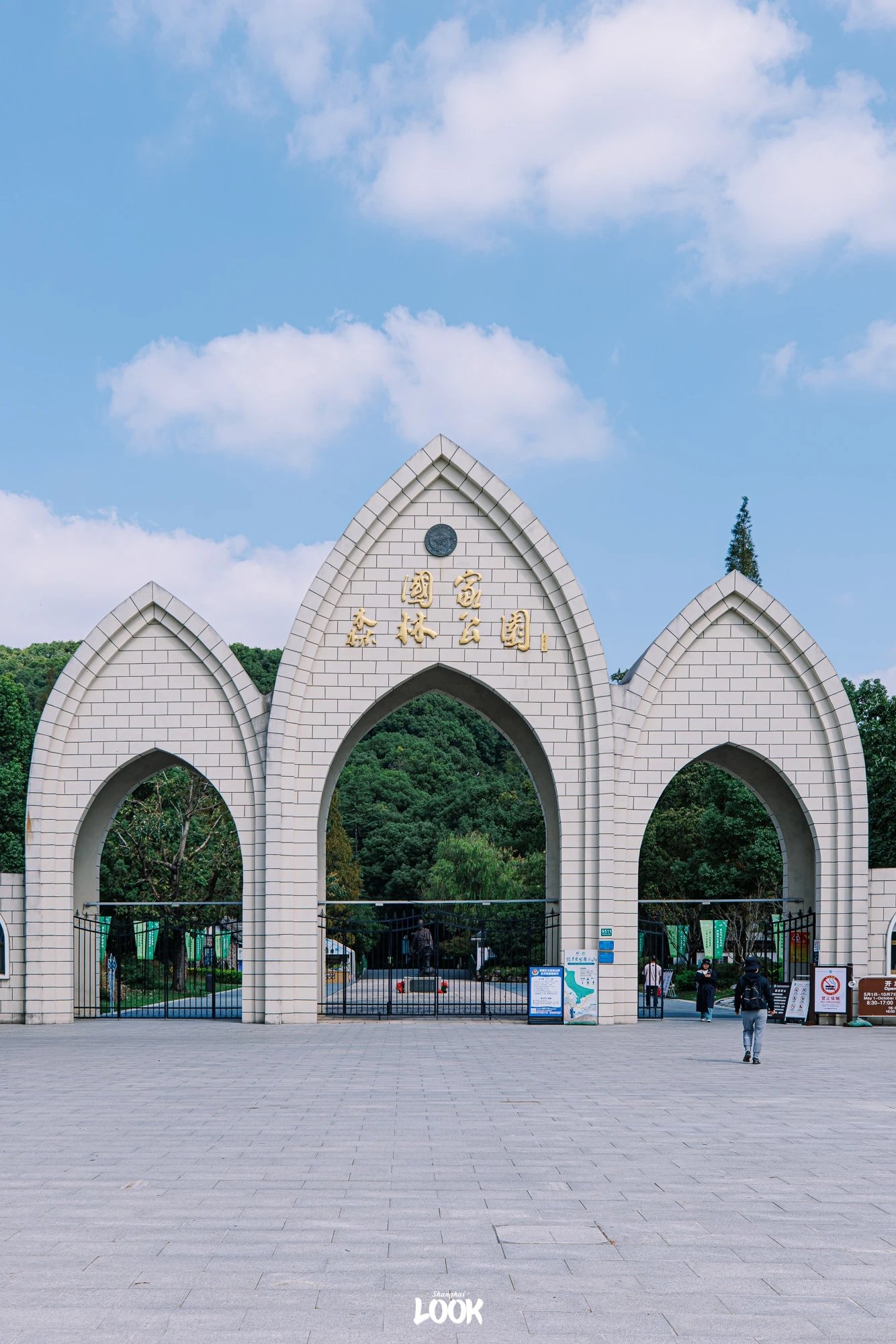
Sheshan National Forest Park
**A Mountain in a Sea of Skyscrapers** Sheshan is a geological curiosity in a region defined by water and concrete. About 60 million years ago, volcanic activity pushed up these low hills along the fault line of the Yangtze Delta—ancient, weathered, and almost entirely covered by evergreen and mixed broadleaf forest. With more than 80 percent canopy cover and around 250 trees over a century old, the park's air quality routinely surpasses that of central Shanghai. Granted national forest status in 1993 and rated an AAAA scenic site, it remains the only place where the 25-million-strong metropolis can genuinely trade asphalt for leaf litter. **West Sheshan — Where Faith Meets the Stars** The western peak is the cultural heart of the park. Crowning the summit is the Basilica of Our Lady of Sheshan, a Romanesque-Byzantine colossus completed in 1935 and once the largest Catholic church in the Far East. Built of brick and concrete without a single iron nail or beam, its red-stone bulk recalls Mediterranean cathedrals rather than anything typically Chinese. Just below sits the Shanghai Astronomy Museum, whose predecessor—founded by French Jesuits in 1900—housed the "First Telescope of the Far East," a 40 cm double astrograph that mapped Asian skies for decades. Nearby, the 11th-century Song dynasty Xiudaozhe Pagoda stands as a quiet counterpoint to the surrounding 20th-century grandeur. **East Sheshan — Bamboo and Breath** If West Sheshan is the head, East Sheshan is the lungs. Vast stands of moso bamboo sway along gently graded boardwalks, creating a green corridor that feels lifted from a Japanese ink painting. The climb to the summit rewards hikers with a panoramic view over the flat jade expanse of Songjiang's rice paddies and distant villages. Easy paths, shaded benches, and interpretive signs make this an ideal choice for families with children or anyone looking for a low-effort, high-reward nature walk. **Tianma Mountain and the Pagoda That Out-Pisas Pisa** A short drive away, the Tianma Mountain section hides one of China's most charming architectural oddities: the Huzhu Baoguang Pagoda, built around 1079 during the Northern Song dynasty. Thanks to centuries of subsidence, it now leans at an angle greater than its more famous Italian cousin in Pisa. A 700-year-old ginkgo tree guards the grounds, turning the entire site into a golden spectacle each November. Entry is a nominal 10 yuan. History buffs can also detour to Xiaokunshan, where a modest shrine honors the famed Western Jin literary brothers Lu Ji and Lu Yun, whose 3rd-century essays on Chinese literature still grace school curricula. **Practicalities for the Independent Traveler** The main forest parks are free to enter; only the Shanghai Astronomy Museum charges admission (around 30 yuan, advance booking via the WeChat mini-program "上海天文博物馆服务" is essential). Take Metro Line 9 to Sheshan Station, then a quick taxi or local bus to the various gates. Drivers will find ample parking at each entrance. Spring and autumn are unbeatable—the Orchid and Bamboo Shoot Festival fills April with fragrance, while the autumn ginkgo draws photographers from across the region. Summer visits demand water, insect repellent, and sturdy shoes; the trails, though short, can be slippery after rain. **A Suggested Half-Day Itinerary** Arrive at the East Sheshan south gate by mid-morning and spend an hour wandering the bamboo boardwalks. From there, a 20-minute walk leads to West Sheshan, where the Song-dynasty pagoda, the cathedral, and the observatory await—an easy hat-trick of art, faith, and science. Exit through the north gate by mid-afternoon. Note that the observatory's ticket counter closes at 16:00, and there are few shops on the mountain, so pack water, snacks, and a light rain jacket. In just three or four hours, you'll understand why generations of Shanghainese have treated these quiet hills as their weekend sanctuary.

Traveler reviews

Sheshan Forest Park breaks down into East Sheshan, West Sheshan, Xiaokunshan, and Tianmashan, with most of the main sights in the West Sheshan area. West Sheshan sits on the western peak at about 100m, covering around 52 hectares, with old-growth trees and bamboo everywhere — the mix of cultural stuff and natural...
⭐ 3 · Ellis Fox Expand
The loop was less than 2km with gentle slopes, perfect for older folks taking it slow. The Nine Peaks Temple up on the hill used to be pretty shabby but now it's been redone into this super golden flashy look. The whole vibe of two Lu's (Lu Ji and Lu Yun) h...
⭐ 4 · Marlow Reed Expand