Jiuxian Village Ancient Architectural Complex
⭐ 3.50
Jiuxian Village, Xingping Town, Yangshuo County, Guangxi Zhuang Autonomous Region, China
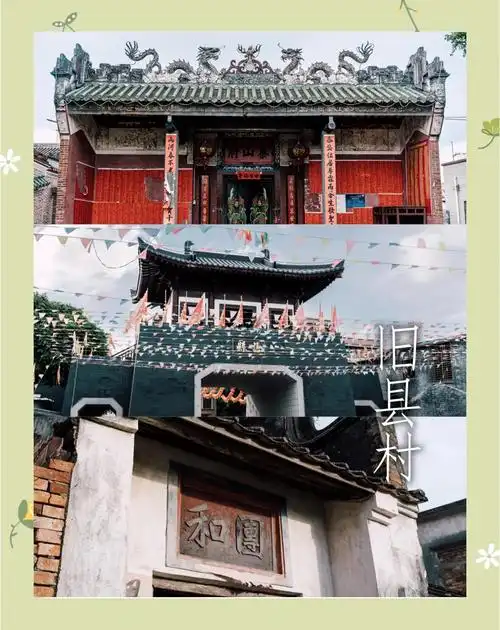 Jiuxian Village traces its origins to 621 AD, when it served as the seat of Guiyi County during the early Tang dynasty—a time contemporary with the rise of the Anglo-Saxon kingdoms in Britain and the Byzantine Empire under Emperor Heraclius. After the county was abolished, the settlement grew organically around the original site, accumulating architectural layers from the Tang, Song, and Ming-Qing periods across fourteen centuries. This continuous habitation makes Jiuxian a rare "living" historical specimen in southern China, where most ancient villages were either abandoned or rebuilt beyond recognition.
The village's defining feature is an extraordinary cluster of 44 interconnected walled courtyard compounds built primarily during the Ming and Qing dynasties (14th–19th centuries). Their enclosed, castle-like layout fuses the axial symmetry of Beijing's quadrangle mansions with the fortress-like stepped gables—known locally as "horse-head walls"—typical of southern China's defensive vernacular. The result resembles a fortified medieval manor village, where households, courtyards, and narrow lanes interconnect like a labyrinth. The most celebrated residence, "Jinshi Mansion," produced both a Qing-dynasty imperial scholar and a Republican-era anti-Japanese general.
Scholarly and communal heritage permeate the village. The Li Family Ancestral Hall displays imperial plaques bestowing titles of "Jinshi," "Wen Kui," and "Wu Kui"—examinations roughly paralleling Europe's medieval university degrees—and features exquisitely carved wooden dragon heads. Nearby stands Xiangui Bridge, a single-arch stone span built in 1123 AD during the Northern Song dynasty, ranking among Guangxi's oldest surviving bridges and comparable in age to many Romanesque crossings in France and Italy. The Tang-era county ruins, with rammed-earth walls and a stone well inscribed "Shou Jiu" ("guard the old"), quietly testify to a millennium of administration.
The village sits about 20 minutes from Yangshuo by electric scooter or bicycle, following a scenic riverside greenway flanked by karst peaks and rice paddies—a landscape often called "the world's most beautiful countryside" by Western travelers. Spring and autumn are ideal, though the misty hours just after rain are equally magical. Plan to arrive before dusk to avoid mosquitoes, wander the bluestone alleys, visit the ancestral hall and Jinshi Mansion, cross the ancient bridge, and pause for tea at one of the lovingly restored courtyard cafés, such as the "Secret Garden" guesthouse cluster renovated by South African architect Ian.
Several courtyard homes remain private residences; visitors should ask permission before photographing or entering domestic spaces. Supporting the village's adaptive-reuse model—where foreign and Chinese designers have converted historic structures into boutique guesthouses without erasing original architecture—helps preserve this fragile heritage. Jiuxian offers what few Chinese villages can: an authentic sense of stepping into layered history, where Tang foundations, Song bridges, and Ming-Qing mansions coexist within walking distance, all set against Guilin's iconic karst scenery.
Jiuxian Village traces its origins to 621 AD, when it served as the seat of Guiyi County during the early Tang dynasty—a time contemporary with the rise of the Anglo-Saxon kingdoms in Britain and the Byzantine Empire under Emperor Heraclius. After the county was abolished, the settlement grew organically around the original site, accumulating architectural layers from the Tang, Song, and Ming-Qing periods across fourteen centuries. This continuous habitation makes Jiuxian a rare "living" historical specimen in southern China, where most ancient villages were either abandoned or rebuilt beyond recognition.
The village's defining feature is an extraordinary cluster of 44 interconnected walled courtyard compounds built primarily during the Ming and Qing dynasties (14th–19th centuries). Their enclosed, castle-like layout fuses the axial symmetry of Beijing's quadrangle mansions with the fortress-like stepped gables—known locally as "horse-head walls"—typical of southern China's defensive vernacular. The result resembles a fortified medieval manor village, where households, courtyards, and narrow lanes interconnect like a labyrinth. The most celebrated residence, "Jinshi Mansion," produced both a Qing-dynasty imperial scholar and a Republican-era anti-Japanese general.
Scholarly and communal heritage permeate the village. The Li Family Ancestral Hall displays imperial plaques bestowing titles of "Jinshi," "Wen Kui," and "Wu Kui"—examinations roughly paralleling Europe's medieval university degrees—and features exquisitely carved wooden dragon heads. Nearby stands Xiangui Bridge, a single-arch stone span built in 1123 AD during the Northern Song dynasty, ranking among Guangxi's oldest surviving bridges and comparable in age to many Romanesque crossings in France and Italy. The Tang-era county ruins, with rammed-earth walls and a stone well inscribed "Shou Jiu" ("guard the old"), quietly testify to a millennium of administration.
The village sits about 20 minutes from Yangshuo by electric scooter or bicycle, following a scenic riverside greenway flanked by karst peaks and rice paddies—a landscape often called "the world's most beautiful countryside" by Western travelers. Spring and autumn are ideal, though the misty hours just after rain are equally magical. Plan to arrive before dusk to avoid mosquitoes, wander the bluestone alleys, visit the ancestral hall and Jinshi Mansion, cross the ancient bridge, and pause for tea at one of the lovingly restored courtyard cafés, such as the "Secret Garden" guesthouse cluster renovated by South African architect Ian.
Several courtyard homes remain private residences; visitors should ask permission before photographing or entering domestic spaces. Supporting the village's adaptive-reuse model—where foreign and Chinese designers have converted historic structures into boutique guesthouses without erasing original architecture—helps preserve this fragile heritage. Jiuxian offers what few Chinese villages can: an authentic sense of stepping into layered history, where Tang foundations, Song bridges, and Ming-Qing mansions coexist within walking distance, all set against Guilin's iconic karst scenery.