Yulong River Rafting
⭐ 4.70
Yulong River Rafting Scenic Area, Yangshuo County, Guilin, Guangxi Zhuang Autonomous Region, China
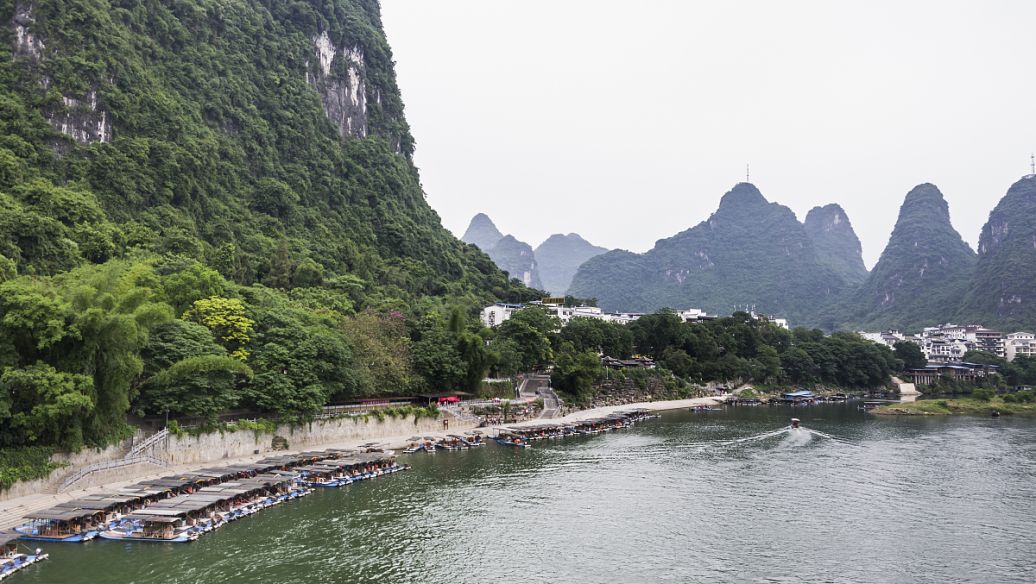 The Yulong River is Yangshuo's longest tributary, twisting roughly 35 kilometres through a landscape that Chinese poets have long likened to a celestial ink-wash scroll. Geologically, its dramatic limestone towers belong to the same family of karst formations that shape the Guilin region—and arguably no waterway on Earth offers such an intimate, eye-level encounter with this terrain. Travellers familiar with the terraced cliffs of the Italian Dolomites or the watery limestone gorges of France's Ardèche will recognise a kindred beauty here, though the Yulong adds something uniquely Chinese: ancient stone villages, mist-cloaked paddies, and the quiet rhythm of the bamboo pole dipping into jade-green water.
Rafting here is deliberately low-tech. Each flat-bottomed bamboo craft is propelled solely by a skilled boatman wielding a single long pole, a technique virtually unchanged since the Ming dynasty when the river served as the region's main trade artery. The two-person rafts sit so close to the surface that passengers seem to float directly into reflections of the surrounding peaks—an effect often described, in keeping with centuries of Chinese literary tradition, as "travelling inside a painting." Compared with the large motorised cruise boats on the neighbouring Li River, this method is far slower, quieter, and considerably more immersive.
The route's signature thrill is the sequence of low stone weirs, or "dams," built into the riverbed over generations of agricultural engineering. As the raft slides down each cascade, cool water splashes over the bow while passengers laugh and reach for cameras—damp, joyful, and utterly safe for all ages. Between the dam-bumps, the soundscape shifts to birdsong, distant village drums, and the soft slap of water against bamboo, creating a multi-sensory experience that feels closer to a gentle theme-park ride than to white-water adventure.
Photography enthusiasts travel here specifically to recreate the fabled background of China's 20-yuan banknote, depicting a fisherman on a bamboo raft with Karst peaks behind. Several photo-stops along the river are designed for replicating that exact composition, and boatmen are well practised at positioning guests for the shot. Ming-era single-arch stone bridges still span the tributaries, weathered and ivy-framed, while water buffalo graze in the fields—a tableau so timeless it could be mistaken for a Song-dynasty scroll.
Tickets start from roughly 210 RMB per raft (not per person) and should be booked through official channels or major travel apps in advance. The flagship Jinlong Bridge to Jiuxian stretch runs about 90 minutes and crosses nine dams—ideal for first-time visitors and serious photographers—while the gentler Shui'edi to Gongnong Bridge section takes 40–50 minutes. Aim for the first morning departure (around 7:30 am) or the golden-hour late afternoon slot to avoid crowds and capture the misty light that makes the karst peaks appear to float. Wear quick-dry clothing, secure footwear, and bring a waterproof pouch for phones and cameras; sunscreen and a hat are essential. Above all, take nothing but photos and leave nothing behind, helping preserve this living landscape for the generations who will, no doubt, continue to call it paradise.
The Yulong River is Yangshuo's longest tributary, twisting roughly 35 kilometres through a landscape that Chinese poets have long likened to a celestial ink-wash scroll. Geologically, its dramatic limestone towers belong to the same family of karst formations that shape the Guilin region—and arguably no waterway on Earth offers such an intimate, eye-level encounter with this terrain. Travellers familiar with the terraced cliffs of the Italian Dolomites or the watery limestone gorges of France's Ardèche will recognise a kindred beauty here, though the Yulong adds something uniquely Chinese: ancient stone villages, mist-cloaked paddies, and the quiet rhythm of the bamboo pole dipping into jade-green water.
Rafting here is deliberately low-tech. Each flat-bottomed bamboo craft is propelled solely by a skilled boatman wielding a single long pole, a technique virtually unchanged since the Ming dynasty when the river served as the region's main trade artery. The two-person rafts sit so close to the surface that passengers seem to float directly into reflections of the surrounding peaks—an effect often described, in keeping with centuries of Chinese literary tradition, as "travelling inside a painting." Compared with the large motorised cruise boats on the neighbouring Li River, this method is far slower, quieter, and considerably more immersive.
The route's signature thrill is the sequence of low stone weirs, or "dams," built into the riverbed over generations of agricultural engineering. As the raft slides down each cascade, cool water splashes over the bow while passengers laugh and reach for cameras—damp, joyful, and utterly safe for all ages. Between the dam-bumps, the soundscape shifts to birdsong, distant village drums, and the soft slap of water against bamboo, creating a multi-sensory experience that feels closer to a gentle theme-park ride than to white-water adventure.
Photography enthusiasts travel here specifically to recreate the fabled background of China's 20-yuan banknote, depicting a fisherman on a bamboo raft with Karst peaks behind. Several photo-stops along the river are designed for replicating that exact composition, and boatmen are well practised at positioning guests for the shot. Ming-era single-arch stone bridges still span the tributaries, weathered and ivy-framed, while water buffalo graze in the fields—a tableau so timeless it could be mistaken for a Song-dynasty scroll.
Tickets start from roughly 210 RMB per raft (not per person) and should be booked through official channels or major travel apps in advance. The flagship Jinlong Bridge to Jiuxian stretch runs about 90 minutes and crosses nine dams—ideal for first-time visitors and serious photographers—while the gentler Shui'edi to Gongnong Bridge section takes 40–50 minutes. Aim for the first morning departure (around 7:30 am) or the golden-hour late afternoon slot to avoid crowds and capture the misty light that makes the karst peaks appear to float. Wear quick-dry clothing, secure footwear, and bring a waterproof pouch for phones and cameras; sunscreen and a hat are essential. Above all, take nothing but photos and leave nothing behind, helping preserve this living landscape for the generations who will, no doubt, continue to call it paradise.