Ordos Museum
⭐ 4.60
Ordos Museum, Dongsheng District, Ordos City, Inner Mongolia Autonomous Region, China
 Occupying the heart of Kangbashi — a futuristic district that rose from the Gobi steppe in the 2000s — the Ordos Museum is the cultural anchor of a city once dismissed as a "ghost town" but now thriving as a showcase of Inner Mongolian prosperity. The museum traces the region's story from the Paleolithic era to the modern day, illuminating how the grasslands along the upper Yellow River served as a vast meeting point between settled agrarian dynasties to the south and the horse-riding nomadic empires — Xiongnu, Xianbei, Khitan, and eventually the Mongols — who shaped much of Eurasian history.
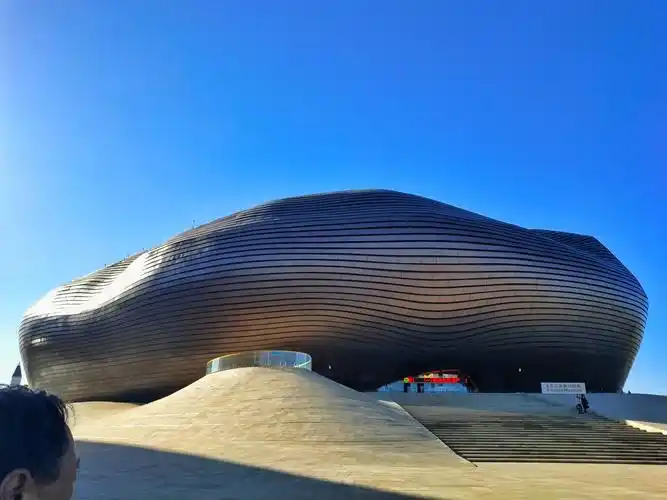
The architecture itself rewards a look before you even step inside. The flowing, undulating roofline evokes the soft curves of the surrounding Mongolian grasslands and the rounded silhouette of a traditional ger (yurt) seen from above. Clad in warm bronze-toned panels that catch the Gobi light, the building stands in dialogue with the broad boulevards and civic plazas of Kangbashi, creating a visual harmony between contemporary Chinese urban design and ancient steppe aesthetics. Inside, soaring atria and clean, well-lit galleries make for comfortable, unhurried exploration.
The Paleontology Hall is a guaranteed highlight for families and fossil enthusiasts. Its centerpiece is a 17-meter mounted skeleton of the Chagan Nuur dinosaur, a massive sauropod discovered in the Ordos basin that rivals the famous Diplodocus displays in London's Natural History Museum. A complete woolly rhinoceros skeleton — a relic of the last Ice Age when mammoths roamed these plains — and clusters of fossilized dinosaur eggs bring the deep prehistory of the Gobi vividly to life, supported by immersive light-and-sound reconstructions of ancient landscapes.
The Bronze Gallery gathers the finest examples of the so-called "Ordos bronzes," a category of metalwork known in Western archaeology since the early twentieth century and often compared to Scythian goldwork from the Ukrainian and Kazakh steppes. Intricately cast short swords with bell-shaped pommels, bronze sculptures of wild sheep, and ceremonial horse trappings reveal the artistic sophistication of nomadic craftsmen who lived two to three thousand years ago. These objects, produced by ancestors of the Xiongnu and other steppe confederations, are essential context for understanding the material culture that eventually gave rise to the Mongol Empire under Genghis Khan — whose own sacred guardian tribe, the Darkhad, gave the Ordos region its name.
The main historical galleries unfold chronologically across multiple floors, weaving together archaeological finds, traditional Mongolian dress, religious artifacts, and historical photography in a narrative titled "When the Yellow River Flows Across the Grasslands." A particularly moving section titled "A Century of Light and Shadow" documents the turbulent modern era, from late Qing frontier life through the Republic, the arrival of industry, and the coal boom that transformed Ordos into one of China's wealthiest cities today. Multilingual audio guides are available at the entrance.
Practical details make visiting straightforward. Plan two to three hours for a thorough tour; arriving shortly after the 9:00 a.m. opening is ideal for quieter galleries and sharper photographs of the exterior reflecting pools. Summer evenings, when the building's curved facade glows under architectural lighting, offer a magical second visit. Entry is free with a passport or ID, signage is partially bilingual, and the staff are accustomed to international visitors — making the Ordos Museum an easy and unforgettable cultural detour on any journey through Inner Mongolia.
Occupying the heart of Kangbashi — a futuristic district that rose from the Gobi steppe in the 2000s — the Ordos Museum is the cultural anchor of a city once dismissed as a "ghost town" but now thriving as a showcase of Inner Mongolian prosperity. The museum traces the region's story from the Paleolithic era to the modern day, illuminating how the grasslands along the upper Yellow River served as a vast meeting point between settled agrarian dynasties to the south and the horse-riding nomadic empires — Xiongnu, Xianbei, Khitan, and eventually the Mongols — who shaped much of Eurasian history.
The architecture itself rewards a look before you even step inside. The flowing, undulating roofline evokes the soft curves of the surrounding Mongolian grasslands and the rounded silhouette of a traditional ger (yurt) seen from above. Clad in warm bronze-toned panels that catch the Gobi light, the building stands in dialogue with the broad boulevards and civic plazas of Kangbashi, creating a visual harmony between contemporary Chinese urban design and ancient steppe aesthetics. Inside, soaring atria and clean, well-lit galleries make for comfortable, unhurried exploration.
The Paleontology Hall is a guaranteed highlight for families and fossil enthusiasts. Its centerpiece is a 17-meter mounted skeleton of the Chagan Nuur dinosaur, a massive sauropod discovered in the Ordos basin that rivals the famous Diplodocus displays in London's Natural History Museum. A complete woolly rhinoceros skeleton — a relic of the last Ice Age when mammoths roamed these plains — and clusters of fossilized dinosaur eggs bring the deep prehistory of the Gobi vividly to life, supported by immersive light-and-sound reconstructions of ancient landscapes.
The Bronze Gallery gathers the finest examples of the so-called "Ordos bronzes," a category of metalwork known in Western archaeology since the early twentieth century and often compared to Scythian goldwork from the Ukrainian and Kazakh steppes. Intricately cast short swords with bell-shaped pommels, bronze sculptures of wild sheep, and ceremonial horse trappings reveal the artistic sophistication of nomadic craftsmen who lived two to three thousand years ago. These objects, produced by ancestors of the Xiongnu and other steppe confederations, are essential context for understanding the material culture that eventually gave rise to the Mongol Empire under Genghis Khan — whose own sacred guardian tribe, the Darkhad, gave the Ordos region its name.
The main historical galleries unfold chronologically across multiple floors, weaving together archaeological finds, traditional Mongolian dress, religious artifacts, and historical photography in a narrative titled "When the Yellow River Flows Across the Grasslands." A particularly moving section titled "A Century of Light and Shadow" documents the turbulent modern era, from late Qing frontier life through the Republic, the arrival of industry, and the coal boom that transformed Ordos into one of China's wealthiest cities today. Multilingual audio guides are available at the entrance.
Practical details make visiting straightforward. Plan two to three hours for a thorough tour; arriving shortly after the 9:00 a.m. opening is ideal for quieter galleries and sharper photographs of the exterior reflecting pools. Summer evenings, when the building's curved facade glows under architectural lighting, offer a magical second visit. Entry is free with a passport or ID, signage is partially bilingual, and the staff are accustomed to international visitors — making the Ordos Museum an easy and unforgettable cultural detour on any journey through Inner Mongolia.