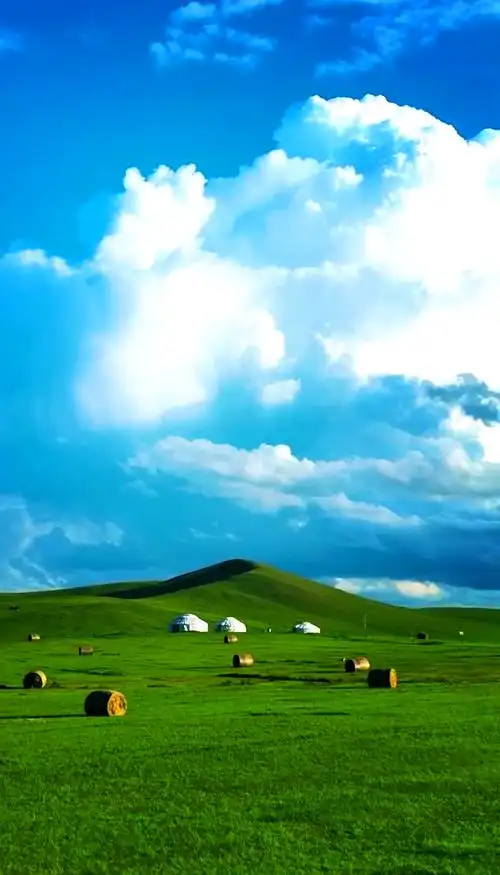
Ordos Grassland sits at the cultural heartland of the Mongol people, in the territory long guarded by the Ordos tribe, custodians of Genghis Khan's Eight White Palaces — the sacred reliquary complex housing the memory of the great khan himself. This is the homeland from which the Mongols launched the 13th-century conquests that built history's largest contiguous land empire, stretching from Korea to Hungary and surpassing even the Roman Empire at its peak. Local communities have preserved the pastoral traditions, epic songs, and dance forms inherited from the Yuan Dynasty, giving rise to what scholars now call the distinct "Ordos culture," an essential window onto Mongolian heritage.
The landscape itself tells a story of transition: here, the Kubuqi Desert — China's seventh-largest — meets the northern steppe, allowing visitors to cross two biomes in a single afternoon. While the grasses are hardier and shorter than the famously lush Hulunbuir meadows farther east, the scenery is layered and dramatic. August daytime temperatures hover around 20–25°C (68–77°F), with cool evenings, so a light jacket is essential.
What sets this resort apart is its theatrical program, considered among the finest on any Inner Mongolian grassland. The national-intangible-heritage show "Ordos Wedding" re-enacts Mongol-Yuan aristocratic marriage rites with full regalia; the live-action equestrian drama "Heroes" celebrates the cavalry tradition that carried Mongol armies across Eurasia; and "Zama Banquet" recreates the feasting, music, and protocol of a Yuan imperial court dinner. Productions are large-scale and visually striking.
Activities extend well beyond spectating: horse riding, archery, grass-sliding, go-karts, and 4x4 dune safaris fill the daytime, while bonfire parties light up the night. Accommodation comes in modernized yurts fitted with air-conditioning, private bathrooms, and hot water — a notable comfort upgrade that makes the experience accessible for children and less adventurous travelers.
For Western visitors, Ordos Grassland offers something rare: an easy, well-organized entry point into a culture most people only know from history books about the Mongol Empire. Plan one to two days during July or August, when the grass is at its greenest. Entry tickets cover the basic grounds; horse rides, shows, and dune-buggies are paid separately, so confirm prices in advance. Pack strong sun protection and layers for shifting temperatures. The site pairs naturally with Xiangshawan ("Singing Sands") desert resort and the futuristic skyline of Kangbashi, making it an ideal stop on a broader Inner Mongolian circuit.