Lingyan Temple
⭐ 4.20
3.5 km along Luegao Road, Lüeyang County, Hanzhong City, Shaanxi Province, China
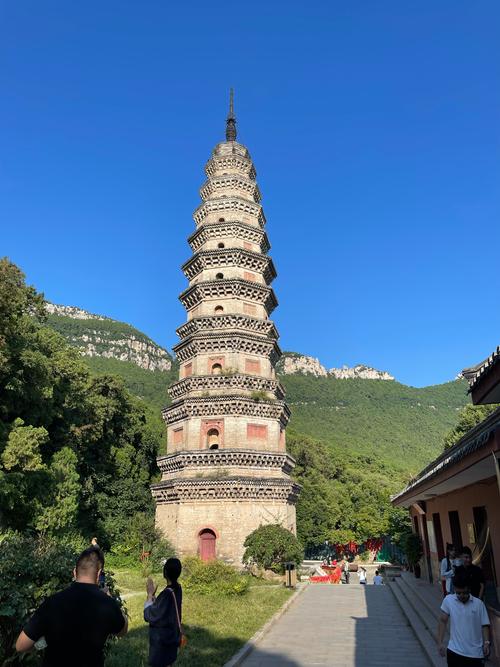 Lingyan Temple was founded during the Kaiyuan era (713–741 CE), the same golden age of Tang patronage that produced China's great Buddhist centers at Mount Wutai and the Longmen Grottoes near Luoyang. Yet unlike those grand cliff carvings, Lingyan is remarkable for what nature provided first: two enormous limestone caves called Jinguin (Golden Turtle) and Luohan (Arhat) that form the monastery's very body. The result is a layout where cave and temple are inseparable—a configuration that recalls the rock-hewn monasteries of Cappadocia in Turkey, though on a more intimate scale. Its remote mountain setting, perched above the Jialing River gorge, kept it overlooked by mainstream tourist circuits for centuries, preserving its quiet atmosphere.
The cultural heart of Lingyan lies in its extraordinary collection of cliff inscriptions. The "Fu Ge Song," carved in 172 CE during the reign of Emperor Ling of Han, ranks alongside the "Shimen Song" and "Xixia Song" as one of the "Three Han Eulogies"—a trio often compared in Chinese art history to the great Roman inscriptions and early medieval epigraphs of Europe for their historical and calligraphic importance. Designated a national first-class relic, it documents the engineering of an ancient plank road across the Qinling mountains. Surrounding it, more than 140 steles span nearly two millennia, including a rare Tang-dynasty traffic regulation tablet, making the cliff face a true open-air museum of Chinese epigraphy.
Beyond its inscriptions, the temple itself rewards exploration. The front cave shelters an 18-meter golden Vairocana Buddha, the largest gilded statue in southern Shaanxi, while the rear cave dazzles with stalactite columns and a natural reclining Buddha so lifelike that legend credits Empress Wu Zetian with inscribing "Pillars of Heaven and Earth" upon it. Recent additions—a glass walkway and suspension bridge—extend a 1.4-kilometer trail along the cliff face, offering views comparable to those along Italy's Amalfi coast or Portugal's Sintra, though suspended over a misty river gorge rather than the sea.
Practical visitation is refreshingly uncomplicated. Admission is free or nominal, and hours run roughly 09:00 to 16:30. The temple lies about 110 kilometers southwest of Hanzhong city, best reached by car or bus to Lueyang followed by a short local transfer. Visitors should wear sturdy, non-slip shoes for the moderate stone stairway climbing to the main halls, and carry water; the path is gentle enough for families with children or elderly travelers. Spring and autumn bring the most comfortable weather for hiking. Limited on-site food options mean packing a light snack is wise.
A visit to Lingyan pairs naturally with Lueyang's Ming-dynasty city wall and the nearby Jiangshen Temple (River God Temple), creating a full day of historical exploration. For Western travelers seeking a site that feels genuinely off the beaten path—where Tang Buddhism, Han dynasty calligraphy, and living geology converge in a single dramatic setting—Lingyan Temple offers an experience rarely matched even in China's more famous heritage regions.
Lingyan Temple was founded during the Kaiyuan era (713–741 CE), the same golden age of Tang patronage that produced China's great Buddhist centers at Mount Wutai and the Longmen Grottoes near Luoyang. Yet unlike those grand cliff carvings, Lingyan is remarkable for what nature provided first: two enormous limestone caves called Jinguin (Golden Turtle) and Luohan (Arhat) that form the monastery's very body. The result is a layout where cave and temple are inseparable—a configuration that recalls the rock-hewn monasteries of Cappadocia in Turkey, though on a more intimate scale. Its remote mountain setting, perched above the Jialing River gorge, kept it overlooked by mainstream tourist circuits for centuries, preserving its quiet atmosphere.
The cultural heart of Lingyan lies in its extraordinary collection of cliff inscriptions. The "Fu Ge Song," carved in 172 CE during the reign of Emperor Ling of Han, ranks alongside the "Shimen Song" and "Xixia Song" as one of the "Three Han Eulogies"—a trio often compared in Chinese art history to the great Roman inscriptions and early medieval epigraphs of Europe for their historical and calligraphic importance. Designated a national first-class relic, it documents the engineering of an ancient plank road across the Qinling mountains. Surrounding it, more than 140 steles span nearly two millennia, including a rare Tang-dynasty traffic regulation tablet, making the cliff face a true open-air museum of Chinese epigraphy.
Beyond its inscriptions, the temple itself rewards exploration. The front cave shelters an 18-meter golden Vairocana Buddha, the largest gilded statue in southern Shaanxi, while the rear cave dazzles with stalactite columns and a natural reclining Buddha so lifelike that legend credits Empress Wu Zetian with inscribing "Pillars of Heaven and Earth" upon it. Recent additions—a glass walkway and suspension bridge—extend a 1.4-kilometer trail along the cliff face, offering views comparable to those along Italy's Amalfi coast or Portugal's Sintra, though suspended over a misty river gorge rather than the sea.
Practical visitation is refreshingly uncomplicated. Admission is free or nominal, and hours run roughly 09:00 to 16:30. The temple lies about 110 kilometers southwest of Hanzhong city, best reached by car or bus to Lueyang followed by a short local transfer. Visitors should wear sturdy, non-slip shoes for the moderate stone stairway climbing to the main halls, and carry water; the path is gentle enough for families with children or elderly travelers. Spring and autumn bring the most comfortable weather for hiking. Limited on-site food options mean packing a light snack is wise.
A visit to Lingyan pairs naturally with Lueyang's Ming-dynasty city wall and the nearby Jiangshen Temple (River God Temple), creating a full day of historical exploration. For Western travelers seeking a site that feels genuinely off the beaten path—where Tang Buddhism, Han dynasty calligraphy, and living geology converge in a single dramatic setting—Lingyan Temple offers an experience rarely matched even in China's more famous heritage regions.