Mount Qingcheng
⭐ 4.60
Qingchengshan Town, Dujiangyan City, Sichuan Province, China
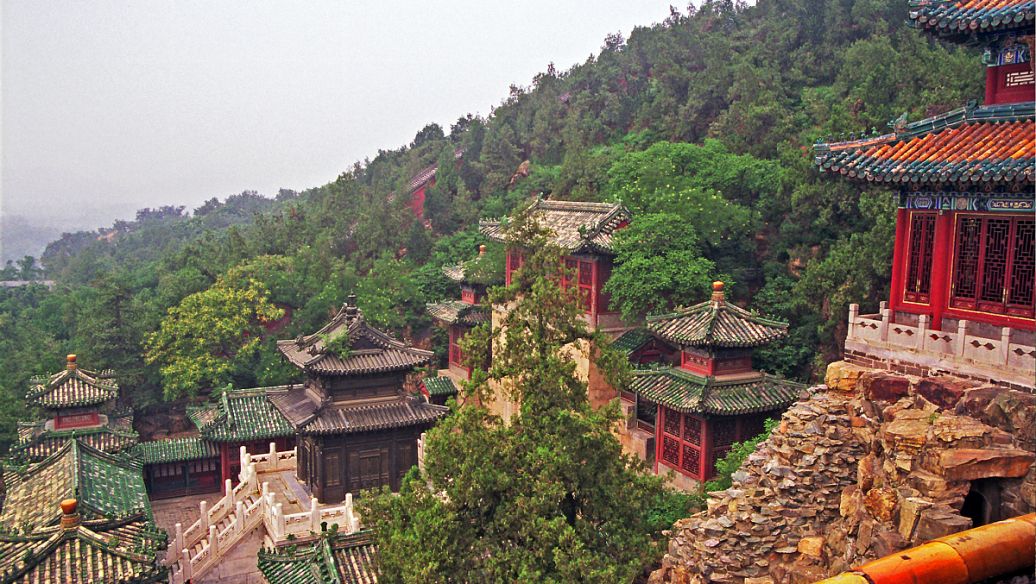 Mount Qingcheng's religious significance dates to the late Eastern Han Dynasty around 142 CE, when the philosopher Zhang Daoling founded the Way of the Celestial Masters here, launching organized Taoism as China's first institutionalized religion. That era is roughly contemporary with the Roman Antonine age, when Marcus Aurelius was meditating on Stoicism in distant Europe. While Roman roads and aqueducts shaped the West, this mist-shrouded peak became the cradle of a wholly different spiritual tradition. In 2000, UNESCO recognized Mount Qingcheng together with Dujiangyan as a single World Heritage Site.
The Front Mountain's architecture embodies Taoist harmony between humanity and nature. Three major temple complexes follow the ridgeline like beads on a string. Tianshi Cave, where Zhang Daoling reportedly meditated, is carved into a cliff face in deliberately rough-hewn simplicity. The Upper Purity Palace unfolds in terraced courtyards on the summit plateau, while the towering Laojun Pavilion, the highest point, frames sweeping views across the Min River plain to Dujiangyan below. Grey tiles and whitewashed walls recede quietly into cedar and bamboo, refusing to compete with the landscape.
The mountain's enduring motto, "Qingcheng's serenity outranks all under heaven," captures an aesthetic that may remind European travelers of the contemplative quietude of Benedictine monasteries or the hermitages of Mount Athos. Poets and painters have long pilgrimaged here: Du Fu sheltered here during his 755 CE exile, the Song dynasty writer Lu You composed verses among its groves, and the twentieth-century artist Zhang Daqian lived and painted in its hills for years. Carved inscriptions and ancient statuary survive along the trails, and resident Taoist priests still maintain daily rituals.
Mount Qingcheng is reached by high-speed rail from Chengdu in roughly thirty minutes, followed by a short local bus or taxi to the scenic entrance. A combined ticket for Front and Back Mountain costs around 150 RMB; cable cars reduce the steep Front Mountain climb for those pressed for time. The Front Mountain circuit takes three to four hours, while Back Mountain demands a full day and reasonable fitness. Summer temperatures average several degrees lower than Chengdu, making the mountain a popular escape from the basin's notorious humidity.
For Western travelers familiar with Europe's great cathedrals and abbeys, Mount Qingcheng offers something the West never developed: an 1,800-year-old living religious landscape where philosophers, monks, and pilgrims have shaped both stone and forest. It pairs naturally with a visit to the Dujiangyan Irrigation System, a 2,200-year-old engineering marvel built by the same ancient state. Whether you come for the architecture, the philosophy of the Tao Te Ching, or simply the waterfalls and ancient cedar groves of Back Mountain, this remains one of China's most rewarding day trips from Chengdu.
Mount Qingcheng's religious significance dates to the late Eastern Han Dynasty around 142 CE, when the philosopher Zhang Daoling founded the Way of the Celestial Masters here, launching organized Taoism as China's first institutionalized religion. That era is roughly contemporary with the Roman Antonine age, when Marcus Aurelius was meditating on Stoicism in distant Europe. While Roman roads and aqueducts shaped the West, this mist-shrouded peak became the cradle of a wholly different spiritual tradition. In 2000, UNESCO recognized Mount Qingcheng together with Dujiangyan as a single World Heritage Site.
The Front Mountain's architecture embodies Taoist harmony between humanity and nature. Three major temple complexes follow the ridgeline like beads on a string. Tianshi Cave, where Zhang Daoling reportedly meditated, is carved into a cliff face in deliberately rough-hewn simplicity. The Upper Purity Palace unfolds in terraced courtyards on the summit plateau, while the towering Laojun Pavilion, the highest point, frames sweeping views across the Min River plain to Dujiangyan below. Grey tiles and whitewashed walls recede quietly into cedar and bamboo, refusing to compete with the landscape.
The mountain's enduring motto, "Qingcheng's serenity outranks all under heaven," captures an aesthetic that may remind European travelers of the contemplative quietude of Benedictine monasteries or the hermitages of Mount Athos. Poets and painters have long pilgrimaged here: Du Fu sheltered here during his 755 CE exile, the Song dynasty writer Lu You composed verses among its groves, and the twentieth-century artist Zhang Daqian lived and painted in its hills for years. Carved inscriptions and ancient statuary survive along the trails, and resident Taoist priests still maintain daily rituals.
Mount Qingcheng is reached by high-speed rail from Chengdu in roughly thirty minutes, followed by a short local bus or taxi to the scenic entrance. A combined ticket for Front and Back Mountain costs around 150 RMB; cable cars reduce the steep Front Mountain climb for those pressed for time. The Front Mountain circuit takes three to four hours, while Back Mountain demands a full day and reasonable fitness. Summer temperatures average several degrees lower than Chengdu, making the mountain a popular escape from the basin's notorious humidity.
For Western travelers familiar with Europe's great cathedrals and abbeys, Mount Qingcheng offers something the West never developed: an 1,800-year-old living religious landscape where philosophers, monks, and pilgrims have shaped both stone and forest. It pairs naturally with a visit to the Dujiangyan Irrigation System, a 2,200-year-old engineering marvel built by the same ancient state. Whether you come for the architecture, the philosophy of the Tao Te Ching, or simply the waterfalls and ancient cedar groves of Back Mountain, this remains one of China's most rewarding day trips from Chengdu.