Dujiangyan Irrigation System
⭐ 4.60
Dujiangyan Irrigation System, Dujiangyan City, Sichuan Province, China
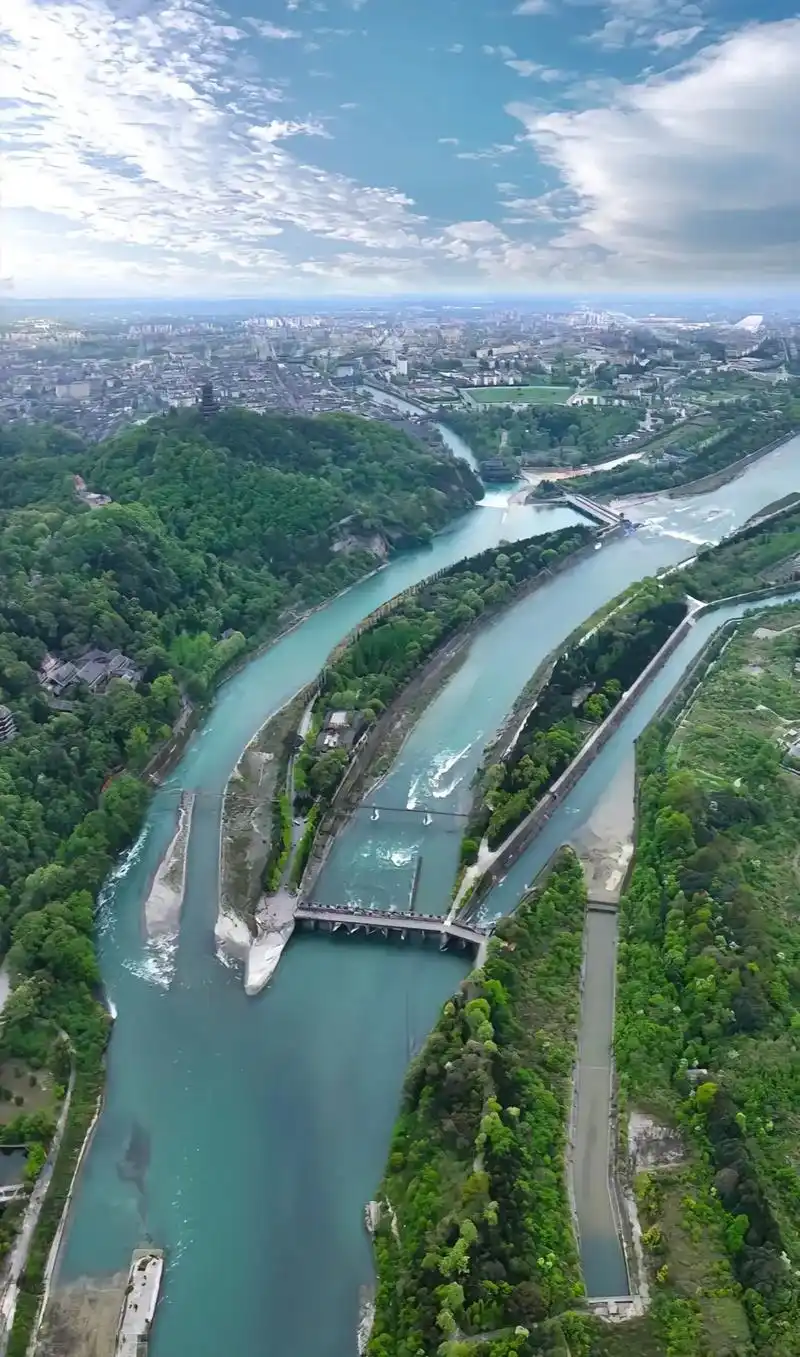 The Dujiangyan Irrigation System dates to 256 BC, the twilight of China's Warring States era, when the Qin kingdom was about to unify the empire for the first time. To grasp its staggering age, consider this: engineers broke ground when Rome was still a young republic and more than a century before Alexander the Great's conquests reached their peak. Provincial governor Li Bing and his son confronted the Min River's chronic rampages, which routinely devastated the Chengdu Basin. Without modern surveying tools, they relied on the six-character mantra "deep dredging, low weirs," a philosophy of working with nature rather than against it. The result was a triumph that has outlasted dynasties, survived devastating earthquakes, and still irrigates over 11 million mu of farmland today.
Unlike Rome's Pont du Gard aqueduct or the colossal dam projects of the modern age, Dujiangyan accomplishes monumental flood control without a single barrier wall. The Fish Mouth Levee splits the Min River into inner and outer channels, automatically diverting six parts of flow inland during dry seasons and four parts during floods. The Flying Sand Weir exploits the physics of curved currents to fling silt harmlessly out of the system, while the narrow Bottle-Neck Channel acts as a natural throttle governing how much water enters the Chengdu Plain. Together they achieve the legendary four-six water split and two-eight sediment discharge—a ratio so precise it has held steady for over two millennia.
Beyond its engineering marvels, the site hums with spiritual weight. The Erwang Temple honors Li Bing and his son as deified guardians of the waters, where pilgrims still burn incense hoping for flood protection. Fulong Temple commemorates the legend of Li Bing subduing a malevolent river dragon, weaving engineering triumph into mythic drama. The swaying Anlan Rope Bridge, spanning the river's inner and outer channels, has linked communities for centuries. By nightfall, the historic South Bridge and surrounding pavilions glow with intricate lighting, including the celebrated "blue tears" effect shimmering along the water—an atmospheric finale that lingers long after visitors leave.
The grounds open from 8:00 AM to 6:00 PM during peak season, with admission at 80 yuan (free for visitors over 65). Advance booking through the official WeChat booking platform is required. For the smoothest experience, enter via Qin Yan Tower and walk counterclockwise downhill—a 2.5 to 3-hour loop that rewards you with sweeping river panoramas while sparing your knees. An audio guide or human guide is strongly recommended; without context, the engineering brilliance can easily slip past unnoticed amid the crowds.
Summer, especially June through August, is prime visiting time when the Min River swells and the four-six water split is most dramatic. April brings the Qingming Water-Releasing Festival, a centuries-old ritual marking the start of the irrigation season—worth timing your trip around if possible. After exploring, walk to the South Bridge for its glittering night views, then wander into the old town's West Street for local specialties like scallion rolls, sweet-water noodles, and refreshing ice jelly. Wear sturdy non-slip shoes—stone paths turn slick when wet—and pack a rain jacket in summer. Crowds peak in July and August, so early mornings or shoulder months make for a calmer visit.
The Dujiangyan Irrigation System dates to 256 BC, the twilight of China's Warring States era, when the Qin kingdom was about to unify the empire for the first time. To grasp its staggering age, consider this: engineers broke ground when Rome was still a young republic and more than a century before Alexander the Great's conquests reached their peak. Provincial governor Li Bing and his son confronted the Min River's chronic rampages, which routinely devastated the Chengdu Basin. Without modern surveying tools, they relied on the six-character mantra "deep dredging, low weirs," a philosophy of working with nature rather than against it. The result was a triumph that has outlasted dynasties, survived devastating earthquakes, and still irrigates over 11 million mu of farmland today.
Unlike Rome's Pont du Gard aqueduct or the colossal dam projects of the modern age, Dujiangyan accomplishes monumental flood control without a single barrier wall. The Fish Mouth Levee splits the Min River into inner and outer channels, automatically diverting six parts of flow inland during dry seasons and four parts during floods. The Flying Sand Weir exploits the physics of curved currents to fling silt harmlessly out of the system, while the narrow Bottle-Neck Channel acts as a natural throttle governing how much water enters the Chengdu Plain. Together they achieve the legendary four-six water split and two-eight sediment discharge—a ratio so precise it has held steady for over two millennia.
Beyond its engineering marvels, the site hums with spiritual weight. The Erwang Temple honors Li Bing and his son as deified guardians of the waters, where pilgrims still burn incense hoping for flood protection. Fulong Temple commemorates the legend of Li Bing subduing a malevolent river dragon, weaving engineering triumph into mythic drama. The swaying Anlan Rope Bridge, spanning the river's inner and outer channels, has linked communities for centuries. By nightfall, the historic South Bridge and surrounding pavilions glow with intricate lighting, including the celebrated "blue tears" effect shimmering along the water—an atmospheric finale that lingers long after visitors leave.
The grounds open from 8:00 AM to 6:00 PM during peak season, with admission at 80 yuan (free for visitors over 65). Advance booking through the official WeChat booking platform is required. For the smoothest experience, enter via Qin Yan Tower and walk counterclockwise downhill—a 2.5 to 3-hour loop that rewards you with sweeping river panoramas while sparing your knees. An audio guide or human guide is strongly recommended; without context, the engineering brilliance can easily slip past unnoticed amid the crowds.
Summer, especially June through August, is prime visiting time when the Min River swells and the four-six water split is most dramatic. April brings the Qingming Water-Releasing Festival, a centuries-old ritual marking the start of the irrigation season—worth timing your trip around if possible. After exploring, walk to the South Bridge for its glittering night views, then wander into the old town's West Street for local specialties like scallion rolls, sweet-water noodles, and refreshing ice jelly. Wear sturdy non-slip shoes—stone paths turn slick when wet—and pack a rain jacket in summer. Crowds peak in July and August, so early mornings or shoulder months make for a calmer visit.