Zhaxigang Temple
⭐ 3.80
Zhaxigang Temple, Amdo County, Nagqu City, Tibet Autonomous Region, China
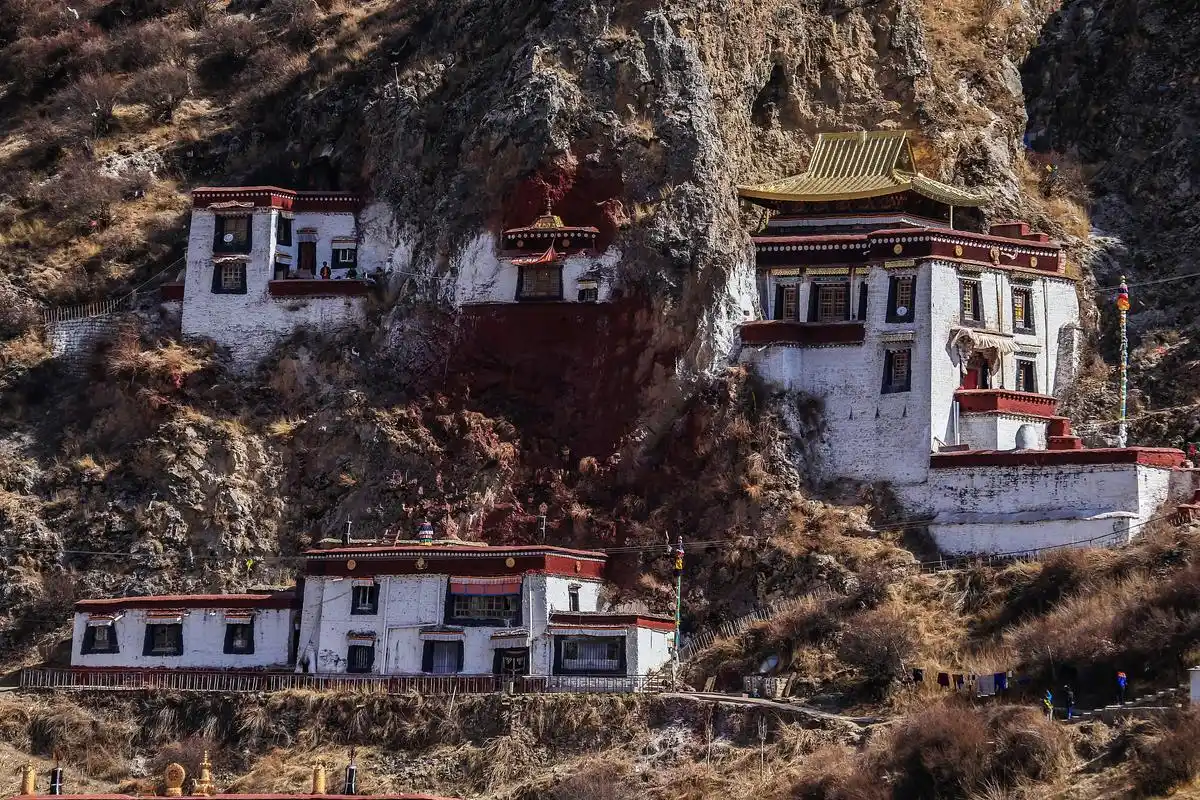 Built in the 17th century by the Ladakhi lama Dacangwa, Zhaxi Gang Monastery emerged during the chaotic twilight of the once-mighty Guge Kingdom. When the dynasty collapsed and frontier skirmishes reshaped western Tibet, monastic communities often had to defend themselves as well as tend to spiritual matters—much like the fortified abbeys of medieval Europe that served simultaneously as refuges and seats of learning. Zhaxi Gang is one of the few surviving examples of this dual religious-military model on the Tibetan plateau, embodying centuries of cultural exchange between Ladakh, Kashmir, and the Tibetan heartland.
What makes Zhaxi Gang especially striking is its almost castle-like perimeter: a deep moat, rammed-earth walls, and corner watchtowers form a complete defensive system almost unheard of among Tibetan monasteries, which more often resemble the sprawling palace-monasteries of Lhasa or the gilded temples of Bhutan. The main hall follows a cruciform plan with folded corners, symbolizing Mount Meru, the cosmic axis at the center of Buddhist cosmology. Its interior layout hews closely to building traditions of the Tibetan Empire (7th–9th centuries), making it a rare architectural time capsule for scholars and travelers alike.
Within its weathered walls, Zhaxi Gang safeguards an extraordinary artistic inheritance: a revered Jowo Buddha statue—modeled on the famous twelve-year-old Shakyamuni image at Lhasa's Jokhang—alongside several Kadampa-style stupas and more than a thousand thangkas. Spanning multiple centuries and stylistic schools, these works blend Kashmiri, Ladakhi, and central Tibetan aesthetics, much as the Romanesque portals of Lombardy reveal Byzantine and Carolingian influences. For art historians tracing the evolution of Himalayan Buddhist art, Zhaxi Gang offers remarkable evidence under one seldom-visited roof.
The monastery lies about 58 kilometers—a two-hour drive—from Shiquanhe, the dusty capital of Ali Prefecture, with the second half of the journey on rough mountain tracks that demand a sturdy 4WD vehicle and ideally a small convoy. There is no entrance fee, but visitors must be self-sufficient: bring snacks, plenty of drinking water, and warm layers, since hot water, restaurants, and lodging are simply absent. At roughly 4,300 meters, the thin air can be punishing; acclimatize in Shiquanhe for a day or two beforehand and avoid alcohol the night before.
Photography is best at sunrise or late afternoon, when the monastery, fluttering prayer flags, and surrounding snow peaks form a tableau both intimate and epic—reminiscent of the remoteness of a Saharan caravanserai or a Hebridean island monastery. Allow half a day, and observe customary etiquette: keep voices low, do not touch sacred objects, and never step over prayer flags. Zhaxi Gang is not a destination in itself but an unforgettable reward for those committed to the long Ali Grand North Route—skip it if traveling with elderly companions or very young children.
Built in the 17th century by the Ladakhi lama Dacangwa, Zhaxi Gang Monastery emerged during the chaotic twilight of the once-mighty Guge Kingdom. When the dynasty collapsed and frontier skirmishes reshaped western Tibet, monastic communities often had to defend themselves as well as tend to spiritual matters—much like the fortified abbeys of medieval Europe that served simultaneously as refuges and seats of learning. Zhaxi Gang is one of the few surviving examples of this dual religious-military model on the Tibetan plateau, embodying centuries of cultural exchange between Ladakh, Kashmir, and the Tibetan heartland.
What makes Zhaxi Gang especially striking is its almost castle-like perimeter: a deep moat, rammed-earth walls, and corner watchtowers form a complete defensive system almost unheard of among Tibetan monasteries, which more often resemble the sprawling palace-monasteries of Lhasa or the gilded temples of Bhutan. The main hall follows a cruciform plan with folded corners, symbolizing Mount Meru, the cosmic axis at the center of Buddhist cosmology. Its interior layout hews closely to building traditions of the Tibetan Empire (7th–9th centuries), making it a rare architectural time capsule for scholars and travelers alike.
Within its weathered walls, Zhaxi Gang safeguards an extraordinary artistic inheritance: a revered Jowo Buddha statue—modeled on the famous twelve-year-old Shakyamuni image at Lhasa's Jokhang—alongside several Kadampa-style stupas and more than a thousand thangkas. Spanning multiple centuries and stylistic schools, these works blend Kashmiri, Ladakhi, and central Tibetan aesthetics, much as the Romanesque portals of Lombardy reveal Byzantine and Carolingian influences. For art historians tracing the evolution of Himalayan Buddhist art, Zhaxi Gang offers remarkable evidence under one seldom-visited roof.
The monastery lies about 58 kilometers—a two-hour drive—from Shiquanhe, the dusty capital of Ali Prefecture, with the second half of the journey on rough mountain tracks that demand a sturdy 4WD vehicle and ideally a small convoy. There is no entrance fee, but visitors must be self-sufficient: bring snacks, plenty of drinking water, and warm layers, since hot water, restaurants, and lodging are simply absent. At roughly 4,300 meters, the thin air can be punishing; acclimatize in Shiquanhe for a day or two beforehand and avoid alcohol the night before.
Photography is best at sunrise or late afternoon, when the monastery, fluttering prayer flags, and surrounding snow peaks form a tableau both intimate and epic—reminiscent of the remoteness of a Saharan caravanserai or a Hebridean island monastery. Allow half a day, and observe customary etiquette: keep voices low, do not touch sacred objects, and never step over prayer flags. Zhaxi Gang is not a destination in itself but an unforgettable reward for those committed to the long Ali Grand North Route—skip it if traveling with elderly companions or very young children.