Nagqu Museum
⭐ 4.20
Nagqu Museum, Nagqu City, Tibet Autonomous Region, China
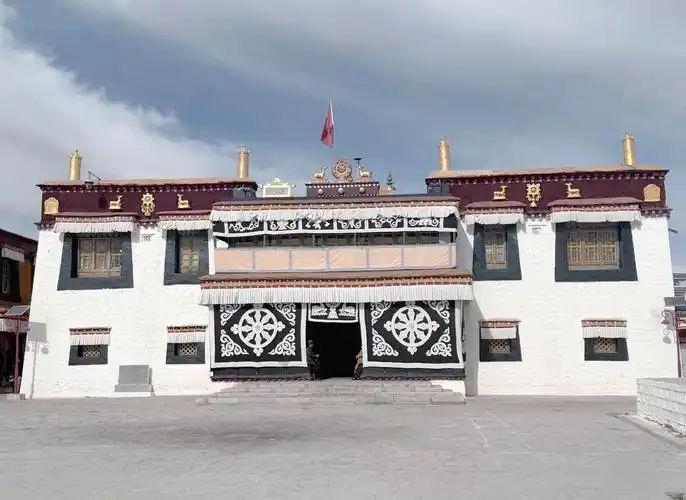 The Naqu Museum traces Changtang civilization from prehistoric times to the present through excavated artifacts and immersive scene reconstructions. Highlights include ceramic vessels from the Zhajiong Ema cemetery, roughly a millennium old, whose forms and motifs reveal early cross-cultural exchanges between the Tibetan Plateau and the Chinese heartland. Like the Silk Road caravans that once linked China to the Mediterranean, the ancient salt roads radiating from Nagqu carried goods, ideas, and people across Central Asia, positioning the Changtang not as a remote wilderness but as a vital node in the broader Eurasian cultural network.
The museum's architecture thoughtfully balances traditional Tibetan aesthetics with contemporary exhibition design. Warm earth tones, generous natural light, and well-paced circulation create a contemplative atmosphere comparable to European national museums such as Vienna's Weltmuseum or Edinburgh's National Museum of Scotland. The interior is organized into three coherent sections—historical artifacts, living intangible heritage, and themed exhibitions—woven into a clear narrative flow that guides visitors from the ancient past toward the vibrant cultural traditions still practiced today.
What truly distinguishes Naqu Museum is its commitment to living cultural display. The nationally protected Nima Xiangqin tradition is presented in full ceremonial regalia, accompanied by original vocal recordings that let visitors hear the resonant, archaic melodies of northern Tibetan folk dance. The Bange Changlu folk songs are performed in their raw, traditional form, capturing the sweeping, open-air quality of grassland music. Together, these exhibits offer a window into intangible heritage that, much like Ireland's traditional music sessions or Spain's flamenco peñas, is both fragile and deeply treasured.
A dedicated Black Tent gallery evokes the world of Tibetan nomads through displays of yak-wool textiles, hand-spinning wheels, and traditional implements. The black tent itself, woven from yak hair to withstand the brutal winds of the 4,500-meter plateau, represents a remarkable example of vernacular architecture. It stands alongside the Mongolian ger and the Sami lavvu of northern Scandinavia as one of the great pastoralist structures of the northern hemisphere. Together, these artifacts illustrate the ingenious survival strategies of one of Earth's last great nomadic traditions.
Admission is free, with special provisions for visitors over 60, persons with disabilities, and active-duty military personnel. Plan to spend two to three hours to fully appreciate the collections. Bilingual guided tours in Tibetan and Mandarin are available and can be reserved through official channels. Foreign travelers must carry a valid passport and Tibet Entry Permit, and arrangements must be made through a licensed local travel agency registered with cultural and tourism authorities. Afterward, stroll through the nearby Tibetan-style commercial streets for an authentic taste of contemporary grassland life.
A visit to the Naqu Museum rewards travelers with a layered understanding of one of the most extreme yet culturally rich environments on earth. Begin in the historical artifacts section and move chronologically toward the intangible heritage galleries—this approach builds from material culture into living tradition. Please respect museum rules: flash photography is prohibited, and some fragile artifacts may be viewed only from a distance. The Changtang Plateau lies above 4,500 meters, so travelers should acclimatize in a lower-altitude city for a day or two beforehand.
The Naqu Museum traces Changtang civilization from prehistoric times to the present through excavated artifacts and immersive scene reconstructions. Highlights include ceramic vessels from the Zhajiong Ema cemetery, roughly a millennium old, whose forms and motifs reveal early cross-cultural exchanges between the Tibetan Plateau and the Chinese heartland. Like the Silk Road caravans that once linked China to the Mediterranean, the ancient salt roads radiating from Nagqu carried goods, ideas, and people across Central Asia, positioning the Changtang not as a remote wilderness but as a vital node in the broader Eurasian cultural network.
The museum's architecture thoughtfully balances traditional Tibetan aesthetics with contemporary exhibition design. Warm earth tones, generous natural light, and well-paced circulation create a contemplative atmosphere comparable to European national museums such as Vienna's Weltmuseum or Edinburgh's National Museum of Scotland. The interior is organized into three coherent sections—historical artifacts, living intangible heritage, and themed exhibitions—woven into a clear narrative flow that guides visitors from the ancient past toward the vibrant cultural traditions still practiced today.
What truly distinguishes Naqu Museum is its commitment to living cultural display. The nationally protected Nima Xiangqin tradition is presented in full ceremonial regalia, accompanied by original vocal recordings that let visitors hear the resonant, archaic melodies of northern Tibetan folk dance. The Bange Changlu folk songs are performed in their raw, traditional form, capturing the sweeping, open-air quality of grassland music. Together, these exhibits offer a window into intangible heritage that, much like Ireland's traditional music sessions or Spain's flamenco peñas, is both fragile and deeply treasured.
A dedicated Black Tent gallery evokes the world of Tibetan nomads through displays of yak-wool textiles, hand-spinning wheels, and traditional implements. The black tent itself, woven from yak hair to withstand the brutal winds of the 4,500-meter plateau, represents a remarkable example of vernacular architecture. It stands alongside the Mongolian ger and the Sami lavvu of northern Scandinavia as one of the great pastoralist structures of the northern hemisphere. Together, these artifacts illustrate the ingenious survival strategies of one of Earth's last great nomadic traditions.
Admission is free, with special provisions for visitors over 60, persons with disabilities, and active-duty military personnel. Plan to spend two to three hours to fully appreciate the collections. Bilingual guided tours in Tibetan and Mandarin are available and can be reserved through official channels. Foreign travelers must carry a valid passport and Tibet Entry Permit, and arrangements must be made through a licensed local travel agency registered with cultural and tourism authorities. Afterward, stroll through the nearby Tibetan-style commercial streets for an authentic taste of contemporary grassland life.
A visit to the Naqu Museum rewards travelers with a layered understanding of one of the most extreme yet culturally rich environments on earth. Begin in the historical artifacts section and move chronologically toward the intangible heritage galleries—this approach builds from material culture into living tradition. Please respect museum rules: flash photography is prohibited, and some fragile artifacts may be viewed only from a distance. The Changtang Plateau lies above 4,500 meters, so travelers should acclimatize in a lower-altitude city for a day or two beforehand.