Damxung Grassland
⭐ 4.50
Damxung County, Nagqu City, Tibet Autonomous Region, China
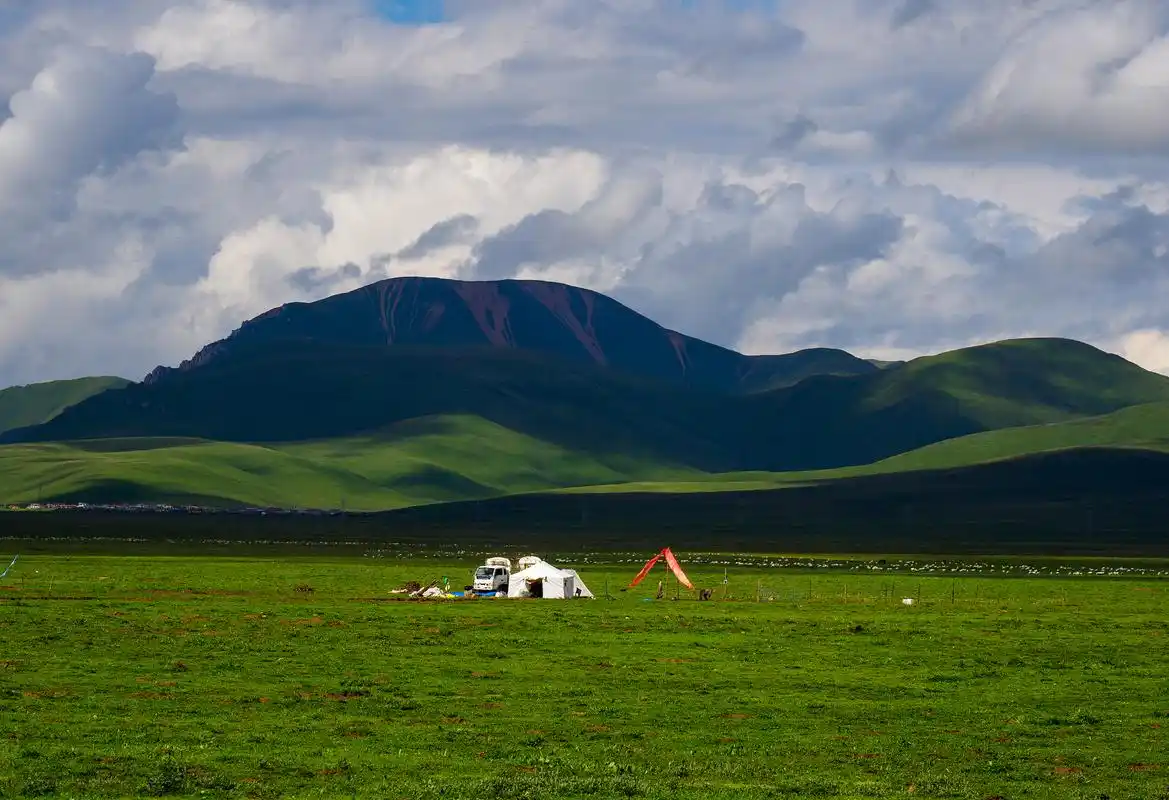 For millennia, the Dangxiong Grassland has sustained Tibetan nomads whose way of life predates recorded history. The high-altitude pastures of kobresia and needle grasses recall the steppes traversed by Genghis Khan's cavalry, yet they remain the lifeblood of pastoral communities today. Like the Scottish Highlands before the Clearances or the Pyrenean summer transhumance, this is a working landscape where herding families still move seasonally with their yaks, sheep, and horses. The grassland carries ancient meaning, and visitors entering here step onto one of Earth's last intact nomadic frontiers.
The scenery layers vertically in a way few landscapes can match. From the 7,111-meter crown of Nyainqêntanglha—comparable in scale to Mont Blanc—down through silver glaciers, emerald wetlands, and turquoise alpine lakes, every elevation tells a different story. Namtso, one of Tibet's great sacred lakes and the world's highest large saltwater body, glitters at the eastern edge. The Nagela Pass at 5,190 meters serves as nature's grandstand, offering a sweeping view that rivals the panoramas from Switzerland's Jungfraujoch or Norway's Atlantic Road.
August brings the annual Dangxiong Horse Racing Festival, a highlight of the Tibetan calendar when herders gather in traditional dress. Visitors can witness yak racing, Tibetan wrestling (similar in spirit to Highland games), and the swirling circle dances called guozhuang. The festival offers a rare chance to join in nomadic life—helping with daily herding tasks, learning about cordyceps harvesting, or simply sharing butter tea in a black yak-hair tent. Such immersion is increasingly rare globally, comparable only to Mongolia's Naadam or perhaps a Sami gathering in northern Scandinavia.
Dangxiong lies just 162 kilometers north of Lhasa along the G109 National Highway and the Qinghai-Tibet Railway, both engineering marvels that traverse permafrost at elevations exceeding 4,500 meters. Most travelers self-drive or hire a 4WD vehicle, passing the steaming Yangbajain geothermal hot springs en route—worth a soak before continuing. The grassland itself is open-access and free of charge, though entering the Namtso Lake scenic area requires a separate ticket. There is no formal visitor infrastructure; the landscape is meant to be experienced on foot or from your vehicle.
At 4,200 to 4,500 meters, Dangxiong sits higher than any European mountain pass or North American ski resort. Altitude sickness is a genuine concern; travelers should spend at least two days acclimatizing in Lhasa before ascending. Summer temperatures swing dramatically—from pleasant mid-teens Celsius by day to near-freezing at night—so a down jacket or windbreaker is essential even in July and August. UV radiation is intense at this altitude; sunscreen, sunglasses, and lip balm are non-negotiable. Bring sufficient food and water, as services along the route are sparse.
For millennia, the Dangxiong Grassland has sustained Tibetan nomads whose way of life predates recorded history. The high-altitude pastures of kobresia and needle grasses recall the steppes traversed by Genghis Khan's cavalry, yet they remain the lifeblood of pastoral communities today. Like the Scottish Highlands before the Clearances or the Pyrenean summer transhumance, this is a working landscape where herding families still move seasonally with their yaks, sheep, and horses. The grassland carries ancient meaning, and visitors entering here step onto one of Earth's last intact nomadic frontiers.
The scenery layers vertically in a way few landscapes can match. From the 7,111-meter crown of Nyainqêntanglha—comparable in scale to Mont Blanc—down through silver glaciers, emerald wetlands, and turquoise alpine lakes, every elevation tells a different story. Namtso, one of Tibet's great sacred lakes and the world's highest large saltwater body, glitters at the eastern edge. The Nagela Pass at 5,190 meters serves as nature's grandstand, offering a sweeping view that rivals the panoramas from Switzerland's Jungfraujoch or Norway's Atlantic Road.
August brings the annual Dangxiong Horse Racing Festival, a highlight of the Tibetan calendar when herders gather in traditional dress. Visitors can witness yak racing, Tibetan wrestling (similar in spirit to Highland games), and the swirling circle dances called guozhuang. The festival offers a rare chance to join in nomadic life—helping with daily herding tasks, learning about cordyceps harvesting, or simply sharing butter tea in a black yak-hair tent. Such immersion is increasingly rare globally, comparable only to Mongolia's Naadam or perhaps a Sami gathering in northern Scandinavia.
Dangxiong lies just 162 kilometers north of Lhasa along the G109 National Highway and the Qinghai-Tibet Railway, both engineering marvels that traverse permafrost at elevations exceeding 4,500 meters. Most travelers self-drive or hire a 4WD vehicle, passing the steaming Yangbajain geothermal hot springs en route—worth a soak before continuing. The grassland itself is open-access and free of charge, though entering the Namtso Lake scenic area requires a separate ticket. There is no formal visitor infrastructure; the landscape is meant to be experienced on foot or from your vehicle.
At 4,200 to 4,500 meters, Dangxiong sits higher than any European mountain pass or North American ski resort. Altitude sickness is a genuine concern; travelers should spend at least two days acclimatizing in Lhasa before ascending. Summer temperatures swing dramatically—from pleasant mid-teens Celsius by day to near-freezing at night—so a down jacket or windbreaker is essential even in July and August. UV radiation is intense at this altitude; sunscreen, sunglasses, and lip balm are non-negotiable. Bring sufficient food and water, as services along the route are sparse.