Nagqu Tibetan-style Folk Houses
⭐ 3.50
Nagqu Tibetan-style Folk Houses, Nagqu City, Tibet Autonomous Region, China
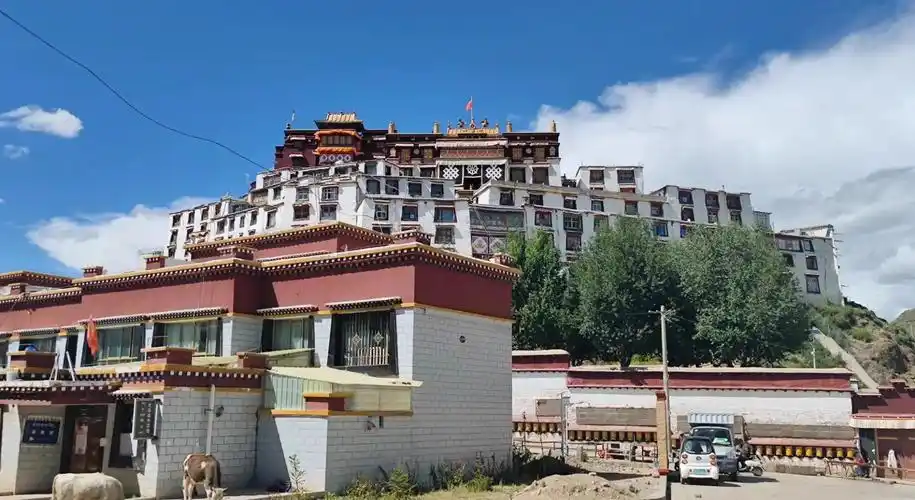 Tibetan plateau nomads have refined their domestic architecture over more than a thousand years, drawing on survival strategies familiar to high-altitude cultures from the Swiss Alps to the Andean highlands. The yak-hair tent, comparable to the Sami lavvu of Scandinavia or the Mongolian ger, allows families to migrate seasonally with their herds—a portable solution perfected for unforgiving terrain above 4,500 meters. The permanent stone tower houses, known as diaofang, evolved later as semi-agricultural communities took root near sacred lakes, layering geological permanence atop the same principles of thermal mass and wind resistance found in Alpine farmsteads and medieval European keeps.
The tents rest on simple wooden frames draped in felted yak wool, with strategic openings at the apex to admit daylight and vent hearth smoke. The diaofang are marvels of vernacular engineering: walls taper upward from a thick base, constructed of stone, rammed earth, or compressed turf, creating the distinctive waisted silhouette reminiscent of Tuscan farmhouses or Pyrenean watchtowers. Inside, vermilion walls blaze with painted mandalas and lotus motifs, while hand-carved wooden cabinetry and butter-lamp altars anchor the family to a daily devotional rhythm that has endured for generations.
These dwellings are far more than shelter—they are vessels of devotion. White, red, yellow, and black, the four sacred hues of Vajrayana Buddhism, appear throughout, each color carrying ritual meaning. The tent's interior partitions space efficiently: hearth, altar, and sheepskin sleeping zone coexist within arm's reach. In tower houses, open courtyards channel light and air while flat roofs serve as working platforms for drying barley and fodder, embodying the Buddhist harmony between human dwelling and surrounding cosmos. Locals maintain reverence for nearby sacred mountains and lakes, seamlessly weaving pilgrimage into everyday chores.
Wenbunancun, on the shores of Dangreyong Tso in Nima County, has emerged as the prime homestay destination, its all-stone cottages now welcoming curious travelers seeking authentic immersion. Note that the average elevation of 4,500 meters poses genuine altitude-sickness risk—ascend gradually, hydrate constantly, and avoid strenuous exertion on arrival. Spring and autumn offer the mildest weather, though temperatures swing wildly between day and night. Hire a private driver or guide, as public transport is limited and some sites remain scattered or modernized beyond recognition.
Respect is essential when entering these homes. Never step on door thresholds, always receive offerings with both hands, walk clockwise around religious structures and stupas, and ask permission before photographing indoor altars or shrines. Locals are generally warm toward respectful visitors, and following these customs enriches the encounter considerably. Travelers who embrace the silence and slow pace of plateau life often find the experience quietly transformative.
Beyond the architecture, Nagqu opens a window onto a landscape shared with the famed Selin Tso and Nam Tso—Tibet's celebrated pilgrimage lakes—and vast grasslands where nomads still tend yak herds much as their ancestors did. Few places on Earth combine such raw natural beauty with a living, breathing cultural heritage. For travelers seeking the road less traveled, a Tibetan home in Nagqu offers the rare privilege of stepping inside one of humanity's most enduring high-altitude civilizations.
Tibetan plateau nomads have refined their domestic architecture over more than a thousand years, drawing on survival strategies familiar to high-altitude cultures from the Swiss Alps to the Andean highlands. The yak-hair tent, comparable to the Sami lavvu of Scandinavia or the Mongolian ger, allows families to migrate seasonally with their herds—a portable solution perfected for unforgiving terrain above 4,500 meters. The permanent stone tower houses, known as diaofang, evolved later as semi-agricultural communities took root near sacred lakes, layering geological permanence atop the same principles of thermal mass and wind resistance found in Alpine farmsteads and medieval European keeps.
The tents rest on simple wooden frames draped in felted yak wool, with strategic openings at the apex to admit daylight and vent hearth smoke. The diaofang are marvels of vernacular engineering: walls taper upward from a thick base, constructed of stone, rammed earth, or compressed turf, creating the distinctive waisted silhouette reminiscent of Tuscan farmhouses or Pyrenean watchtowers. Inside, vermilion walls blaze with painted mandalas and lotus motifs, while hand-carved wooden cabinetry and butter-lamp altars anchor the family to a daily devotional rhythm that has endured for generations.
These dwellings are far more than shelter—they are vessels of devotion. White, red, yellow, and black, the four sacred hues of Vajrayana Buddhism, appear throughout, each color carrying ritual meaning. The tent's interior partitions space efficiently: hearth, altar, and sheepskin sleeping zone coexist within arm's reach. In tower houses, open courtyards channel light and air while flat roofs serve as working platforms for drying barley and fodder, embodying the Buddhist harmony between human dwelling and surrounding cosmos. Locals maintain reverence for nearby sacred mountains and lakes, seamlessly weaving pilgrimage into everyday chores.
Wenbunancun, on the shores of Dangreyong Tso in Nima County, has emerged as the prime homestay destination, its all-stone cottages now welcoming curious travelers seeking authentic immersion. Note that the average elevation of 4,500 meters poses genuine altitude-sickness risk—ascend gradually, hydrate constantly, and avoid strenuous exertion on arrival. Spring and autumn offer the mildest weather, though temperatures swing wildly between day and night. Hire a private driver or guide, as public transport is limited and some sites remain scattered or modernized beyond recognition.
Respect is essential when entering these homes. Never step on door thresholds, always receive offerings with both hands, walk clockwise around religious structures and stupas, and ask permission before photographing indoor altars or shrines. Locals are generally warm toward respectful visitors, and following these customs enriches the encounter considerably. Travelers who embrace the silence and slow pace of plateau life often find the experience quietly transformative.
Beyond the architecture, Nagqu opens a window onto a landscape shared with the famed Selin Tso and Nam Tso—Tibet's celebrated pilgrimage lakes—and vast grasslands where nomads still tend yak herds much as their ancestors did. Few places on Earth combine such raw natural beauty with a living, breathing cultural heritage. For travelers seeking the road less traveled, a Tibetan home in Nagqu offers the rare privilege of stepping inside one of humanity's most enduring high-altitude civilizations.