Wild Elephant Valley
⭐ 4.30
Jinuoshan Township, Jinghong City, Xishuangbanna Dai Autonomous Prefecture, Yunnan Province, China
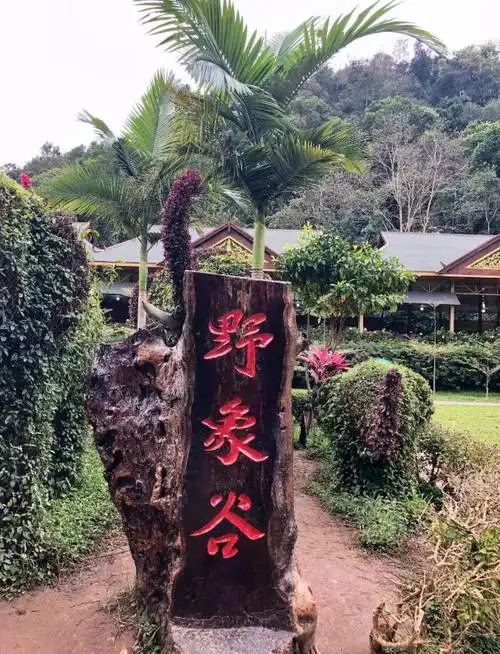 Set within Xishuangbanna, a region whose steamy, palm-draped landscapes feel more akin to northern Thailand than to the rest of China, Wild Elephant Valley occupies roughly 370 hectares of the larger Mengyang National Nature Reserve. Established as one of China's first national eco-tourism demonstration zones, it carries a mission similar in spirit to Africa's Kruger or India's Jim Corbett reserves: protecting an iconic megafauna while welcoming carefully managed public access. The valley has become known as the "bridge between humans and Asian elephants," channelling conservation funds and awareness into one of the continent's most threatened environments.
The signature feature is a 2,280-metre elevated boardwalk that weaves between the trunks of towering rain-forest giants, lifting visitors some 20 metres above the forest floor. Think of it as a high-tech cousin to a Victorian-era treetop walkway, designed to keep both elephants and people undisturbed. Look down for footprints, dung, and feeding signs; the early morning, before 8:30 a.m., offers the best chance of spotting a wild herd moving through the undergrowth. A 2,263-metre cable car complements the walkway, gliding above the valley in roughly 30 minutes and providing panoramic views that rival any scenic alpine ride in Switzerland.
Beyond pure wildlife observation, the park functions as a living classroom. The on-site Asian Elephant Museum, the daily "Elephant School" performances, and supervised feeding and photography with rescued, habituated elephants echo the educational ethos of modern European zoos such as Berlin's Tierpark or Vienna's Schönbrunn. Surrounding attractions, including a butterfly house, an aviary, an orchid garden, and a small rainforest amphitheatre, broaden the experience into a full-day immersion in tropical biodiversity that visitors from temperate climates rarely encounter.
Practical planning is straightforward. Entrance costs around 58–60 RMB, with a return cable-car ride approximately 70 RMB; combined tickets purchased online in advance offer the best value. From Jinghong, allow 4–5 hours total, either by pre-booked shuttle, taxi, or hired car. The dry season from November through April dramatically increases the odds of wild-elephant sightings, while May to October brings heavier rains that keep the forest emerald but make wildlife more elusive.
Two final notes make the difference between a good visit and a great one. First, flash photography is prohibited, and feeding or attempting to approach any wild elephant is strictly forbidden—both for visitor safety and animal welfare. Second, sturdy walking shoes, insect repellent, and a light rain jacket are essential kit, regardless of season. Done right, a morning at Wild Elephant Valley delivers something rare in modern tourism: the genuine possibility of locking eyes with one of the world's last wild Asian elephants, just metres away across a screen of mist and bamboo.
Set within Xishuangbanna, a region whose steamy, palm-draped landscapes feel more akin to northern Thailand than to the rest of China, Wild Elephant Valley occupies roughly 370 hectares of the larger Mengyang National Nature Reserve. Established as one of China's first national eco-tourism demonstration zones, it carries a mission similar in spirit to Africa's Kruger or India's Jim Corbett reserves: protecting an iconic megafauna while welcoming carefully managed public access. The valley has become known as the "bridge between humans and Asian elephants," channelling conservation funds and awareness into one of the continent's most threatened environments.
The signature feature is a 2,280-metre elevated boardwalk that weaves between the trunks of towering rain-forest giants, lifting visitors some 20 metres above the forest floor. Think of it as a high-tech cousin to a Victorian-era treetop walkway, designed to keep both elephants and people undisturbed. Look down for footprints, dung, and feeding signs; the early morning, before 8:30 a.m., offers the best chance of spotting a wild herd moving through the undergrowth. A 2,263-metre cable car complements the walkway, gliding above the valley in roughly 30 minutes and providing panoramic views that rival any scenic alpine ride in Switzerland.
Beyond pure wildlife observation, the park functions as a living classroom. The on-site Asian Elephant Museum, the daily "Elephant School" performances, and supervised feeding and photography with rescued, habituated elephants echo the educational ethos of modern European zoos such as Berlin's Tierpark or Vienna's Schönbrunn. Surrounding attractions, including a butterfly house, an aviary, an orchid garden, and a small rainforest amphitheatre, broaden the experience into a full-day immersion in tropical biodiversity that visitors from temperate climates rarely encounter.
Practical planning is straightforward. Entrance costs around 58–60 RMB, with a return cable-car ride approximately 70 RMB; combined tickets purchased online in advance offer the best value. From Jinghong, allow 4–5 hours total, either by pre-booked shuttle, taxi, or hired car. The dry season from November through April dramatically increases the odds of wild-elephant sightings, while May to October brings heavier rains that keep the forest emerald but make wildlife more elusive.
Two final notes make the difference between a good visit and a great one. First, flash photography is prohibited, and feeding or attempting to approach any wild elephant is strictly forbidden—both for visitor safety and animal welfare. Second, sturdy walking shoes, insect repellent, and a light rain jacket are essential kit, regardless of season. Done right, a morning at Wild Elephant Valley delivers something rare in modern tourism: the genuine possibility of locking eyes with one of the world's last wild Asian elephants, just metres away across a screen of mist and bamboo.