Zhonglie Shrine
⭐ 3.80
Zhonglie Shrine, Hengshan County, Hengyang City, Hunan Province, China
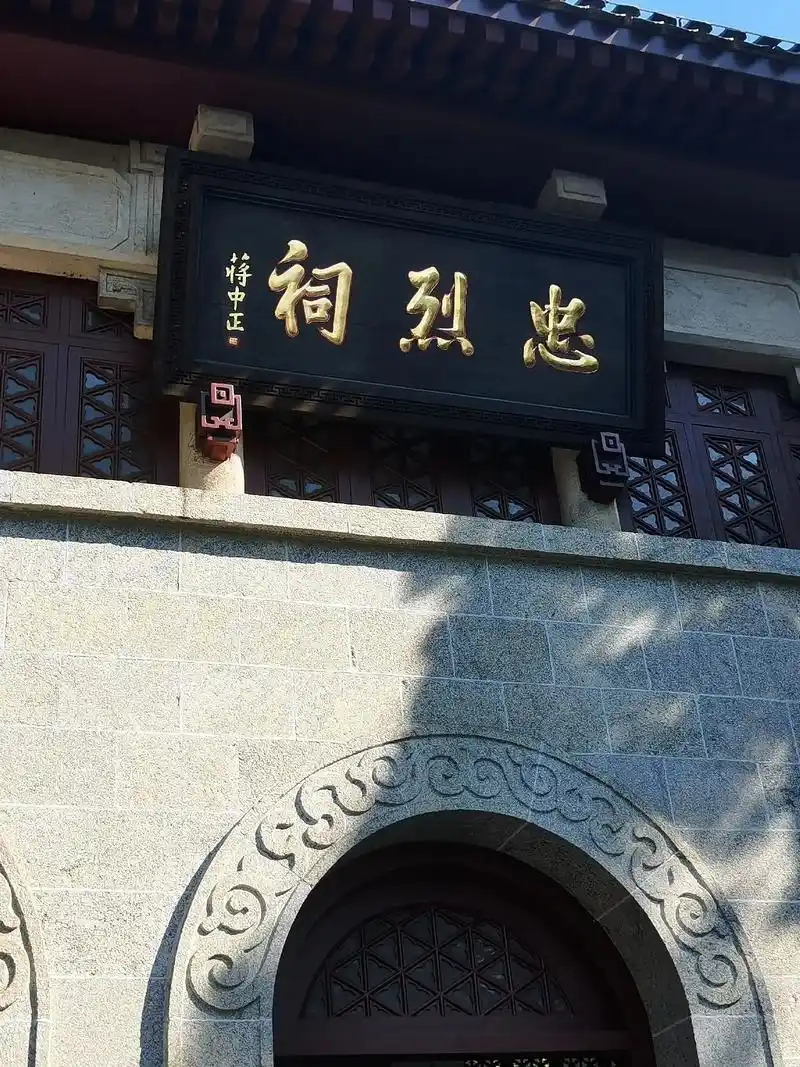 Constructed between 1938 and 1943 during the darkest chapter of the Second Sino-Japanese War—a conflict that cost an estimated 20 million Chinese lives—the Martyrs' Shrine commemorates Nationalist (KMT) soldiers who perished defending their homeland against Imperial Japanese occupation. Comparable in scale and intent to Western counterparts such as the Menin Gate in Ypres, the American Cemetery at Normandy, or Australia's Shrine of Remembrance in Melbourne, the site is mainland China's only major memorial recognizing the sacrifices of the Nationalist armed forces. The central "7-7 Monument" references the Marco Polo Bridge Incident of July 7, 1937, the flashpoint that escalated tensions into full-scale war.
Spanning roughly 15 hectares, the shrine's layout mirrors the grand axial symmetry of Sun Yat-sen's Mausoleum in Nanjing, itself a 1929 fusion of classical Chinese temple design and Western neoclassical proportion. Visitors pass through a triple-arched granite gateway bearing calligraphic inscription by General Xue Yue, one of China's most decorated anti-Japanese commanders, before ascending past the "7-7" memorial—five oversized stone artillery shells flanking a smaller sixth, symbolizing the unity of the Han, Manchu, Mongolian, Hui, and Tibetan peoples in national defense. The solemn central hall (Xiangtang) is crowned by a plaque inscribed personally by Chiang Kai-shek, with the character for "martyrdom" deliberately missing a single dot—a poetic flourish suggesting that only fire can forge true metal.
Beyond its architectural grandeur, the shrine functions as a national classroom of remembrance. Inside the Memorial Hall, enormous stone steles chronicle the biographies of fallen generals and common soldiers, while a central tablet enshrines the names of dozens of high-ranking officers. A characterless stele in the adjacent pavilion invites visitors to bow in silent tribute. Designated a nationally protected heritage site and an official patriotic education base, the shrine preserves a chapter of Chinese memory seldom emphasized in mainland narratives dominated by the Communist struggle. For travelers tracing the human dimensions of WWII, it offers perspectives found almost nowhere else on Earth.
Admission is included in the Mount Heng scenic area ticket, with no separate fee. The shrine sits a short ten-minute ride from the South Peak (Nanyue) Visitor Center via shuttle bus; private vehicles are not permitted within the scenic zone. Summer opening hours run roughly 8:00 a.m. to 5:30 p.m., with reduced hours in winter. No English-speaking guides are available on-site, so foreign visitors should download an offline translation app or print an English summary in advance. Spring and autumn mornings offer the best lighting, smaller crowds, and a contemplative atmosphere. The complex pairs naturally with a visit to the nearby Grand Temple of Mount Heng, one of southern China's oldest Buddhist sanctuaries.
This is not a leisure stop but a site of genuine gravitas, and visitors are asked to behave accordingly: dress in muted, dark clothing; speak softly; and refrain from laughter, horseplay, or drone photography. Traditional tribute flowers such as white chrysanthemums are appropriate; synthetic plastic offerings should be avoided. Unlike the imperial tombs of Beijing or the bustling Buddhist complexes of central China, the shrine offers a quieter, more somber pilgrimage—one that resonates with the reflective spirit found at Verdun or Thiepval in northern France. For Western travelers seeking to understand the full scope of WWII beyond the European theater, this solemn grove beneath Mount Heng is both an essential and unexpectedly moving stop.
Constructed between 1938 and 1943 during the darkest chapter of the Second Sino-Japanese War—a conflict that cost an estimated 20 million Chinese lives—the Martyrs' Shrine commemorates Nationalist (KMT) soldiers who perished defending their homeland against Imperial Japanese occupation. Comparable in scale and intent to Western counterparts such as the Menin Gate in Ypres, the American Cemetery at Normandy, or Australia's Shrine of Remembrance in Melbourne, the site is mainland China's only major memorial recognizing the sacrifices of the Nationalist armed forces. The central "7-7 Monument" references the Marco Polo Bridge Incident of July 7, 1937, the flashpoint that escalated tensions into full-scale war.
Spanning roughly 15 hectares, the shrine's layout mirrors the grand axial symmetry of Sun Yat-sen's Mausoleum in Nanjing, itself a 1929 fusion of classical Chinese temple design and Western neoclassical proportion. Visitors pass through a triple-arched granite gateway bearing calligraphic inscription by General Xue Yue, one of China's most decorated anti-Japanese commanders, before ascending past the "7-7" memorial—five oversized stone artillery shells flanking a smaller sixth, symbolizing the unity of the Han, Manchu, Mongolian, Hui, and Tibetan peoples in national defense. The solemn central hall (Xiangtang) is crowned by a plaque inscribed personally by Chiang Kai-shek, with the character for "martyrdom" deliberately missing a single dot—a poetic flourish suggesting that only fire can forge true metal.
Beyond its architectural grandeur, the shrine functions as a national classroom of remembrance. Inside the Memorial Hall, enormous stone steles chronicle the biographies of fallen generals and common soldiers, while a central tablet enshrines the names of dozens of high-ranking officers. A characterless stele in the adjacent pavilion invites visitors to bow in silent tribute. Designated a nationally protected heritage site and an official patriotic education base, the shrine preserves a chapter of Chinese memory seldom emphasized in mainland narratives dominated by the Communist struggle. For travelers tracing the human dimensions of WWII, it offers perspectives found almost nowhere else on Earth.
Admission is included in the Mount Heng scenic area ticket, with no separate fee. The shrine sits a short ten-minute ride from the South Peak (Nanyue) Visitor Center via shuttle bus; private vehicles are not permitted within the scenic zone. Summer opening hours run roughly 8:00 a.m. to 5:30 p.m., with reduced hours in winter. No English-speaking guides are available on-site, so foreign visitors should download an offline translation app or print an English summary in advance. Spring and autumn mornings offer the best lighting, smaller crowds, and a contemplative atmosphere. The complex pairs naturally with a visit to the nearby Grand Temple of Mount Heng, one of southern China's oldest Buddhist sanctuaries.
This is not a leisure stop but a site of genuine gravitas, and visitors are asked to behave accordingly: dress in muted, dark clothing; speak softly; and refrain from laughter, horseplay, or drone photography. Traditional tribute flowers such as white chrysanthemums are appropriate; synthetic plastic offerings should be avoided. Unlike the imperial tombs of Beijing or the bustling Buddhist complexes of central China, the shrine offers a quieter, more somber pilgrimage—one that resonates with the reflective spirit found at Verdun or Thiepval in northern France. For Western travelers seeking to understand the full scope of WWII beyond the European theater, this solemn grove beneath Mount Heng is both an essential and unexpectedly moving stop.