Nantong Museum
⭐ 4.50
Haohe Scenic Area, Chongchuan District, Nantong City, Jiangsu Province, China
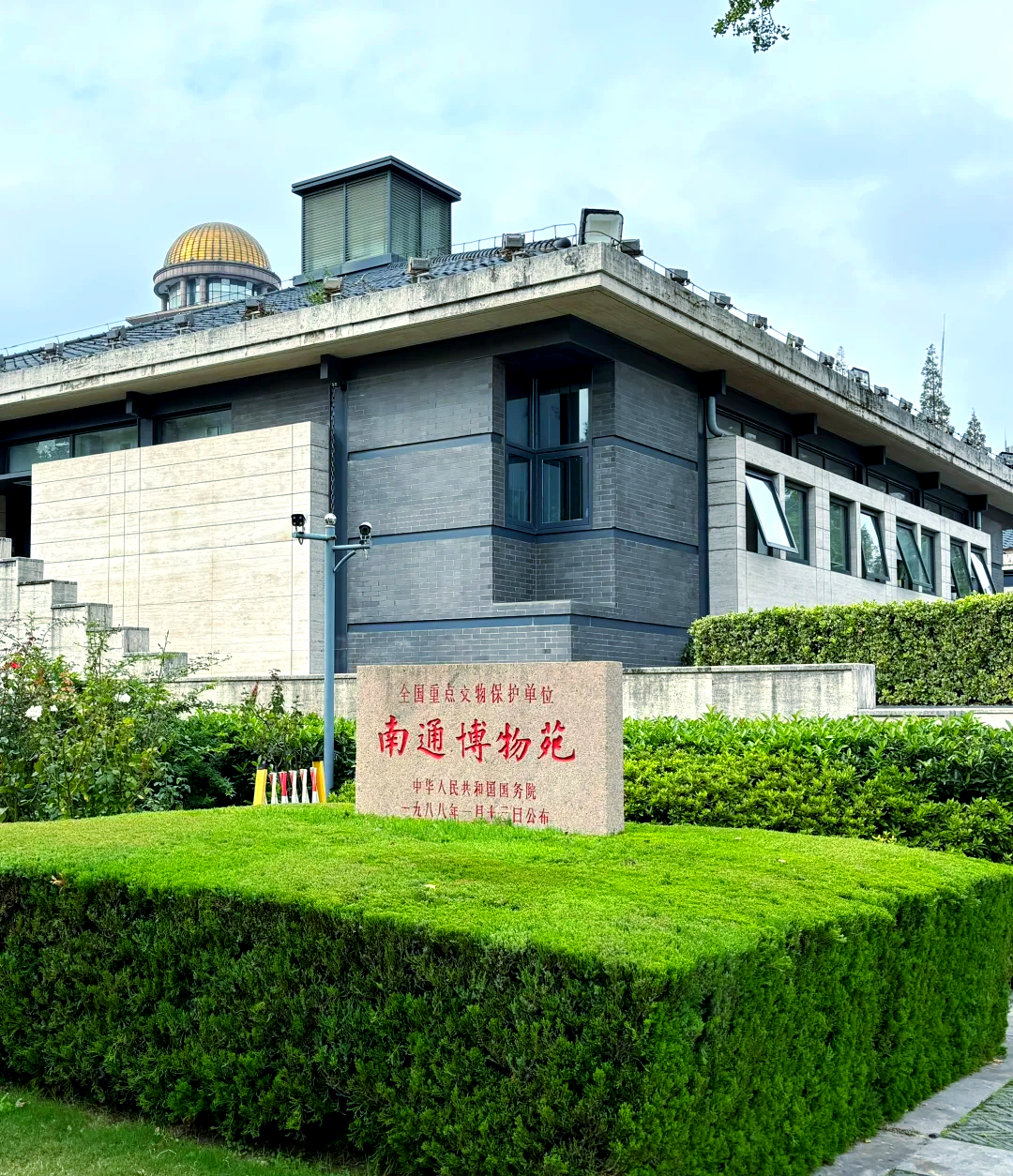 Step back to 1905 — the same year Einstein published his Theory of Special Relativity and Norway gained independence — and you arrive at the birth of modern Chinese museology. Nantong Museum was the brainchild of Zhang Jian, a scholar-turned-industrialist who believed education and enterprise could save a wounded nation after the Boxer Rebellion. Conceived as a public institution rather than a private curiosity cabinet in the European royal tradition, it predated the Republic by six years and became a template that inspired museums across China. Today it stands as a National Key Cultural Heritage Site and a living monument to one man's audacious vision.
The complex's signature is its "garden-museum" fusion, a layout that feels unlike anything in the West. Early pavilions — the Central, South, and North Halls — marry Chinese grey-brick craftsmanship with European arcades and Romanesque arches, a stylistic blend often compared to the eclectic colonial architecture of British India. Nearby, the Hao River Residence (Haonan Bieye), Zhang Jian's former home, is a charming red-brick English country-style villa complete with a clock tower, offering a rare glimpse into the cosmopolitan life of a turn-of-the-century Chinese magnate.
Culturally, the museum is often called the "cradle of Chinese museums," a phrase echoed by scholars and heritage experts. Two permanent exhibitions anchor the narrative: "The Spirit of Zhang Jian," which traces his pioneering trinity of industry, education, and charity, and "Tides of the River and Sea," an exploration of Nantong's deep maritime heritage. Together they frame a story rarely told to Western visitors — that of grassroots, locally-driven modernization years before Mao or the Reform Era.
Practicalities are refreshingly simple. The museum sits at 19 Haonan Road, Chongchuan District. Gardens open daily 6:00–18:00; indoor halls run 9:00–17:00 (last entry 16:30), closed Mondays. The park and New Hall are free with real-name booking via the WeChat account "Nantong Museum"; combined tickets for the Hao River Residence and South Hall cost just 10 yuan. Buses 5, 8, 12, and 51 stop nearby, and free parking is available. Allow roughly three hours.
Plan to arrive around 9:30, when the light is soft and crowds thin. Begin at the New Hall for context, then take the ticketed route through the South Hall and Zhang Jian's former residence to see personal artifacts up close. End by wandering the garden itself — the century-old wisteria arbor, the zigzagging Nine-Turn Bridge, and the Tendong Waterside Pavilion, all named by Zhang himself, reward unhurried exploration. With outdoor fossils, antique farm tools, and shaded lawns, this is a place where children learn without realizing it and adults leave quietly moved — a rare find in modern China.
Step back to 1905 — the same year Einstein published his Theory of Special Relativity and Norway gained independence — and you arrive at the birth of modern Chinese museology. Nantong Museum was the brainchild of Zhang Jian, a scholar-turned-industrialist who believed education and enterprise could save a wounded nation after the Boxer Rebellion. Conceived as a public institution rather than a private curiosity cabinet in the European royal tradition, it predated the Republic by six years and became a template that inspired museums across China. Today it stands as a National Key Cultural Heritage Site and a living monument to one man's audacious vision.
The complex's signature is its "garden-museum" fusion, a layout that feels unlike anything in the West. Early pavilions — the Central, South, and North Halls — marry Chinese grey-brick craftsmanship with European arcades and Romanesque arches, a stylistic blend often compared to the eclectic colonial architecture of British India. Nearby, the Hao River Residence (Haonan Bieye), Zhang Jian's former home, is a charming red-brick English country-style villa complete with a clock tower, offering a rare glimpse into the cosmopolitan life of a turn-of-the-century Chinese magnate.
Culturally, the museum is often called the "cradle of Chinese museums," a phrase echoed by scholars and heritage experts. Two permanent exhibitions anchor the narrative: "The Spirit of Zhang Jian," which traces his pioneering trinity of industry, education, and charity, and "Tides of the River and Sea," an exploration of Nantong's deep maritime heritage. Together they frame a story rarely told to Western visitors — that of grassroots, locally-driven modernization years before Mao or the Reform Era.
Practicalities are refreshingly simple. The museum sits at 19 Haonan Road, Chongchuan District. Gardens open daily 6:00–18:00; indoor halls run 9:00–17:00 (last entry 16:30), closed Mondays. The park and New Hall are free with real-name booking via the WeChat account "Nantong Museum"; combined tickets for the Hao River Residence and South Hall cost just 10 yuan. Buses 5, 8, 12, and 51 stop nearby, and free parking is available. Allow roughly three hours.
Plan to arrive around 9:30, when the light is soft and crowds thin. Begin at the New Hall for context, then take the ticketed route through the South Hall and Zhang Jian's former residence to see personal artifacts up close. End by wandering the garden itself — the century-old wisteria arbor, the zigzagging Nine-Turn Bridge, and the Tendong Waterside Pavilion, all named by Zhang himself, reward unhurried exploration. With outdoor fossils, antique farm tools, and shaded lawns, this is a place where children learn without realizing it and adults leave quietly moved — a rare find in modern China.