Nantianmen
⭐ 3.80
Nantianmen Scenic Area, Hengshan County, Hengyang City, Hunan Province, China
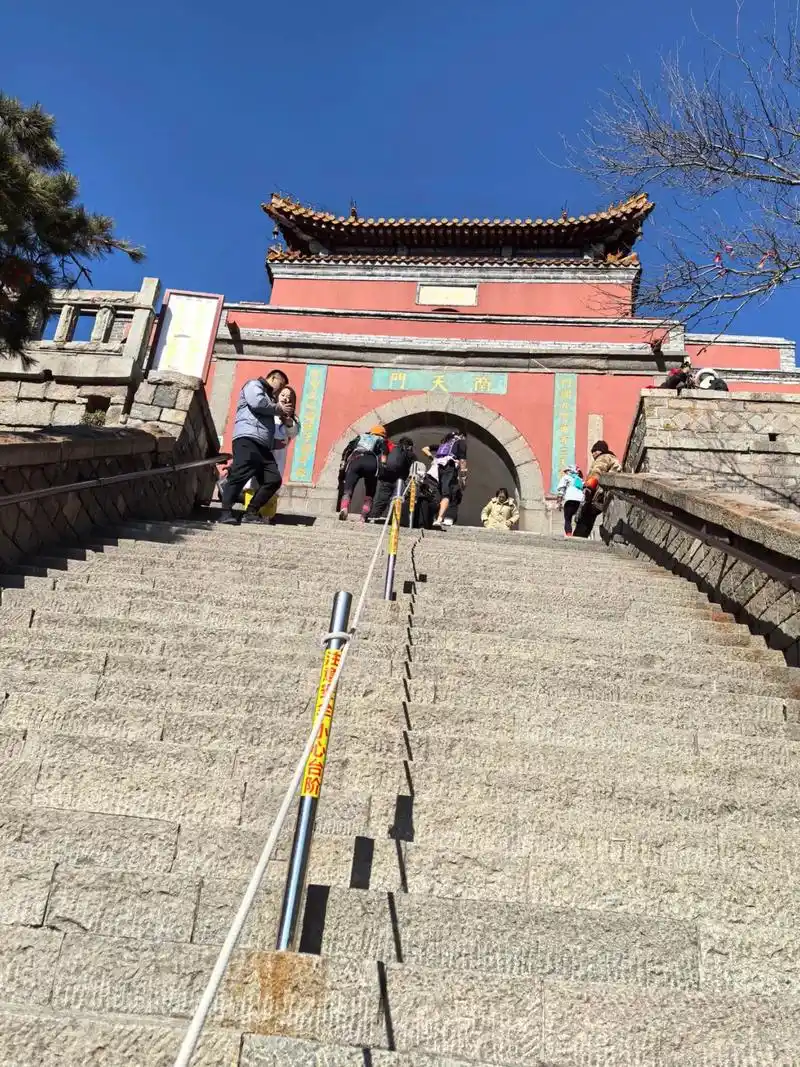 South Heavenly Gate has guarded the final approach to Mount Heng's 4,290-foot Zhurong Peak since at least the Tang Dynasty, functioning much like an Alpine or Andean pass that funneled travelers through a single dramatic threshold. Mount Heng itself ranks among China's Five Sacred Mountains, venerated since the 4th century BCE—a tradition as old as the pilgrims who climbed Mount Olympus in antiquity. For Taoists, this stone gate represents the entrance to the legendary "Third Heavenly Grotto," one of the immortal realms. Countless poets over the centuries have left inscriptions here, comparing the crossing to Dante's passage from Inferno to Paradise.
Unlike the multi-hall palace-style South Heavenly Gate atop Mount Tai—China's eastern sacred peak—this version is a single, austere stone paifang, or ceremonial archway, crafted entirely from local bluestone. The central lintel bears the three characters for "South Heavenly Gate" (Nantianmen), filled with cinnabar red, while the side panels are inscribed with "Passing Clouds" and "Bestowing Rain"—flanking blessings for travelers. Its minimalist silhouette blends seamlessly with the rugged ridgeline, the kind of restrained natural integration that recalls ancient Roman milestones or Shinto torii gates in Japan, where structure and landscape become inseparable.
A celebrated couplet etched beside the gate reads: "The gate connects to the imperial throne three thousand miles away; the road ascends as the foremost pass into the clouds." This single verse captures why the spot holds such gravitational pull for pilgrims across Buddhist, Taoist, and Confucian traditions alike—China's so-called "three teachings in harmony" all converge here. For outdoor enthusiasts, the gate marks the psychological midpoint of any Mount Heng ascent; for spiritual seekers, it offers the rare physical sensation of stepping across a sacred boundary between worldly and celestial realms, an experience Western visitors may recognize from pilgrim trails at Santiago de Compostela in Spain.
The gate lies about 4 km from Nanyue Town, just past the historic Ye Hou Academy, and is included in Mount Heng's main entrance ticket (around 110 yuan). There is no separate admission fee. Note that the old cable car was dismantled for reconstruction in late 2025, so visitors currently reach Half Mountain Pavilion by sightseeing shuttle bus (about 78 yuan one-way) and continue on foot. Book shuttle tickets in advance through WeChat or Alipay. Sturdy hiking boots are essential, and a windproof jacket is wise—summit temperatures run 8–10°C cooler than the valley below.
The most rewarding visits come in April through June, when wild azaleas carpet the slopes in pink and crimson, or in September through November, when crisp autumn clarity reveals views extending for miles. Cloud seas are most likely between 5:30 and 7:00 a.m., while winter brings spectacular rime-ice formations. The classic route runs shuttle to Half Mountain Pavilion, then a steady hike through the gate and onward to Zhurong Peak—though less ambitious visitors can combine shuttle and rebuilt cable sections once they reopen. Few experiences in China blend such concentrated natural drama, profound religious heritage, and a genuine sense of crossing into another world.
South Heavenly Gate has guarded the final approach to Mount Heng's 4,290-foot Zhurong Peak since at least the Tang Dynasty, functioning much like an Alpine or Andean pass that funneled travelers through a single dramatic threshold. Mount Heng itself ranks among China's Five Sacred Mountains, venerated since the 4th century BCE—a tradition as old as the pilgrims who climbed Mount Olympus in antiquity. For Taoists, this stone gate represents the entrance to the legendary "Third Heavenly Grotto," one of the immortal realms. Countless poets over the centuries have left inscriptions here, comparing the crossing to Dante's passage from Inferno to Paradise.
Unlike the multi-hall palace-style South Heavenly Gate atop Mount Tai—China's eastern sacred peak—this version is a single, austere stone paifang, or ceremonial archway, crafted entirely from local bluestone. The central lintel bears the three characters for "South Heavenly Gate" (Nantianmen), filled with cinnabar red, while the side panels are inscribed with "Passing Clouds" and "Bestowing Rain"—flanking blessings for travelers. Its minimalist silhouette blends seamlessly with the rugged ridgeline, the kind of restrained natural integration that recalls ancient Roman milestones or Shinto torii gates in Japan, where structure and landscape become inseparable.
A celebrated couplet etched beside the gate reads: "The gate connects to the imperial throne three thousand miles away; the road ascends as the foremost pass into the clouds." This single verse captures why the spot holds such gravitational pull for pilgrims across Buddhist, Taoist, and Confucian traditions alike—China's so-called "three teachings in harmony" all converge here. For outdoor enthusiasts, the gate marks the psychological midpoint of any Mount Heng ascent; for spiritual seekers, it offers the rare physical sensation of stepping across a sacred boundary between worldly and celestial realms, an experience Western visitors may recognize from pilgrim trails at Santiago de Compostela in Spain.
The gate lies about 4 km from Nanyue Town, just past the historic Ye Hou Academy, and is included in Mount Heng's main entrance ticket (around 110 yuan). There is no separate admission fee. Note that the old cable car was dismantled for reconstruction in late 2025, so visitors currently reach Half Mountain Pavilion by sightseeing shuttle bus (about 78 yuan one-way) and continue on foot. Book shuttle tickets in advance through WeChat or Alipay. Sturdy hiking boots are essential, and a windproof jacket is wise—summit temperatures run 8–10°C cooler than the valley below.
The most rewarding visits come in April through June, when wild azaleas carpet the slopes in pink and crimson, or in September through November, when crisp autumn clarity reveals views extending for miles. Cloud seas are most likely between 5:30 and 7:00 a.m., while winter brings spectacular rime-ice formations. The classic route runs shuttle to Half Mountain Pavilion, then a steady hike through the gate and onward to Zhurong Peak—though less ambitious visitors can combine shuttle and rebuilt cable sections once they reopen. Few experiences in China blend such concentrated natural drama, profound religious heritage, and a genuine sense of crossing into another world.