Grinding Mirror Platform
⭐ 4.50
Grinding Mirror Platform, Hengshan County, Hengyang City, Hunan Province, China
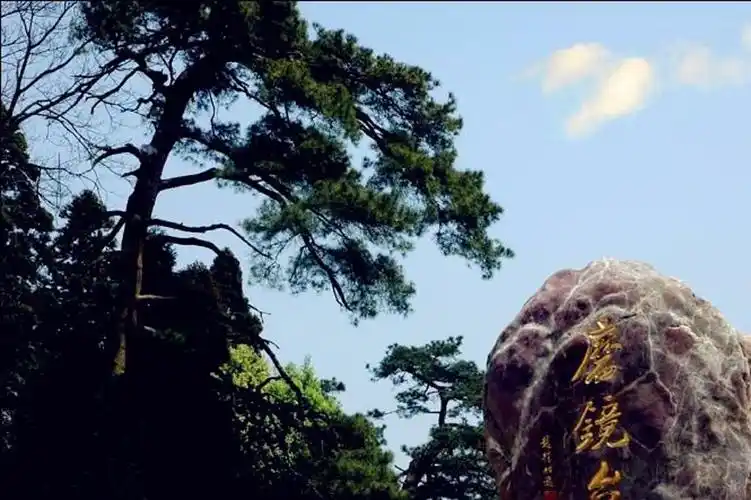 The Mirror-Polishing Platform's fame rests on one of Chinese Buddhism's most celebrated parables. In the 7th century—the era when Muhammad was founding Islam and Anglo-Saxon missionaries were converting England—Zen Master Huairang spent years here polishing a brick, telling his disciple Mazu Daoyi that no amount of polishing makes a brick into a mirror, so mere seated meditation cannot produce Buddhahood. This startling reversal became one of Zen's foundational koans, comparable in impact to Martin Luther's challenge to Catholic ritual in 16th-century Europe. The teaching gave birth to the "sudden enlightenment" doctrine that would eventually sweep across East Asia.
The site's architectural centerpiece is the Mazu Ancestral Hall, built to honor the disciple whose enlightenment reshaped Eastern Buddhism. Climbing the slope, visitors encounter the dignified Seventh Patriarch Pagoda—a Tang-era brick-and-stone reliquary marking Mazu's remains, with stacked eaves reminiscent of early Japanese pagodas at Horyu-ji near Nara. The complex is dotted with cliff-side inscriptions and meditation pavilions whose restraint echoes the Zen aesthetic later embraced by Japanese tea masters. Wandering these quiet courtyards, one feels the same contemplative stillness found at ancient European monasteries like Montserrat outside Barcelona.
Adding an unexpected chapter to its spiritual legacy, the platform became a strategic hub during the Second Sino-Japanese War (1938–1944)—a period contemporary with the Blitz in London and the preparations for D-Day in France. Nationalist leader Chiang Kai-shek and his wife Soong Mei-ling held military conferences here, with their residence, the He Mansion, still standing as an intriguing East-meets-West villa blending Chinese timber framing with European decorative touches. Beside it lies a labyrinth of cleverly engineered air-raid tunnels, a tangible reminder that even sacred mountains were reshaped by modern warfare.
Perched at roughly 600 meters on Mount Heng's mid-slope—one of China's five sacred mountains and the southern counterpart to Mount Tai—the platform enjoys a cool, forested microclimate. Centuries-old pines and maples frame ancient stone paths, while mountain streams tumble past mossy boulders. A purpose-built viewing terrace opens onto sweeping vistas of Hengshan's jagged peaks, where sunrise and sea-of-clouds displays rival the famous views at Huangshan or even parts of the Alps. The fusion of stone, forest, and distant mist captures the very essence of Chinese mountain landscape painting.
The Mirror-Polishing Platform is included with the standard Mount Heng admission ticket (100 RMB), so no separate fee is required. Visitors should ride the eco-friendly shuttle bus (78 RMB) from the main entrance, which drops them directly at the site—saving the steep climb for later exploration. Allow roughly 1.5 to 2 hours to fully absorb the temples, pagoda, wartime residence, and tunnels. Comfortable walking shoes are essential, as are layers; mountain weather shifts quickly. The site can easily be paired with the nearby Shangfeng Temple and the summit of Zhurong Peak, the highest point of the range.
For Western travelers, the platform offers something rare: a single compact site where 1,300 years of religious innovation, classical architecture, and 20th-century geopolitical drama converge against a backdrop of sublime mountain scenery. Few places in the world let you trace such a continuous arc—from a Tang-dynasty monk's pointed parable to Chiang Kai-shek's war councils—without leaving a hillside path. Whether you're a student of Buddhism, a history enthusiast, or simply a lover of striking landscapes, this corner of Hunan rewards curiosity with quiet revelation.
The Mirror-Polishing Platform's fame rests on one of Chinese Buddhism's most celebrated parables. In the 7th century—the era when Muhammad was founding Islam and Anglo-Saxon missionaries were converting England—Zen Master Huairang spent years here polishing a brick, telling his disciple Mazu Daoyi that no amount of polishing makes a brick into a mirror, so mere seated meditation cannot produce Buddhahood. This startling reversal became one of Zen's foundational koans, comparable in impact to Martin Luther's challenge to Catholic ritual in 16th-century Europe. The teaching gave birth to the "sudden enlightenment" doctrine that would eventually sweep across East Asia.
The site's architectural centerpiece is the Mazu Ancestral Hall, built to honor the disciple whose enlightenment reshaped Eastern Buddhism. Climbing the slope, visitors encounter the dignified Seventh Patriarch Pagoda—a Tang-era brick-and-stone reliquary marking Mazu's remains, with stacked eaves reminiscent of early Japanese pagodas at Horyu-ji near Nara. The complex is dotted with cliff-side inscriptions and meditation pavilions whose restraint echoes the Zen aesthetic later embraced by Japanese tea masters. Wandering these quiet courtyards, one feels the same contemplative stillness found at ancient European monasteries like Montserrat outside Barcelona.
Adding an unexpected chapter to its spiritual legacy, the platform became a strategic hub during the Second Sino-Japanese War (1938–1944)—a period contemporary with the Blitz in London and the preparations for D-Day in France. Nationalist leader Chiang Kai-shek and his wife Soong Mei-ling held military conferences here, with their residence, the He Mansion, still standing as an intriguing East-meets-West villa blending Chinese timber framing with European decorative touches. Beside it lies a labyrinth of cleverly engineered air-raid tunnels, a tangible reminder that even sacred mountains were reshaped by modern warfare.
Perched at roughly 600 meters on Mount Heng's mid-slope—one of China's five sacred mountains and the southern counterpart to Mount Tai—the platform enjoys a cool, forested microclimate. Centuries-old pines and maples frame ancient stone paths, while mountain streams tumble past mossy boulders. A purpose-built viewing terrace opens onto sweeping vistas of Hengshan's jagged peaks, where sunrise and sea-of-clouds displays rival the famous views at Huangshan or even parts of the Alps. The fusion of stone, forest, and distant mist captures the very essence of Chinese mountain landscape painting.
The Mirror-Polishing Platform is included with the standard Mount Heng admission ticket (100 RMB), so no separate fee is required. Visitors should ride the eco-friendly shuttle bus (78 RMB) from the main entrance, which drops them directly at the site—saving the steep climb for later exploration. Allow roughly 1.5 to 2 hours to fully absorb the temples, pagoda, wartime residence, and tunnels. Comfortable walking shoes are essential, as are layers; mountain weather shifts quickly. The site can easily be paired with the nearby Shangfeng Temple and the summit of Zhurong Peak, the highest point of the range.
For Western travelers, the platform offers something rare: a single compact site where 1,300 years of religious innovation, classical architecture, and 20th-century geopolitical drama converge against a backdrop of sublime mountain scenery. Few places in the world let you trace such a continuous arc—from a Tang-dynasty monk's pointed parable to Chiang Kai-shek's war councils—without leaving a hillside path. Whether you're a student of Buddhism, a history enthusiast, or simply a lover of striking landscapes, this corner of Hunan rewards curiosity with quiet revelation.