Zhurong Peak
⭐ 4.60
Zhurong Peak, Hengshan County, Hengyang City, Hunan Province, China
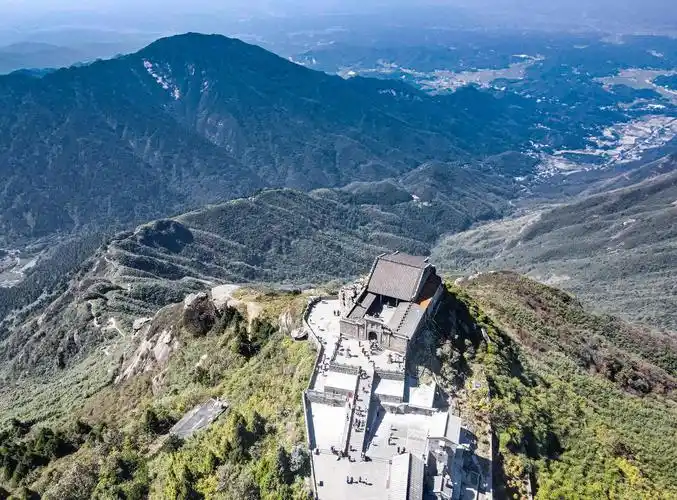 Zhurong Peak crowns Mount Heng, or Hengshan, the southernmost of China's Five Great Mountains—a sacred lineage that stretches back over 4,000 years, predating the Roman Empire. Long before pilgrims climbed, ancient Chinese believed this summit belonged to Zhurong, the fire god who, like the Greek Hephaestus or Roman Vulcan, ruled flame and the southern realms. His burial here gave rise to a worship tradition that blends Daoism, Buddhism, and Confucianism—a syncretism as striking as that found at Montserrat or Mont Saint-Michel in Europe. Even the Tang Dynasty poet Du Fu once noted that the southern peak stood alone in splendor, and to this day Zhurong remains the spiritual totem of "Five Mountains, One Unrivaled Beauty."
The architectural highlight is the Zhurong Temple at the summit, a Ming Dynasty stone structure capped with iron tiles—a clever engineering solution that has weathered four centuries of mountain storms. Constructed during the same era as Shakespeare's London, this compact sanctuary houses altars to three faiths, its incense smoke curling continuously into the high-altitude air. Nearby, the Moon-Viewing Terrace offers the finest panorama of surrounding peaks and the silver thread of the Xiang River below, while the Sun-Viewing Terrace is the legendary spot for sunrise, where the sun seems to lift itself directly from a tumbling ocean of cloud.
En route, pilgrims pass through a landscape layered with history: the ancient Shangfeng Temple, the symbolic South Heavenly Gate—comparable in spirit to a sacred threshold like the Torii gates of Japan or the chapel portals of Santiago de Compostela—and the charming Immortal's Bridge. The Zeng Guofan Ancient Path, named for the 19th-century statesman who once climbed here, winds past cliff inscriptions including the auspicious "Longevity as Long as Southern Mountain." These stone carvings function much like medieval European pilgrims' marks, each one a prayer made permanent in granite.
The mountain reveals a different personality each season. April through June cloaks the slopes in wild azalea blossoms, while summer brings spectacular cloud seas—when the summit floats like an island above the mist, much like Table Mountain above Cape Town. Autumn delivers crisp, golden clarity ideal for photography and sunrise viewing, and winter occasionally gifts the peak with rare rime ice formations, transforming pines into crystalline sculptures reminiscent of fairy-tale Alpine forests.
Practical access is straightforward. From Hengyang, reach the Mount Heng Scenic Area, where visitors ride a shuttle bus to South Heavenly Gate, then either walk the stone steps to the summit in 30 to 45 minutes or take the cable car. Basic snacks and incense are sold at the top, though prices run higher than in town—bring water and a windproof jacket, as summit winds can be fierce even in July. Best seasons are April–June and September–November, when skies are clearest and cloud seas most frequent.
For sunrise chasers, either stay overnight at one of the mountaintop hostels or arrange a pre-dawn shuttle. Check weather forecasts carefully—clear or partly cloudy skies are essential—and wear sturdy, grippy shoes for the stone stairways. Respect temple etiquette: step over thresholds rather than on them, and keep voices low. Climbing Zhurong at dawn is not merely sightseeing but a continuation of a ritual that emperors, poets, and commoners have performed for centuries—an experience that rewards both body and soul in equal measure.
Zhurong Peak crowns Mount Heng, or Hengshan, the southernmost of China's Five Great Mountains—a sacred lineage that stretches back over 4,000 years, predating the Roman Empire. Long before pilgrims climbed, ancient Chinese believed this summit belonged to Zhurong, the fire god who, like the Greek Hephaestus or Roman Vulcan, ruled flame and the southern realms. His burial here gave rise to a worship tradition that blends Daoism, Buddhism, and Confucianism—a syncretism as striking as that found at Montserrat or Mont Saint-Michel in Europe. Even the Tang Dynasty poet Du Fu once noted that the southern peak stood alone in splendor, and to this day Zhurong remains the spiritual totem of "Five Mountains, One Unrivaled Beauty."
The architectural highlight is the Zhurong Temple at the summit, a Ming Dynasty stone structure capped with iron tiles—a clever engineering solution that has weathered four centuries of mountain storms. Constructed during the same era as Shakespeare's London, this compact sanctuary houses altars to three faiths, its incense smoke curling continuously into the high-altitude air. Nearby, the Moon-Viewing Terrace offers the finest panorama of surrounding peaks and the silver thread of the Xiang River below, while the Sun-Viewing Terrace is the legendary spot for sunrise, where the sun seems to lift itself directly from a tumbling ocean of cloud.
En route, pilgrims pass through a landscape layered with history: the ancient Shangfeng Temple, the symbolic South Heavenly Gate—comparable in spirit to a sacred threshold like the Torii gates of Japan or the chapel portals of Santiago de Compostela—and the charming Immortal's Bridge. The Zeng Guofan Ancient Path, named for the 19th-century statesman who once climbed here, winds past cliff inscriptions including the auspicious "Longevity as Long as Southern Mountain." These stone carvings function much like medieval European pilgrims' marks, each one a prayer made permanent in granite.
The mountain reveals a different personality each season. April through June cloaks the slopes in wild azalea blossoms, while summer brings spectacular cloud seas—when the summit floats like an island above the mist, much like Table Mountain above Cape Town. Autumn delivers crisp, golden clarity ideal for photography and sunrise viewing, and winter occasionally gifts the peak with rare rime ice formations, transforming pines into crystalline sculptures reminiscent of fairy-tale Alpine forests.
Practical access is straightforward. From Hengyang, reach the Mount Heng Scenic Area, where visitors ride a shuttle bus to South Heavenly Gate, then either walk the stone steps to the summit in 30 to 45 minutes or take the cable car. Basic snacks and incense are sold at the top, though prices run higher than in town—bring water and a windproof jacket, as summit winds can be fierce even in July. Best seasons are April–June and September–November, when skies are clearest and cloud seas most frequent.
For sunrise chasers, either stay overnight at one of the mountaintop hostels or arrange a pre-dawn shuttle. Check weather forecasts carefully—clear or partly cloudy skies are essential—and wear sturdy, grippy shoes for the stone stairways. Respect temple etiquette: step over thresholds rather than on them, and keep voices low. Climbing Zhurong at dawn is not merely sightseeing but a continuation of a ritual that emperors, poets, and commoners have performed for centuries—an experience that rewards both body and soul in equal measure.