Grand Temple of Mount Heng
⭐ 4.60
Grand Temple of Mount Heng, Hengshan County, Hengyang, Hunan Province, China
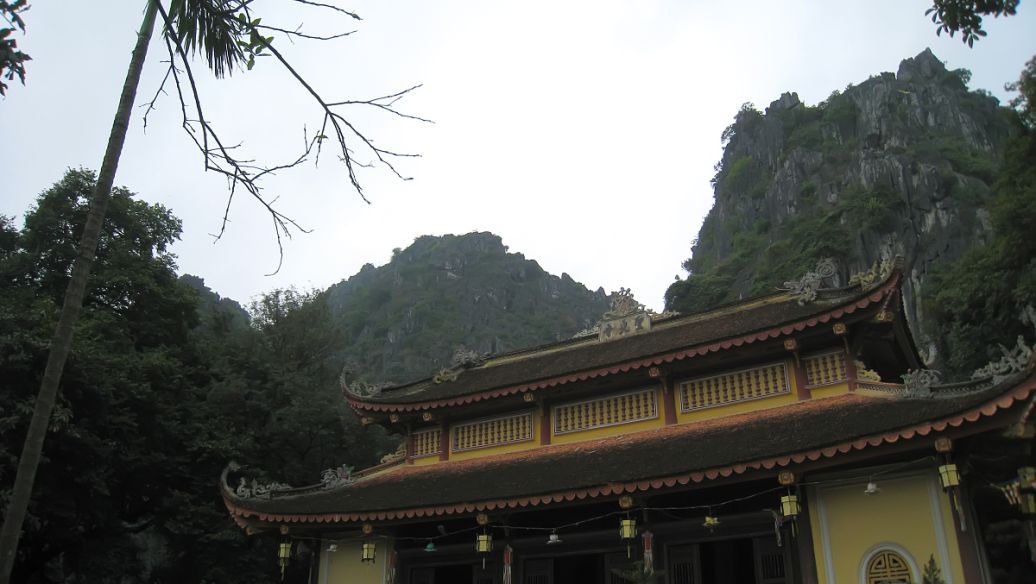 Originally established during the Sui Dynasty (around 600 AD) and rebuilt sixteen times after six devastating fires, the temple's current form dates to a 1882 reconstruction modeled on imperial palace standards—an era contemporary with Queen Victoria's reign and the rebuilding of post-Franco-Prussian War European capitals. The complex expanded through the Tang, Song, Yuan, Ming, and Qing dynasties, accumulating patronage from emperors who used it as the official sacrificial site for sacred Mount Heng, one of China's five great mountains. Designated a national key cultural relic in 2006, it stands as a living archive of over 1,400 years of imperial ritual culture.
Spanning nearly 98,500 square meters on a strict north-south axis, the temple follows a nine-bay, four-courtyard plan reminiscent of Beijing's Forbidden City, though rendered at a more human scale. The central hall, the 31.1-meter Hall of the Sacred Emperor, rises on 72 carved stone columns beneath a sweeping golden-tiled roof. Visitors pass through the Lingxing Gate, Kuixing Pavilion, and Imperial Stele Pavilion along the ceremonial axis. The complex is celebrated for its "Three Wonders of the South"—exquisite wood carvings, stone reliefs, and painted clay sculptures—that rival the decorative arts of European Baroque churches while remaining distinctly Chinese in character.
What makes Nanyue Grand Temple truly exceptional is its enduring trinitarian harmony: Confucian ritual at the center, Taoist immortality cults on the east, and Buddhist devotion on the west. For centuries, scholars, monks, and Taoist masters have worshipped side by side without conflict—a rare phenomenon in a world where religious sites more often define divisions than unity. Comparable in spirit to Jerusalem's shared holy quarters or the syncretic atmosphere of Kyoto's temple districts, the complex embodies a uniquely Chinese vision of philosophical pluralism, serving simultaneously as a sacred mountain shrine and a political monument.
Admission is 58 RMB, with the site open daily from 7:00 AM to 6:00 PM (last entry 5:00 PM). Plan for 1.5 to 2.5 hours; enter through the main Lingxing Gate and progress south along the central axis to the Imperial Calligraphy Hall, then branch east or west to explore the Taoist and Buddhist precincts. The easiest access is by high-speed rail to Hengshan West Station, followed by a direct shuttle bus to the main entrance. Free incense sticks are provided at the entrance—outside incense is prohibited—and visitors are asked to dress modestly, avoiding shorts or short skirts, and never to step on door thresholds.
The temple is at its most photogenic in early morning or late afternoon light, when vermilion walls and gilded roof tiles glow against soft shadows—conditions beloved by photographers seeking imagery reminiscent of European romantic paintings. The annual temple fair on the 15th day of the eighth lunar month delivers the most atmospheric experience, with incense smoke, folk performances, and pilgrim crowds, though those seeking quiet contemplation should visit weekdays outside festival periods. Few places in the world allow travelers to cross between three living faiths in a single afternoon, making Nanyue Grand Temple essential for enthusiasts of architecture, comparative religion, or simply the poetry of stone and time.
Originally established during the Sui Dynasty (around 600 AD) and rebuilt sixteen times after six devastating fires, the temple's current form dates to a 1882 reconstruction modeled on imperial palace standards—an era contemporary with Queen Victoria's reign and the rebuilding of post-Franco-Prussian War European capitals. The complex expanded through the Tang, Song, Yuan, Ming, and Qing dynasties, accumulating patronage from emperors who used it as the official sacrificial site for sacred Mount Heng, one of China's five great mountains. Designated a national key cultural relic in 2006, it stands as a living archive of over 1,400 years of imperial ritual culture.
Spanning nearly 98,500 square meters on a strict north-south axis, the temple follows a nine-bay, four-courtyard plan reminiscent of Beijing's Forbidden City, though rendered at a more human scale. The central hall, the 31.1-meter Hall of the Sacred Emperor, rises on 72 carved stone columns beneath a sweeping golden-tiled roof. Visitors pass through the Lingxing Gate, Kuixing Pavilion, and Imperial Stele Pavilion along the ceremonial axis. The complex is celebrated for its "Three Wonders of the South"—exquisite wood carvings, stone reliefs, and painted clay sculptures—that rival the decorative arts of European Baroque churches while remaining distinctly Chinese in character.
What makes Nanyue Grand Temple truly exceptional is its enduring trinitarian harmony: Confucian ritual at the center, Taoist immortality cults on the east, and Buddhist devotion on the west. For centuries, scholars, monks, and Taoist masters have worshipped side by side without conflict—a rare phenomenon in a world where religious sites more often define divisions than unity. Comparable in spirit to Jerusalem's shared holy quarters or the syncretic atmosphere of Kyoto's temple districts, the complex embodies a uniquely Chinese vision of philosophical pluralism, serving simultaneously as a sacred mountain shrine and a political monument.
Admission is 58 RMB, with the site open daily from 7:00 AM to 6:00 PM (last entry 5:00 PM). Plan for 1.5 to 2.5 hours; enter through the main Lingxing Gate and progress south along the central axis to the Imperial Calligraphy Hall, then branch east or west to explore the Taoist and Buddhist precincts. The easiest access is by high-speed rail to Hengshan West Station, followed by a direct shuttle bus to the main entrance. Free incense sticks are provided at the entrance—outside incense is prohibited—and visitors are asked to dress modestly, avoiding shorts or short skirts, and never to step on door thresholds.
The temple is at its most photogenic in early morning or late afternoon light, when vermilion walls and gilded roof tiles glow against soft shadows—conditions beloved by photographers seeking imagery reminiscent of European romantic paintings. The annual temple fair on the 15th day of the eighth lunar month delivers the most atmospheric experience, with incense smoke, folk performances, and pilgrim crowds, though those seeking quiet contemplation should visit weekdays outside festival periods. Few places in the world allow travelers to cross between three living faiths in a single afternoon, making Nanyue Grand Temple essential for enthusiasts of architecture, comparative religion, or simply the poetry of stone and time.