Changshan Islands
⭐ 4.20
Changshan Islands, Penglai District, Yantai City, Shandong Province, China
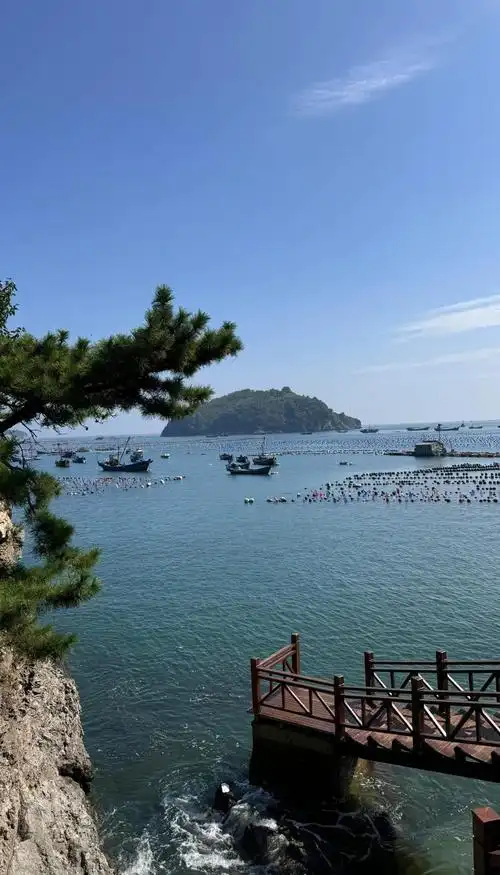 The Changshan Islands emerged from the tectonic collision of the Jiaodong and Liaodong peninsulas, sculpted over millions of years by the relentless carving of wind and waves. The archipelago preserves remarkable geological formations, including sea-eroded cliffs, caves, and hexagonal basalt columns similar to those found at Northern Ireland's Giant's Causeway. These features document the geological evolution of the Yellow-Bohai transition zone. The Beizhuang prehistoric site, dating back roughly 6,500 years, offers a glimpse into the lives of ancient fishing and hunting communities, comparable to the coastal settlements of Scandinavia's Stone Age.
Human heritage flourishes across the islands. The Miaodai Xianying Palace, founded in 1122 during the Northern Song Dynasty, stands as the earliest Mazu temple in northern China and is revered as the cradle of northern Mazu worship. Its architecture marries the grandeur typical of northern Chinese halls with the delicate ornamentation of southern temples, featuring intricately carved beams and painted rafters that reflect centuries of devotion. Scattered stone fishermen's houses and remnants of coastal fortifications add layers of vernacular and military history to the landscape.
The islands weave together three distinct cultural threads: geological time spanning hundreds of millions of years, Mazu devotion stretching back a millennium, and fishing traditions rooted over a hundred years. Beyond Mazu worship, locals maintain ancient sea-god rituals and ceremonial offerings to mark the opening and closing of fishing seasons. The 1949 Battle of Changshan Island further enriches the area with significant revolutionary history. Culinary traditions centered on fresh seafood have been passed down through generations, offering visitors an authentic taste of island life.
Nature thrives in this nationally protected reserve, which shelters over 370 bird species and serves as a vital stopover on the East Asian–Australasian Flyway. Summer brings spectacular seabird gatherings around Wanbiao Island, while spotted seals from the western Pacific breed along these shores. Autumn sunsets over the Jiuzhang Cliffs rival those of Greece's Santorini, and the misty mornings at Crescent Bay evoke the rugged beauty of Scotland's Hebrides. Spring and winter offer quieter moments ideal for birdwatching and contemplative coastal walks.
Reaching the islands requires travel to Yantai or Penglai, followed by a 45-minute ferry from the Pengchang Passenger Port, with multiple daily departures subject to weather cancellations. South and North Changshan are connected by a sea bridge, and renting a car or electric scooter is recommended for exploration. Key sites include Jiuzhang Cliff, Half Moon Bay, Miaodai Island, and the geopark, with two days and one night needed for a thorough visit.
Accommodation ranges from traditional fishermen's guesthouses to a few upscale retreats, though visitors should confirm payment and service details when booking. August brings typhoon risks and peak crowds, and swimming off unmarked rocks is prohibited. Sturdy, non-slip footwear is essential for exploring rocky terrain, along with sun protection. Travelers should respect local customs, never remove pebbles or natural materials, and download offline maps as mobile signal can be unreliable across the islands.
The Changshan Islands emerged from the tectonic collision of the Jiaodong and Liaodong peninsulas, sculpted over millions of years by the relentless carving of wind and waves. The archipelago preserves remarkable geological formations, including sea-eroded cliffs, caves, and hexagonal basalt columns similar to those found at Northern Ireland's Giant's Causeway. These features document the geological evolution of the Yellow-Bohai transition zone. The Beizhuang prehistoric site, dating back roughly 6,500 years, offers a glimpse into the lives of ancient fishing and hunting communities, comparable to the coastal settlements of Scandinavia's Stone Age.
Human heritage flourishes across the islands. The Miaodai Xianying Palace, founded in 1122 during the Northern Song Dynasty, stands as the earliest Mazu temple in northern China and is revered as the cradle of northern Mazu worship. Its architecture marries the grandeur typical of northern Chinese halls with the delicate ornamentation of southern temples, featuring intricately carved beams and painted rafters that reflect centuries of devotion. Scattered stone fishermen's houses and remnants of coastal fortifications add layers of vernacular and military history to the landscape.
The islands weave together three distinct cultural threads: geological time spanning hundreds of millions of years, Mazu devotion stretching back a millennium, and fishing traditions rooted over a hundred years. Beyond Mazu worship, locals maintain ancient sea-god rituals and ceremonial offerings to mark the opening and closing of fishing seasons. The 1949 Battle of Changshan Island further enriches the area with significant revolutionary history. Culinary traditions centered on fresh seafood have been passed down through generations, offering visitors an authentic taste of island life.
Nature thrives in this nationally protected reserve, which shelters over 370 bird species and serves as a vital stopover on the East Asian–Australasian Flyway. Summer brings spectacular seabird gatherings around Wanbiao Island, while spotted seals from the western Pacific breed along these shores. Autumn sunsets over the Jiuzhang Cliffs rival those of Greece's Santorini, and the misty mornings at Crescent Bay evoke the rugged beauty of Scotland's Hebrides. Spring and winter offer quieter moments ideal for birdwatching and contemplative coastal walks.
Reaching the islands requires travel to Yantai or Penglai, followed by a 45-minute ferry from the Pengchang Passenger Port, with multiple daily departures subject to weather cancellations. South and North Changshan are connected by a sea bridge, and renting a car or electric scooter is recommended for exploration. Key sites include Jiuzhang Cliff, Half Moon Bay, Miaodai Island, and the geopark, with two days and one night needed for a thorough visit.
Accommodation ranges from traditional fishermen's guesthouses to a few upscale retreats, though visitors should confirm payment and service details when booking. August brings typhoon risks and peak crowds, and swimming off unmarked rocks is prohibited. Sturdy, non-slip footwear is essential for exploring rocky terrain, along with sun protection. Travelers should respect local customs, never remove pebbles or natural materials, and download offline maps as mobile signal can be unreliable across the islands.