Lüzu Temple
⭐ 4.50
Lüzu Temple, Penglai District, Yantai City, Shandong Province, China
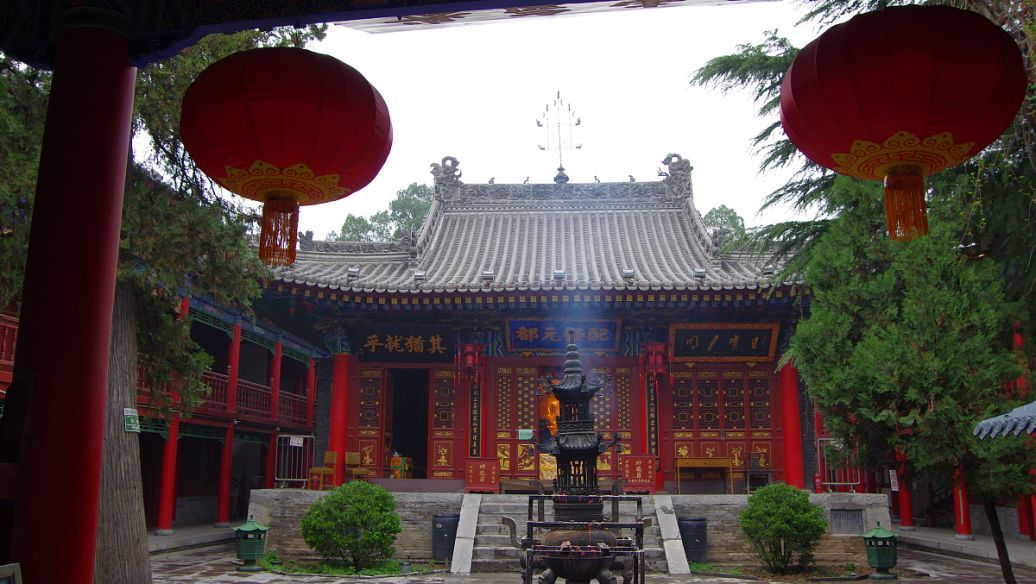 **Historical Context**
Constructed in the third year of the Guangxu Emperor's reign (1877), during the twilight of the Qing dynasty, Lüzu Hall dates to an era that parallels Europe's post-Industrial Revolution period, roughly contemporaneous with Queen Victoria's accession. Its veneration of Lü Dongbin, one of the revered Five Patriarchs of the Quanzhen (Complete Perfection) School of Daoism, preserves a religious lineage stretching back to the 12th century. The hall stands as one of the better-preserved examples of late-imperial sacred architecture on the Shandong coast, predating most modern nation-states in Asia by mere decades.
**Architecture**
The hall faces south in classical Confucian alignment, modest in footprint but architecturally rigorous, much like the smaller devotional chapels flanking the great European cathedrals of Chartres or Cologne. Its timber-frame construction follows traditional palatial proportions, with Lü Dongbin enthroned in the central bay, flanked by an apothecary boy and the willow-tree spirit—a folkloric pairing as familiar in Chinese tradition as the pairing of saints in Catholic iconography. The celebrated "Shou" (longevity) stele, ingeniously composed of characters forming the phrase "nine cycles of alchemical perfection," rewards attentive reading.
**Cultural Significance**
Lü Dongbin embodies the Daoist ideal of the sage-drunkard-warrior-poet, a figure who, in his syncretic blend of swordplay, wine, and verse, might be likened to the medieval European knight-errant with mystical rather than courtly leanings. As a member of the Eight Immortals—a pantheon as beloved in China as the Olympian gods in Mediterranean lore—his legends permeate opera, painting, and festival culture across East Asia. The hall functions less as museum than as living temple, where pilgrims still light incense and Daoist attendants maintain centuries-old rhythms of devotion.
**Practical Visit Info**
Access requires a Penglai Pavilion scenic area ticket (approximately 40–100 RMB, no separate admission). Hours run 08:00–17:30, with last entry at 16:30, year-round. Allow 15–20 minutes on site and integrate it into a logical circuit: Mituo Temple → Lüzu Hall → Sanqing Hall → main Pavilion. The site is reached after climbing stone stairs, so comfortable footwear is essential, particularly in August when Yantai's humid, rainy weather can make pathways slick.
**Visitor Experience**
Whereas the main pavilion often buzzes with camera-toting crowds, Lüzu Hall retains a hushed, almost monastic atmosphere—one is reminded of stumbling upon a forgotten side chapel in a Spanish monastery. Visitors may witness robed Daoist priests sweeping the courtyard or worshippers bowing before the altar, lending an authenticity impossible to stage. Photography is permitted without flash; touching statuary is discouraged. Visiting at opening time ensures the most contemplative encounter, and reading up on the Eight Immortals beforehand greatly enriches the interpretive value of every carved figure and weathered beam.
**Historical Context**
Constructed in the third year of the Guangxu Emperor's reign (1877), during the twilight of the Qing dynasty, Lüzu Hall dates to an era that parallels Europe's post-Industrial Revolution period, roughly contemporaneous with Queen Victoria's accession. Its veneration of Lü Dongbin, one of the revered Five Patriarchs of the Quanzhen (Complete Perfection) School of Daoism, preserves a religious lineage stretching back to the 12th century. The hall stands as one of the better-preserved examples of late-imperial sacred architecture on the Shandong coast, predating most modern nation-states in Asia by mere decades.
**Architecture**
The hall faces south in classical Confucian alignment, modest in footprint but architecturally rigorous, much like the smaller devotional chapels flanking the great European cathedrals of Chartres or Cologne. Its timber-frame construction follows traditional palatial proportions, with Lü Dongbin enthroned in the central bay, flanked by an apothecary boy and the willow-tree spirit—a folkloric pairing as familiar in Chinese tradition as the pairing of saints in Catholic iconography. The celebrated "Shou" (longevity) stele, ingeniously composed of characters forming the phrase "nine cycles of alchemical perfection," rewards attentive reading.
**Cultural Significance**
Lü Dongbin embodies the Daoist ideal of the sage-drunkard-warrior-poet, a figure who, in his syncretic blend of swordplay, wine, and verse, might be likened to the medieval European knight-errant with mystical rather than courtly leanings. As a member of the Eight Immortals—a pantheon as beloved in China as the Olympian gods in Mediterranean lore—his legends permeate opera, painting, and festival culture across East Asia. The hall functions less as museum than as living temple, where pilgrims still light incense and Daoist attendants maintain centuries-old rhythms of devotion.
**Practical Visit Info**
Access requires a Penglai Pavilion scenic area ticket (approximately 40–100 RMB, no separate admission). Hours run 08:00–17:30, with last entry at 16:30, year-round. Allow 15–20 minutes on site and integrate it into a logical circuit: Mituo Temple → Lüzu Hall → Sanqing Hall → main Pavilion. The site is reached after climbing stone stairs, so comfortable footwear is essential, particularly in August when Yantai's humid, rainy weather can make pathways slick.
**Visitor Experience**
Whereas the main pavilion often buzzes with camera-toting crowds, Lüzu Hall retains a hushed, almost monastic atmosphere—one is reminded of stumbling upon a forgotten side chapel in a Spanish monastery. Visitors may witness robed Daoist priests sweeping the courtyard or worshippers bowing before the altar, lending an authenticity impossible to stage. Photography is permitted without flash; touching statuary is discouraged. Visiting at opening time ensures the most contemplative encounter, and reading up on the Eight Immortals beforehand greatly enriches the interpretive value of every carved figure and weathered beam.