Layou Village
⭐ 1.50
Layou Village, Libo County, Qiannan Prefecture, Guizhou Province, China
 The Buyei, one of China's oldest ethnic groups, have inhabited Guizhou's karst uplands for over two millennia, with cultural roots reaching back to the ancient Yue peoples of the Yangtze basin. They share these highlands with the Miao (known in the West as Hmong), whose centuries of migration from central China created distinct enclaves across Southeast Asia. Compared to Europe's surviving highland communities—Pyrenean hamlets or Scottish Borders sheep-farming villages—Layou represents a similarly self-contained world, where lineage, festivals, and subsistence farming still dictate the calendar. Travelers seeking pre-modern rural textures find here what they would have found across rural Europe a century ago: a community whose pace follows the seasons, not the market.
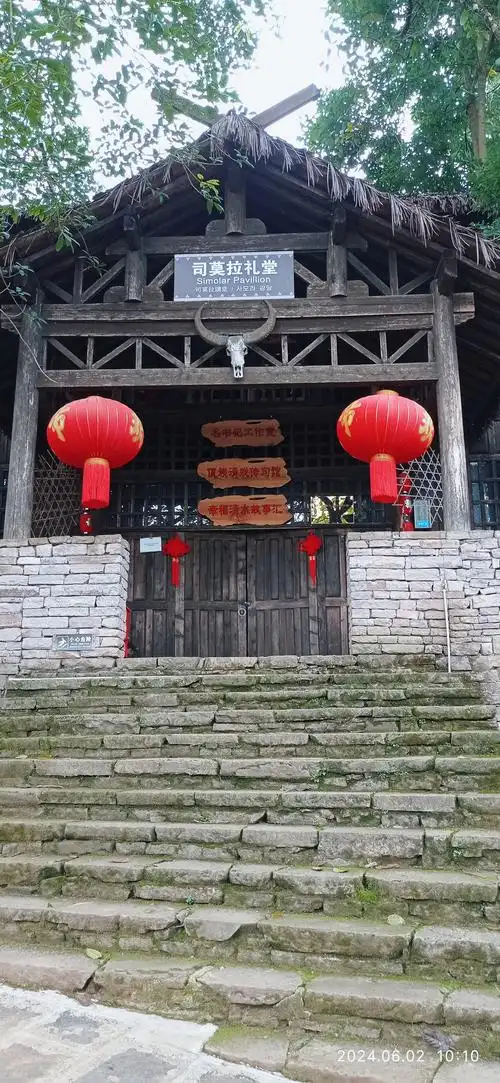
The village's built environment reflects its steep terrain and humid subtropical climate. Many homes follow the Buyei stilt-house tradition (ganlan), with wooden upper floors raised on stone pillars to combat damp and pests—a logic shared with the Swiss châlet or the pile dwellings that once lined Alpine lakes. Other houses combine local sandstone with grey clay roof tiles, their irregular footprints hugging the hillside. There are no restored shopfronts or themed streets; the visual field is one of working farms, vegetable plots, terraced fields, and the occasional water buffalo resting beneath a persimmon tree. Functional rather than decorative, the architecture is all the more evocative for it.
Layou's most valuable asset is cultural continuity. The San Yue San festival in the third lunar month, the Miao New Year celebrations, and communal singing contests still draw villagers together in ways that predate written records in the region. Batik (laxu)—molten wax drawn onto indigo-dyed cloth—remains a household craft, a tradition that shares visual DNA with the better-known batik of Java and West Africa but evolved here in relative isolation. Folk songs, embroidery, and wedding customs are passed down within families rather than staged for tourists. For anthropologists, photographers, and cultural travelers, the village functions as a living archive, more revealing than any museum reconstruction.
Getting to Layou requires planning. The village sits within Jiali Town in Dushan County, reached via poorly signed local lanes a few hours by road from the county seat. There are no tourist buses, no guides, no entry fee, and no on-site food or lodging—visitors must arrange accommodation and meals in Dushan town. Hiring a car from the county is the most reliable option, and confirming the village name in advance is essential: a similarly named "Laran Health Resort" in Dushan is sometimes mistakenly recommended and offers a very different experience. Spring and autumn bring the mildest weather and the most photogenic light.
Layou is not a destination for travelers seeking dramatic scenery or polished attractions, and that is precisely its appeal. In an era when most of China's heritage villages have been rebuilt and rebranded for tour groups, Layou offers something increasingly rare: a working community where daily life, festivals, and folk crafts continue without performance for outsiders. It suits the slow traveler, the ethnographer, the documentary photographer—anyone drawn to authenticity over amenity. A half-day here, combined with visits to the nearby Dushan Tian Cave karst formations or the Deep River Bridge war memorial from the 1944 Sino-Japanese campaign, makes for a richly layered itinerary.
The Buyei, one of China's oldest ethnic groups, have inhabited Guizhou's karst uplands for over two millennia, with cultural roots reaching back to the ancient Yue peoples of the Yangtze basin. They share these highlands with the Miao (known in the West as Hmong), whose centuries of migration from central China created distinct enclaves across Southeast Asia. Compared to Europe's surviving highland communities—Pyrenean hamlets or Scottish Borders sheep-farming villages—Layou represents a similarly self-contained world, where lineage, festivals, and subsistence farming still dictate the calendar. Travelers seeking pre-modern rural textures find here what they would have found across rural Europe a century ago: a community whose pace follows the seasons, not the market.
The village's built environment reflects its steep terrain and humid subtropical climate. Many homes follow the Buyei stilt-house tradition (ganlan), with wooden upper floors raised on stone pillars to combat damp and pests—a logic shared with the Swiss châlet or the pile dwellings that once lined Alpine lakes. Other houses combine local sandstone with grey clay roof tiles, their irregular footprints hugging the hillside. There are no restored shopfronts or themed streets; the visual field is one of working farms, vegetable plots, terraced fields, and the occasional water buffalo resting beneath a persimmon tree. Functional rather than decorative, the architecture is all the more evocative for it.
Layou's most valuable asset is cultural continuity. The San Yue San festival in the third lunar month, the Miao New Year celebrations, and communal singing contests still draw villagers together in ways that predate written records in the region. Batik (laxu)—molten wax drawn onto indigo-dyed cloth—remains a household craft, a tradition that shares visual DNA with the better-known batik of Java and West Africa but evolved here in relative isolation. Folk songs, embroidery, and wedding customs are passed down within families rather than staged for tourists. For anthropologists, photographers, and cultural travelers, the village functions as a living archive, more revealing than any museum reconstruction.
Getting to Layou requires planning. The village sits within Jiali Town in Dushan County, reached via poorly signed local lanes a few hours by road from the county seat. There are no tourist buses, no guides, no entry fee, and no on-site food or lodging—visitors must arrange accommodation and meals in Dushan town. Hiring a car from the county is the most reliable option, and confirming the village name in advance is essential: a similarly named "Laran Health Resort" in Dushan is sometimes mistakenly recommended and offers a very different experience. Spring and autumn bring the mildest weather and the most photogenic light.
Layou is not a destination for travelers seeking dramatic scenery or polished attractions, and that is precisely its appeal. In an era when most of China's heritage villages have been rebuilt and rebranded for tour groups, Layou offers something increasingly rare: a working community where daily life, festivals, and folk crafts continue without performance for outsiders. It suits the slow traveler, the ethnographer, the documentary photographer—anyone drawn to authenticity over amenity. A half-day here, combined with visits to the nearby Dushan Tian Cave karst formations or the Deep River Bridge war memorial from the 1944 Sino-Japanese campaign, makes for a richly layered itinerary.