Hao River
⭐ 4.50
Hao River Scenic Area, Tongzhou District, Nantong, Jiangsu, China
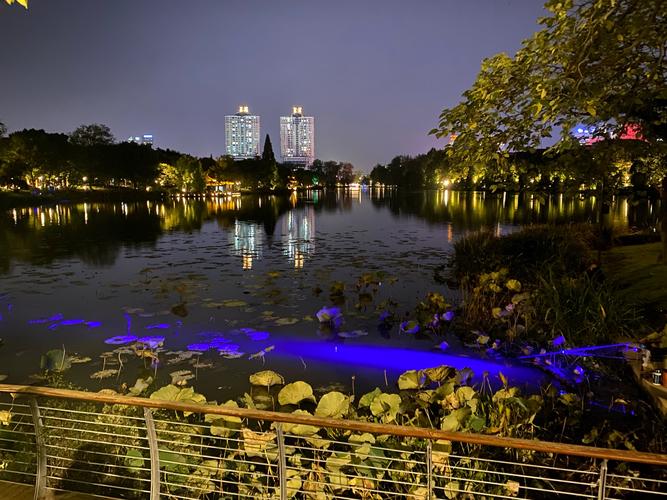 Carved out in 958 AD during the chaotic twilight of China's Five Dynasties period—just a few decades before Otto the Great consolidated the Holy Roman Empire—Hao River is a contemporary of Europe's great medieval city moats. Stretching 10 kilometers in the shape of an inverted gourd, it ranks among the four ancient city moats still in existence in China and has earned the poetic nickname "the Jade Necklace of the River City." For more than a thousand years it has watched Nantong transform from a modest Yangtze garrison into a thriving modern port.
The river's signature charm is its intimate "water embracing city, city cradled by water" layout, a layout that recalls Bruges or Annecy, where the town and its waterway seem to hold each other in an eternal embrace. Gentle, level footpaths line both banks, threading past the Tang-era Tianning Temple, the elegant Song-dynasty Guangxiao Pagoda, the soaring Wenfeng Pagoda, and the Western-style villas that late-Qing reformer Zhang Jian raised along the shore—an architectural conversation between East and West that feels strikingly similar to Edinburgh's New Town beside its medieval Old.
History runs deep here. The philanthropist Zhang Jian—often called "China's Carnegie"—founded the Nantong Museum in 1905, China's very first public museum, predating many Western civic collections of its kind. Today the riverside museum cluster has grown to include the Silk Embroidery Museum, the Abacus Museum, and the Kite Museum, each a small window onto a regional craft tradition. Together they form what locals call a "living cultural corridor," where Tang and Song relics, Republican-era buildings, and modern glass towers share the same waterfront.
Evenings are the river's showpiece moment. The acclaimed "Hao River Night Painting" cruise deploys water-screen projections and 3D mapping across historic façades, transforming the moat into an open-air theater—a digital spectacle reminiscent of Lyon’s Festival of Lights, but staged on water. Boats depart from central piers after dusk, gliding beneath illuminated pagodas and bridges.
Visiting is refreshingly low-friction: the embankments and most museums are free to enter, while boat cruises and audio guides cost in the range of a few dozen up to around 100 RMB and 20 RMB respectively. Most museums close on Mondays and stop admitting visitors at 16:30, with the last boat typically departing around 20:30. The smartest plan is to explore the museums in the morning, stroll the greenway at sunset, and board the night cruise after 18:30. Spring and autumn bring the most comfortable weather; in summer you may spot twin lotus blooms and black swans. Parking in the old town is tight, so arriving by bus or taxi to the visitor center is strongly recommended. Cruises during holidays should be booked one to two days ahead via Trip.com or the official WeChat account.
Carved out in 958 AD during the chaotic twilight of China's Five Dynasties period—just a few decades before Otto the Great consolidated the Holy Roman Empire—Hao River is a contemporary of Europe's great medieval city moats. Stretching 10 kilometers in the shape of an inverted gourd, it ranks among the four ancient city moats still in existence in China and has earned the poetic nickname "the Jade Necklace of the River City." For more than a thousand years it has watched Nantong transform from a modest Yangtze garrison into a thriving modern port.
The river's signature charm is its intimate "water embracing city, city cradled by water" layout, a layout that recalls Bruges or Annecy, where the town and its waterway seem to hold each other in an eternal embrace. Gentle, level footpaths line both banks, threading past the Tang-era Tianning Temple, the elegant Song-dynasty Guangxiao Pagoda, the soaring Wenfeng Pagoda, and the Western-style villas that late-Qing reformer Zhang Jian raised along the shore—an architectural conversation between East and West that feels strikingly similar to Edinburgh's New Town beside its medieval Old.
History runs deep here. The philanthropist Zhang Jian—often called "China's Carnegie"—founded the Nantong Museum in 1905, China's very first public museum, predating many Western civic collections of its kind. Today the riverside museum cluster has grown to include the Silk Embroidery Museum, the Abacus Museum, and the Kite Museum, each a small window onto a regional craft tradition. Together they form what locals call a "living cultural corridor," where Tang and Song relics, Republican-era buildings, and modern glass towers share the same waterfront.
Evenings are the river's showpiece moment. The acclaimed "Hao River Night Painting" cruise deploys water-screen projections and 3D mapping across historic façades, transforming the moat into an open-air theater—a digital spectacle reminiscent of Lyon’s Festival of Lights, but staged on water. Boats depart from central piers after dusk, gliding beneath illuminated pagodas and bridges.
Visiting is refreshingly low-friction: the embankments and most museums are free to enter, while boat cruises and audio guides cost in the range of a few dozen up to around 100 RMB and 20 RMB respectively. Most museums close on Mondays and stop admitting visitors at 16:30, with the last boat typically departing around 20:30. The smartest plan is to explore the museums in the morning, stroll the greenway at sunset, and board the night cruise after 18:30. Spring and autumn bring the most comfortable weather; in summer you may spot twin lotus blooms and black swans. Parking in the old town is tight, so arriving by bus or taxi to the visitor center is strongly recommended. Cruises during holidays should be booked one to two days ahead via Trip.com or the official WeChat account.