Zhangjiang Scenic Area
⭐ 4.80
Zhangjiang Scenic Area, Libo County, Qiannan Buyei and Miao Autonomous Prefecture, Guizhou Province, China
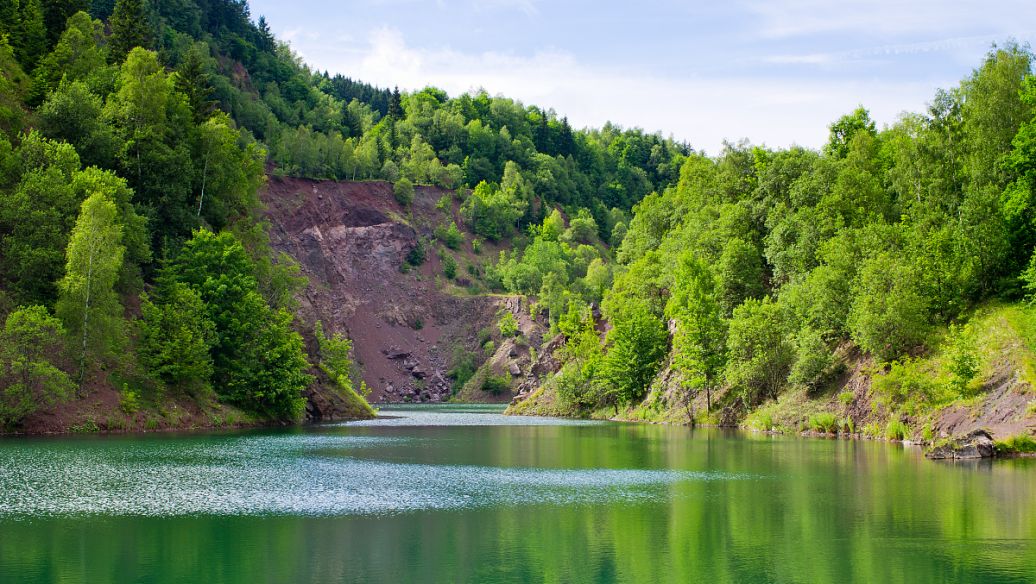 In 2007, the heart of the Zhangjiang Scenic Area became the first Guizhou site inscribed on the UNESCO World Natural Heritage List, joining the MAB (Man and the Biosphere) network the same year. Scientists consider its karst-forest ecosystem a living archive—one of the very few places on Earth where dense subtropical forest has survived atop ancient limestone. For travelers familiar with Slovenia's Škocjan Caves or Vietnam's Ha Long Bay, Libo offers a similarly celebrated karst spectacle, but on a gentler, walkable, and far less crowded scale.
The park's signature landmark is the Small Seven Arches Bridge, a graceful Qing-Dynasty stone span built in 1835, whose reflection in the emerald river gives the area its poetic name. From here, elevated boardwalks weave past the celebrated 68-Stage Waterfall, where water tumbles in delicate terraces reminiscent of Plitvice. The wilder Big Seven Arches sector, reached by a scenic shuttle, offers canyon-style drama with deep sinkholes, cave rivers, and forested cliffs that feel far removed from modern China.
Beyond its geology, Zhangjiang is homeland to the Buyei and Miao peoples, two of southwestern China's most colorful ethnic minorities. Traditional stilted wooden villages fringe the buffer zone, where visitors can sample sour-spiced river fish, sip homemade rice wine, and watch indigo-dyed textiles being hand-woven. This harmonious blend of intact forest and living ethnic culture is precisely what persuaded UNESCO to grant Libo its World Heritage status in the first place.
Libo County is easily reached by high-speed rail from Guiyang in roughly 90 minutes, with direct flights from major Chinese cities into Libo Airport. The park is open year-round, but June through August is the most refreshing escape, with daytime temperatures hovering around 25°C. Entry costs roughly 120 RMB, with separate fees for shuttle buses, electric carts, and the popular Shuichun River drift-boat ride. Allow at least one full day for the Small Seven Arches and a second for Big Seven Arches or a village homestay.
With forest cover exceeding 92 percent and some of the highest natural negative-ion readings on the planet, Zhangjiang delivers the rare double thrill of UNESCO-grade scenery and a genuine wellness retreat. Few places on Earth let you wander a primeval karst rainforest in the morning and share a riverside bamboo-rice lunch with a Miao family in the afternoon. For travelers seeking China's unspoiled south beyond the Great Wall crowds, this remains the country's greenest secret.
In 2007, the heart of the Zhangjiang Scenic Area became the first Guizhou site inscribed on the UNESCO World Natural Heritage List, joining the MAB (Man and the Biosphere) network the same year. Scientists consider its karst-forest ecosystem a living archive—one of the very few places on Earth where dense subtropical forest has survived atop ancient limestone. For travelers familiar with Slovenia's Škocjan Caves or Vietnam's Ha Long Bay, Libo offers a similarly celebrated karst spectacle, but on a gentler, walkable, and far less crowded scale.
The park's signature landmark is the Small Seven Arches Bridge, a graceful Qing-Dynasty stone span built in 1835, whose reflection in the emerald river gives the area its poetic name. From here, elevated boardwalks weave past the celebrated 68-Stage Waterfall, where water tumbles in delicate terraces reminiscent of Plitvice. The wilder Big Seven Arches sector, reached by a scenic shuttle, offers canyon-style drama with deep sinkholes, cave rivers, and forested cliffs that feel far removed from modern China.
Beyond its geology, Zhangjiang is homeland to the Buyei and Miao peoples, two of southwestern China's most colorful ethnic minorities. Traditional stilted wooden villages fringe the buffer zone, where visitors can sample sour-spiced river fish, sip homemade rice wine, and watch indigo-dyed textiles being hand-woven. This harmonious blend of intact forest and living ethnic culture is precisely what persuaded UNESCO to grant Libo its World Heritage status in the first place.
Libo County is easily reached by high-speed rail from Guiyang in roughly 90 minutes, with direct flights from major Chinese cities into Libo Airport. The park is open year-round, but June through August is the most refreshing escape, with daytime temperatures hovering around 25°C. Entry costs roughly 120 RMB, with separate fees for shuttle buses, electric carts, and the popular Shuichun River drift-boat ride. Allow at least one full day for the Small Seven Arches and a second for Big Seven Arches or a village homestay.
With forest cover exceeding 92 percent and some of the highest natural negative-ion readings on the planet, Zhangjiang delivers the rare double thrill of UNESCO-grade scenery and a genuine wellness retreat. Few places on Earth let you wander a primeval karst rainforest in the morning and share a riverside bamboo-rice lunch with a Miao family in the afternoon. For travelers seeking China's unspoiled south beyond the Great Wall crowds, this remains the country's greenest secret.