Yaoshan Folk Culture Garden
⭐ 4.20
Yaoshan Yao Ethnic Township, Libo County, Qiannan Prefecture, Guizhou Province, China
 **Living Heritage in a Karst Setting**
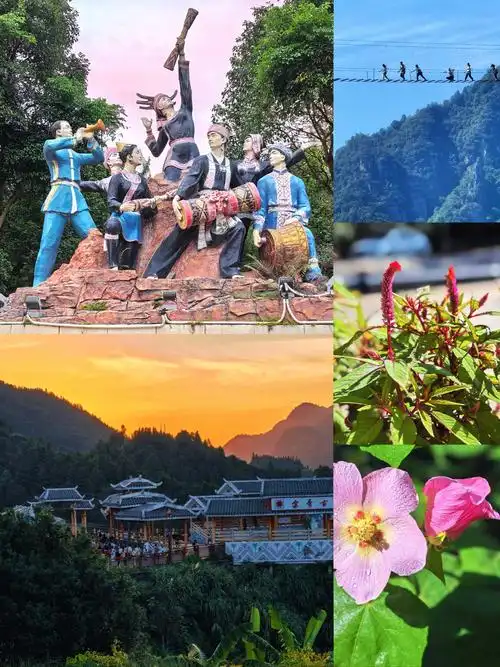
Yao Mountain is the most intact Baiku Yao settlement in China, a distinction that places it alongside Europe's most treasured open-air ethnographic sites, such as Norway's preserved stave-church villages or Italy's Alpine Walser hamlets. The Baiku Yao, whose name literally references the white knee-length trousers worn by men year-round, were designated by UNESCO as one of the most comprehensively preserved ethnic groups on earth. Much like how remote Alpine communities preserved medieval dialects and customs, the Yao here have maintained their language, indigo-resist textiles, and agricultural rituals largely untouched by modernization, earning the village its reputation as a "living fossil of human civilization."
**Architecture Carved by Necessity**
The village's most iconic feature is its cluster of century-old granaries raised on four stout timber pillars—locally called the "four-pillar suspended" style. Lifted clear of the damp ground, they cleverly defeat both humidity and rodents using techniques that have remained unchanged for generations. The stilt houses that cluster nearby echo the design logic of Swiss and Tyrolean mountain dwellings, where timber posts adapt structures to sloping, rocky terrain. Set against the dramatic karst pinnacles, the buildings create a scene that has long drawn photographers seeking the same atmospheric harmony found in Halong Bay or Slovenia's Škocjan Caves region.
**Cultural Experiences Beyond Spectacle**
Non-heritage craftsmanship forms the beating heart of any visit. Under the guidance of master artisans, guests can try their hand at sticky-paste dyeing, a labor-intensive resist technique using tree resin that parallels the wax-resist batik traditions of Indonesia. Several times daily the village square erupts with the Monkey Drum Dance and bronze drum performances, rhythmic spectacles as visually mesmerizing as any Celtic bodhran ceremony or West African djembe gathering. Hands-on workshops also cover bamboo weaving and pottery, while the village's celebrated topspinning tradition has earned it the title of China's topspinning capital. Evenings climax with the immersive outdoor pageant *Yao Mountain, Yao People*, which weaves mythology and migration history into a stirring theatrical experience.
**Planning Your Visit**
A rewarding itinerary typically begins with the symbolic Three Gates Welcome Ceremony, followed by a walk through the granary complex, the village history museum, and the artisan workshops, culminating in the elaborate Yao King Banquet. Adult tickets run 80 RMB, and the site stays open from 08:30 to 21:00, making a full day comfortably possible. Most travelers pair Yao Mountain with the neighboring Xiaoqikong Scenic Area to combine Guizhou's signature karst waterways with its richest ethnic enclave—a pairing as natural as visiting Florence plus the Tuscan hill towns.
**Practical Tips**
The village paths are paved in flagstone that becomes genuinely slick after rain, so sturdy non-slip footwear is essential. Visitors should observe local customs around ancestral altars and ceremonial spaces, and always ask permission before photographing residents or ritual objects. Light, breathable layers suit the humid subtropical climate, and carrying small cash is wise for artisan purchases, as card facilities remain limited. With thoughtful planning, a stop here rewards travelers with one of southern China's most genuinely preserved windows into minority heritage.
**Living Heritage in a Karst Setting**
Yao Mountain is the most intact Baiku Yao settlement in China, a distinction that places it alongside Europe's most treasured open-air ethnographic sites, such as Norway's preserved stave-church villages or Italy's Alpine Walser hamlets. The Baiku Yao, whose name literally references the white knee-length trousers worn by men year-round, were designated by UNESCO as one of the most comprehensively preserved ethnic groups on earth. Much like how remote Alpine communities preserved medieval dialects and customs, the Yao here have maintained their language, indigo-resist textiles, and agricultural rituals largely untouched by modernization, earning the village its reputation as a "living fossil of human civilization."
**Architecture Carved by Necessity**
The village's most iconic feature is its cluster of century-old granaries raised on four stout timber pillars—locally called the "four-pillar suspended" style. Lifted clear of the damp ground, they cleverly defeat both humidity and rodents using techniques that have remained unchanged for generations. The stilt houses that cluster nearby echo the design logic of Swiss and Tyrolean mountain dwellings, where timber posts adapt structures to sloping, rocky terrain. Set against the dramatic karst pinnacles, the buildings create a scene that has long drawn photographers seeking the same atmospheric harmony found in Halong Bay or Slovenia's Škocjan Caves region.
**Cultural Experiences Beyond Spectacle**
Non-heritage craftsmanship forms the beating heart of any visit. Under the guidance of master artisans, guests can try their hand at sticky-paste dyeing, a labor-intensive resist technique using tree resin that parallels the wax-resist batik traditions of Indonesia. Several times daily the village square erupts with the Monkey Drum Dance and bronze drum performances, rhythmic spectacles as visually mesmerizing as any Celtic bodhran ceremony or West African djembe gathering. Hands-on workshops also cover bamboo weaving and pottery, while the village's celebrated topspinning tradition has earned it the title of China's topspinning capital. Evenings climax with the immersive outdoor pageant *Yao Mountain, Yao People*, which weaves mythology and migration history into a stirring theatrical experience.
**Planning Your Visit**
A rewarding itinerary typically begins with the symbolic Three Gates Welcome Ceremony, followed by a walk through the granary complex, the village history museum, and the artisan workshops, culminating in the elaborate Yao King Banquet. Adult tickets run 80 RMB, and the site stays open from 08:30 to 21:00, making a full day comfortably possible. Most travelers pair Yao Mountain with the neighboring Xiaoqikong Scenic Area to combine Guizhou's signature karst waterways with its richest ethnic enclave—a pairing as natural as visiting Florence plus the Tuscan hill towns.
**Practical Tips**
The village paths are paved in flagstone that becomes genuinely slick after rain, so sturdy non-slip footwear is essential. Visitors should observe local customs around ancestral altars and ceremonial spaces, and always ask permission before photographing residents or ritual objects. Light, breathable layers suit the humid subtropical climate, and carrying small cash is wise for artisan purchases, as card facilities remain limited. With thoughtful planning, a stop here rewards travelers with one of southern China's most genuinely preserved windows into minority heritage.