Qili Mountain
⭐ 4.50
Shantang Street, Gusu District, Suzhou, Jiangsu, China
 Shantang Street was excavated in 825 AD under Bai Juyi, the celebrated Tang Dynasty poet-official. While Charlemagne's Holy Roman Empire was consolidating power in Europe, China's Tang Dynasty represented one of the world's most refined civilizations, and the Grand Canal—part of which Shantang forms—was already centuries old, predating Europe's major canals by more than 600 years. The street became Suzhou's busiest commercial artery during the Ming and Qing dynasties, and Qing painter Xu Yang immortalized it in the panoramic scroll "Prosperous Suzhou," often compared to Pieter Bruegel's sweeping depictions of Flemish towns. In 2010, Shantang Street was named a National Historic Cultural Street and now belongs to the UNESCO-listed Grand Canal.
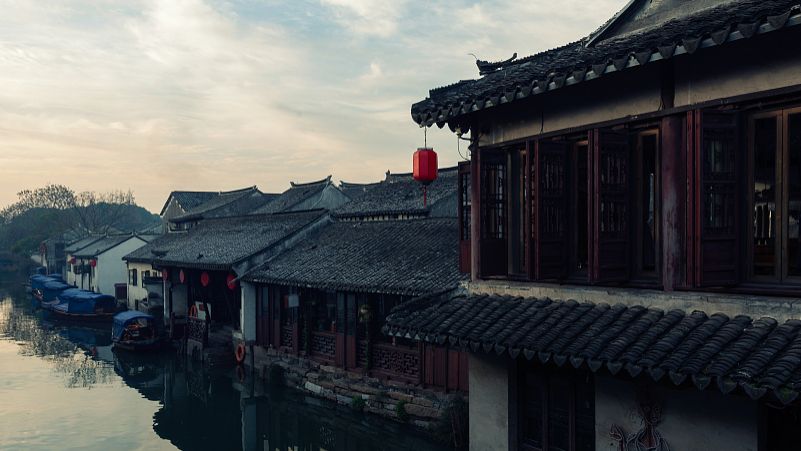
The street runs parallel to its canal, lined with whitewashed walls, grey-tiled roofs, and wooden facades typical of Jiangnan architecture—comparable to the merchants' houses along Bruges' medieval canals or Venice's quieter backwater rii. Seven stone bridges span the waterway, including Shantang, Tonggui, and Xinmin Bridges. At each bridgehead sits a carved stone cat; collectively known as the "Seven Cats of Shantang," legend credits them with guarding against floods. Ming-era mansions, the historic Yuhantang Hall with its intricate carved gate, and the Southern Society Memorial commemorating early-20th-century revolutionaries are scattered along the lane.
Shantang Street serves as a living showcase for Suzhou's intangible heritage. On the open-air ancient theater, performers stage Kunqu opera—recognized by UNESCO in 2001 and often called the "ancestor of Chinese opera"—alongside Suzhou pingtan, a regional storytelling art accompanied by pipa and dulcimer. The Southern Society Museum displays documents from the 1909 literary circle that helped spark the Xinhai Revolution. Visitors can also hunt for the Seven Cats stone carvings at each bridge, blending sightseeing with local folklore in a way that feels like a historical scavenger hunt.
The street is free to enter and open around the clock, though interior sites like Yuhantang Hall follow a 9:00-17:00 schedule and may charge a small fee. Allow 2-3 hours for a relaxed visit. Take Metro Line 2 to Shantangjie Station, or bus 7, 31, 34, or 36. The best experience begins around 16:30, when you can explore the quieter western stretch toward Tiger Hill before the lanterns flicker on at 18:30. Sights like the lantern reflections at Tonggui Bridge and the elevated view from Xinmin Bridge are photographer favorites.
A 30-40-minute gondola-style boat ride from the Bai Juyi Wharf, often featuring live pingtan music, offers an atmospheric evening cruise. To escape tourist-trap eateries on the main drag, duck into the side alleys for old-school snacks: glutinous rice balls at Zhu Xinnian, deep-fried dough balls at Rongyang Lou, and date-paste sesame cakes at Qianshengyuan. Wear flat, non-slip shoes—the flagstones get slick after rain—and watch your pockets on crowded weekends. In summer, bring mosquito repellent for the canal-side evenings.
Shantang Street was excavated in 825 AD under Bai Juyi, the celebrated Tang Dynasty poet-official. While Charlemagne's Holy Roman Empire was consolidating power in Europe, China's Tang Dynasty represented one of the world's most refined civilizations, and the Grand Canal—part of which Shantang forms—was already centuries old, predating Europe's major canals by more than 600 years. The street became Suzhou's busiest commercial artery during the Ming and Qing dynasties, and Qing painter Xu Yang immortalized it in the panoramic scroll "Prosperous Suzhou," often compared to Pieter Bruegel's sweeping depictions of Flemish towns. In 2010, Shantang Street was named a National Historic Cultural Street and now belongs to the UNESCO-listed Grand Canal.
The street runs parallel to its canal, lined with whitewashed walls, grey-tiled roofs, and wooden facades typical of Jiangnan architecture—comparable to the merchants' houses along Bruges' medieval canals or Venice's quieter backwater rii. Seven stone bridges span the waterway, including Shantang, Tonggui, and Xinmin Bridges. At each bridgehead sits a carved stone cat; collectively known as the "Seven Cats of Shantang," legend credits them with guarding against floods. Ming-era mansions, the historic Yuhantang Hall with its intricate carved gate, and the Southern Society Memorial commemorating early-20th-century revolutionaries are scattered along the lane.
Shantang Street serves as a living showcase for Suzhou's intangible heritage. On the open-air ancient theater, performers stage Kunqu opera—recognized by UNESCO in 2001 and often called the "ancestor of Chinese opera"—alongside Suzhou pingtan, a regional storytelling art accompanied by pipa and dulcimer. The Southern Society Museum displays documents from the 1909 literary circle that helped spark the Xinhai Revolution. Visitors can also hunt for the Seven Cats stone carvings at each bridge, blending sightseeing with local folklore in a way that feels like a historical scavenger hunt.
The street is free to enter and open around the clock, though interior sites like Yuhantang Hall follow a 9:00-17:00 schedule and may charge a small fee. Allow 2-3 hours for a relaxed visit. Take Metro Line 2 to Shantangjie Station, or bus 7, 31, 34, or 36. The best experience begins around 16:30, when you can explore the quieter western stretch toward Tiger Hill before the lanterns flicker on at 18:30. Sights like the lantern reflections at Tonggui Bridge and the elevated view from Xinmin Bridge are photographer favorites.
A 30-40-minute gondola-style boat ride from the Bai Juyi Wharf, often featuring live pingtan music, offers an atmospheric evening cruise. To escape tourist-trap eateries on the main drag, duck into the side alleys for old-school snacks: glutinous rice balls at Zhu Xinnian, deep-fried dough balls at Rongyang Lou, and date-paste sesame cakes at Qianshengyuan. Wear flat, non-slip shoes—the flagstones get slick after rain—and watch your pockets on crowded weekends. In summer, bring mosquito repellent for the canal-side evenings.