Tiger Hill

⭐ 4.70

Tiger Hill Scenic Area, Tiger Hill Town, Wuzhong District, Suzhou, Jiangsu, China
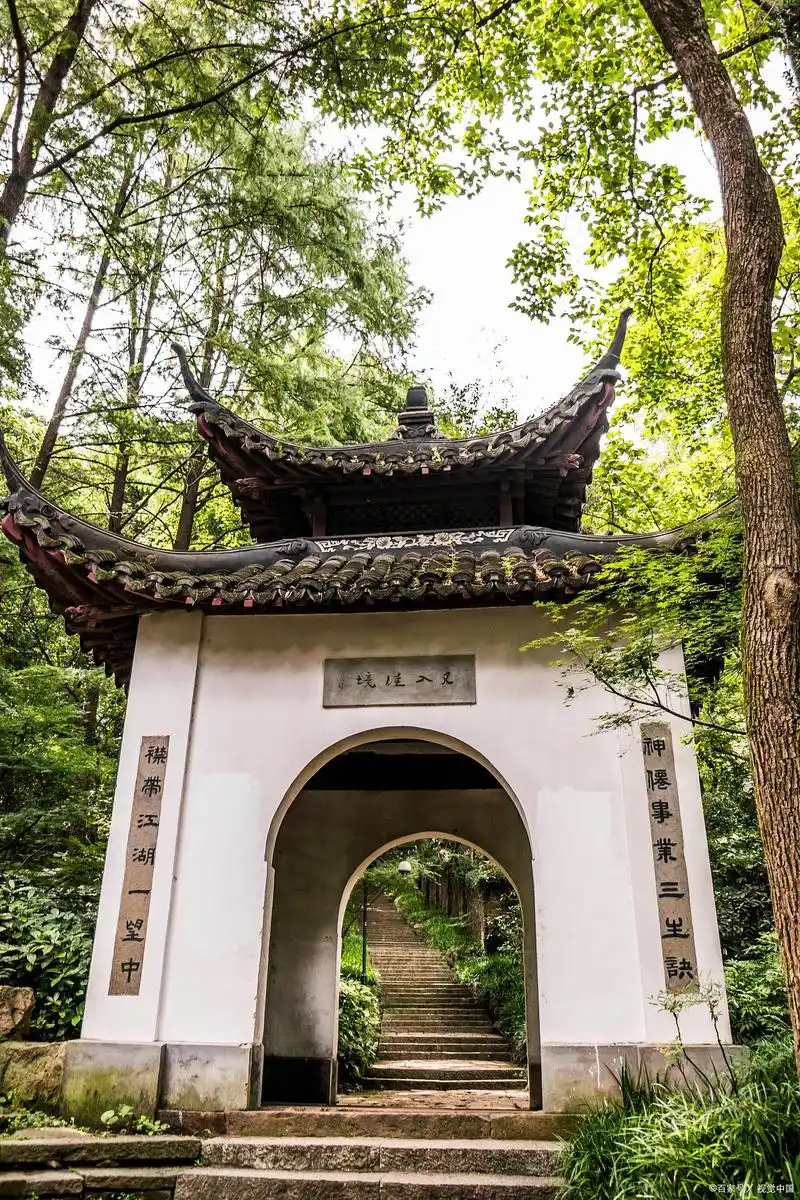
Tiger Hill
Tiger Hill takes its name from the Spring and Autumn period (770–476 BCE), when King Helu of the rival state of Wu—contemporary with the early Greek city-states and the legend of Romulus and Remus—was supposedly entombed on the hill with three thousand swords as funerary treasure. Over the following twenty-five centuries, emperors, scholars, and poets have trekked to this modest 34-meter rise, layering every cliff and courtyard with myth and inscription. Today Tiger Hill stands as one of the most important wellsprings of Wu regional culture, holding a place in Chinese heritage rather like that of ancient Athens in the European imagination. The undisputed star is the Yunyan Temple Pagoda, popularly called the Tiger Hill Pagoda. Built between 959 and 961 CE—roughly a century before Europe's Norman cathedrals were raised—this octagonal, seven-story brick tower has been tilting for centuries, earning it the title of "China's first and the world's second leaning tower." Remarkably, it predates its Tuscan cousin in Pisa by more than two hundred years, making it among the oldest surviving brick pagodas south of the Yangtze. Equally ingenious is the Broken Beam Hall, a Yuan dynasty hall over six centuries old whose principal roof beam is spliced from two shorter timbers—an audacious feat credited to the legendary Xiangshan guild of Suzhou craftsmen. Cultural treasures crowd every corner of the hill. The dramatic inscription "Tiger Hill Sword Pool" chiseled above the shadowy pool is attributed to Tang dynasty calligrapher Yan Zhenqing, a figure held in China with the reverence reserved for Europe's medieval master scribes. At Thousand-Person Rock, Buddhist legend tells of Master Shengong, whose sermons were so persuasive that even the most stubborn stones nodded in agreement—a parable cherished throughout East Asia for fifteen centuries. The hill also guards the Trial Sword Stone, the legend-shrouded Hanhan Spring, the tomb of the poet Zheniang, the Two Immortals Pavilion, and the Wanjing Villa, whose penjing displays refine a tradition often likened to the sculpted topiary of European formal gardens. Admission costs 70 yuan in peak season and 60 yuan off-peak, with half-price concessions for students and seniors holding valid identification. Reaching the site is straightforward: take Metro Line 6 to Tiger Hill Station, Exit 3, then walk five minutes to the south gate; alternatively, tourist buses 1 and 2 and route 949 stop directly at the entrance. The park offers luggage storage, wheelchair and stroller rental, and contactless payment at ticket windows and most vendors. English signage appears at the main landmarks, though much of the layered history will remain invisible without a guide. With gentle slopes and a typical visit lasting two to three hours, Tiger Hill rewards travelers who arrive at opening or after 3:30 p.m. to beat the crowds. A licensed guide or QR-coded audio rental is highly recommended, since the hill's true magic lies in its cumulative legends rather than its scenery alone. The suggested circuit begins at the south gate and follows a central axis through Broken Beam Hall, Hanhan Spring, Thousand-Person Rock, the brooding Sword Pool, and finally the Yunyan Pagoda. Afterward, a short walk leads to Shantang Street, where lantern-lit teahouses beside the Grand Canal extend the immersion into Suzhou's signature water-town charm.

Traveler reviews

Tiger Hill Wetland Park sits in the northwest of central Suzhou, spanning the Gusu and Xiangcheng districts. It's one of Suzhou's "Four Corners of Mountains an...
⭐ 4 · Sage Expand
Tiger Hill Wetland Park, located in the northwest of central Suzhou, is one of the "Four Corners of Mountains and Water" in the city's urban planning and is known as the "Ecological Green Lung" of northwest Suzhou. Covering 873 hectares and spanning the Gusu and Xiangcheng districts, the park boasts abundant natural scenery and ecological resources. Surrounded by lush trees and shimmering waters, it offers different beauty in every season—flowers in spring, water fun in summer, colorful foliage in autumn, and snowy landscapes in winter. With functional zones like the wetl...
⭐ 5 · Jordan Expand