Humble Administrator's Garden

⭐ 4.70

No. 178, Dongbei Street, Gusu District, Suzhou City, Jiangsu Province, China
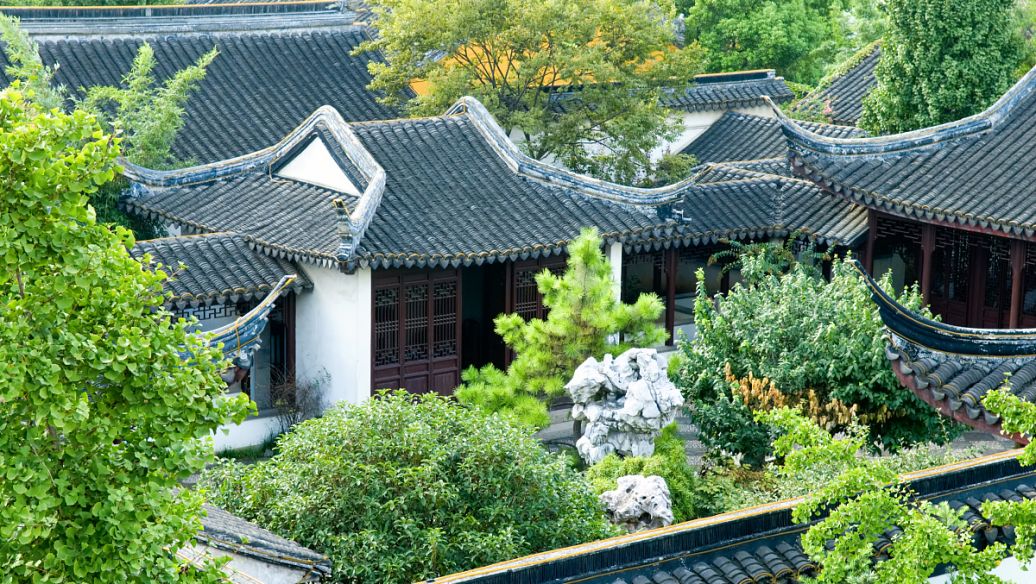
Humble Administrator's Garden
**A Retreat Born from Political Disillusion** Built in 1509 during the Ming Dynasty's Zhengde reign, the garden was the life's passion of Wang Xianchen, a disillusioned imperial censor who resigned his post to return to the land. Naming his estate after a Western Jin essay by Pan Yue celebrating the "clumsy" man's politics of simplicity, Wang created a refuge for literati gatherings. Wen Zhengming, one of the founding masters of the Wu School of painting, helped design its landscapes. Imagine a Renaissance villa's intellectual ambitions transplanted to the canals of the Yangtze delta—a comparable statement of cultivated taste would be the Medici gardens of Florence, though here the philosophy is Taoist withdrawal rather than political power. **Water as the Soul of the Garden** Water dominates the 78-acre estate, with the central pond covering roughly a third of the middle section. The garden unfolds in three distinct zones: the bright, open Eastern section with its "Return-to-Farmland" feel; the magnificent Central section, where the waterside Hall of Distant Fragrance anchors compositions of bridges, lotus pavilions, and borrowed views that cleverly frame a distant pagoda beyond the walls; and the compact Western "Supplementary Garden," added in the Qing Dynasty, where the dazzling Thirty-Six Pairs of Mandarin Ducks Hall plays with blue glass to filter shifting light across its twin chambers. **A Living Textbook of Garden Aesthetics** The garden embodies centuries of literati philosophy, employing the classical techniques of obstruction, borrowing, framing, and mirroring views. Every window frames a painting; every stone carries meaning; every seasonal bloom—from spring magnolias to summer lotuses, autumn maples, and winter plum blossoms—offers a different emotional register. It is, quite literally, an open-air textbook of Eastern aesthetics, where Confucian restraint meets Daoist naturalness and Buddhist contemplation in stone and water. **Planning Your Visit** Located at 178 Northeast Street in the Gusu District, the garden sits steps from the Suzhou Museum (itself designed by I. M. Pei) and is easily reached by metro or taxi. Peak season tickets (April–October) cost 80 RMB; off-season 70 RMB. Foreign visitors can book via the official "Suzhou Gardens" WeChat account using their passport number—on-site tickets are no longer sold. Seniors over 70 enter free; ages 60–69 receive half-price admission. Arrive before 7:30 a.m. to enjoy morning mist rising off the lotus ponds before tour groups descend. **The Essential Experience** Plan at least two and a half to three hours and enter through the South Gate, drifting eastward to west. An audio guide or expert-led tour is strongly recommended—without context, visitors miss the literary allusions embedded in every pavilion name and stone arrangement. To wander here is to read three-dimensional poetry: a place where Chinese painters, calligraphers, and philosophers have been decoding the relationship between humanity and nature for over five hundred years.

Traveler reviews

A whole garden holding the dream of Jiangnan, half an acre of water reflecting the universe. Tucked away in the northeast corner of Suzhou, hidden among white walls and dark tiles, lies a place that has captivated scholars and artists for centuries—Humble Administrator's Garden. Built in the early years of the Ming Dyna...
⭐ 5 · Charlie Expand
Humble Administrator's Garden is the top of China's four famous classical gardens and the biggest one still around in Suzhou. It's all about the water—mountains and water intertwine in the most refined, detailed way. Split into east, central, and west parts, with the...
⭐ 5 · Drew Expand