Hualien Port Shrine Site
⭐ 1.50
Hualien Port Shrine Site, Hualien City, Hualien County, Taiwan Province, China
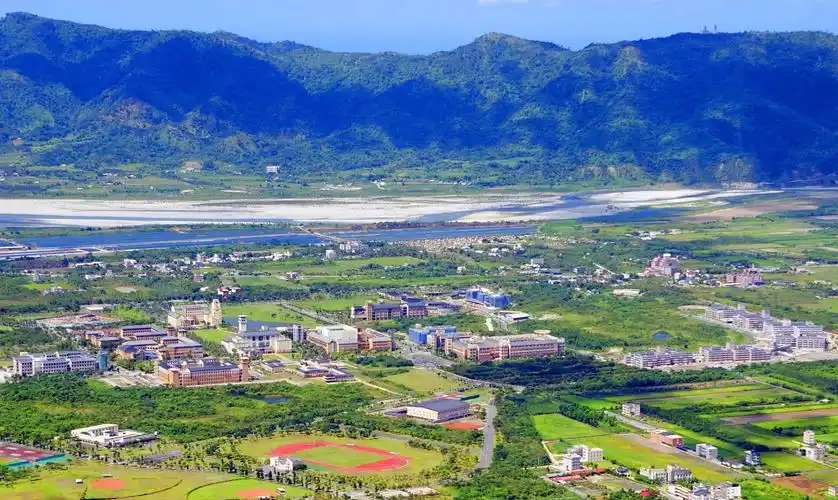 The Hualien Port Shrine was constructed during the Japanese colonial era, when the island—then known as Formosa—was administered as part of Japan's expanding Pacific empire, a period often compared to European colonial enterprises in Southeast Asia. Built on the elevated grounds of Meilun Mountain, the shrine served as the spiritual anchor of Hualien Port Prefecture, much as civic shrines anchored towns across the empire from Hokkaido to Kyushu. Following Japan's defeat in 1945, the site fell into disuse for decades before being fully cleared in 1981, a fate shared by hundreds of shrines across postwar East Asia, from Korea to mainland China.
What stands today is a 1980s reproduction of a northern Chinese palace-style Martyrs' Shrine honoring war dead—an architectural statement entirely disconnected from the site's Shinto origins. The imposing hip-and-gable roof and vermilion columns deliberately erase any trace of the Japanese era. No interpretive panels, reconstructed elements, or even subtle ground markings indicate the former sanctuary, making the visit more an exercise in historical imagination than a tangible heritage encounter. Scholars of colonial architecture may find value in this layered erasure, but general visitors will leave with little visual evidence of the past.
The cultural phenomenon of shrines being converted into Martyrs' Shrines was widespread across former Japanese territories and mirrors the repurposing of churches, mosques, and temples that occurred throughout Europe after periods of political upheaval. Taiwan's case is particularly striking because the substitution was so thorough: not a stone of the original remains. For travelers interested in the contested memory of empire, the site illustrates how succeeding regimes often seek to overwrite rather than preserve the monuments of their predecessors.
Meilun Mountain itself remains the genuine draw. The summit rewards visitors with panoramic vistas across Hualien's low-rise urban grid, the working harbor, and the cobalt arc of the Pacific, framed by the misty ridgeline of the Coastal Mountain Range. The surrounding parkland is quiet and leafy, ideal for a contemplative pause. However, the site's limitations become obvious quickly—expect to spend thirty minutes at most unless you arrive specifically for sunset photography or a deeper research interest in colonial spatial history.
Far richer Japanese-era heritage experiences lie within a short drive. In nearby Xincheng Township, the surreal sight of a Shinto torii gate standing beside a Spanish-mission-style Catholic church creates one of Taiwan's most photographed anachronisms—a juxtaposition of faiths as striking as Istanbul's Hagia Sophia. A fifteen-minute drive further leads to Qingxiu Temple in Ji'an, a wonderfully preserved wooden Buddhist complex dating from 1917, considered the finest surviving example of Japanese-style religious architecture on the island.
Practical considerations are essential. Public transit to Meilun Mountain is sparse, so renting a scooter or hiring a taxi for a half-day circuit is strongly recommended. Wear sturdy footwear, as the approach involves steep slopes and uneven pavement. Avoid visiting after dusk, when several access roads become poorly lit and isolated. Approach the layered colonial history with sensitivity—local attitudes toward the Japanese period remain varied and sometimes emotionally charged, and respectful, informed curiosity is always welcome.
The Hualien Port Shrine was constructed during the Japanese colonial era, when the island—then known as Formosa—was administered as part of Japan's expanding Pacific empire, a period often compared to European colonial enterprises in Southeast Asia. Built on the elevated grounds of Meilun Mountain, the shrine served as the spiritual anchor of Hualien Port Prefecture, much as civic shrines anchored towns across the empire from Hokkaido to Kyushu. Following Japan's defeat in 1945, the site fell into disuse for decades before being fully cleared in 1981, a fate shared by hundreds of shrines across postwar East Asia, from Korea to mainland China.
What stands today is a 1980s reproduction of a northern Chinese palace-style Martyrs' Shrine honoring war dead—an architectural statement entirely disconnected from the site's Shinto origins. The imposing hip-and-gable roof and vermilion columns deliberately erase any trace of the Japanese era. No interpretive panels, reconstructed elements, or even subtle ground markings indicate the former sanctuary, making the visit more an exercise in historical imagination than a tangible heritage encounter. Scholars of colonial architecture may find value in this layered erasure, but general visitors will leave with little visual evidence of the past.
The cultural phenomenon of shrines being converted into Martyrs' Shrines was widespread across former Japanese territories and mirrors the repurposing of churches, mosques, and temples that occurred throughout Europe after periods of political upheaval. Taiwan's case is particularly striking because the substitution was so thorough: not a stone of the original remains. For travelers interested in the contested memory of empire, the site illustrates how succeeding regimes often seek to overwrite rather than preserve the monuments of their predecessors.
Meilun Mountain itself remains the genuine draw. The summit rewards visitors with panoramic vistas across Hualien's low-rise urban grid, the working harbor, and the cobalt arc of the Pacific, framed by the misty ridgeline of the Coastal Mountain Range. The surrounding parkland is quiet and leafy, ideal for a contemplative pause. However, the site's limitations become obvious quickly—expect to spend thirty minutes at most unless you arrive specifically for sunset photography or a deeper research interest in colonial spatial history.
Far richer Japanese-era heritage experiences lie within a short drive. In nearby Xincheng Township, the surreal sight of a Shinto torii gate standing beside a Spanish-mission-style Catholic church creates one of Taiwan's most photographed anachronisms—a juxtaposition of faiths as striking as Istanbul's Hagia Sophia. A fifteen-minute drive further leads to Qingxiu Temple in Ji'an, a wonderfully preserved wooden Buddhist complex dating from 1917, considered the finest surviving example of Japanese-style religious architecture on the island.
Practical considerations are essential. Public transit to Meilun Mountain is sparse, so renting a scooter or hiring a taxi for a half-day circuit is strongly recommended. Wear sturdy footwear, as the approach involves steep slopes and uneven pavement. Avoid visiting after dusk, when several access roads become poorly lit and isolated. Approach the layered colonial history with sensitivity—local attitudes toward the Japanese period remain varied and sometimes emotionally charged, and respectful, informed curiosity is always welcome.