Ciji Temple
⭐ 3.20
Fuli Township, Hualien County, Taiwan Province
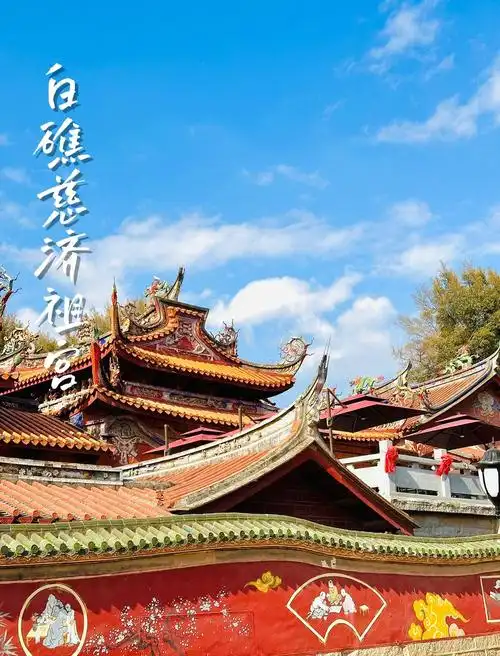 The Tzu Chi Cultural Park traces its origins to 1966, when Dharma Master Cheng Yen and thirty devoted followers in Hualien began saving five Taiwanese dollars each day to buy rice for the poor. From these humble beginnings grew one of Asia's most formidable humanitarian organizations, with relief missions spanning dozens of countries, paralleling the global reach of groups like the Red Cross or Médecins Sans Frontières. The park itself was planned in the mid-1990s as the spiritual epicenter of this worldwide network. Unlike traditional temples, it contains no statues or incense burners, reflecting the philosophy of "Buddhism in daily life and bodhisattvas among the people," a practice reminiscent of engaged Buddhism movements championed by figures like Thich Nhat Hanh.
The architectural centerpiece, Jing Si Hall, rises in a stately Tang-dynasty palace style with sweeping grey-tiled roofs that echo the grandeur of ancient Chinese imperial halls. Its main sutra hall soars 36 meters high, flooded with natural light, while its exterior is wrapped in 1,360 meters of bas-relief sculptures depicting flying apsaras (celestial beings) inspired by the Dunhuang caves along the Silk Road, the Buddhist world's answer to Renaissance angels adorning European cathedrals. Flanking halls house historical archives and scripture libraries, making the entire structure itself a readable work of art rather than mere ornamentation.
Equally remarkable is the Jing Si Bamboo Pavilion, a masterwork of traditional mortise-and-tenon joinery constructed without a single nail, a craft technique that recalls ancient Chinese woodworking traditions still practiced in select Japanese temples. Nearby stands a faithful replica of the small wooden hut where Master Cheng Yen first practiced, anchoring the campus in its origins. Lotus ponds and walkways inscribed with the "Four Virtues" of compassion, mercy, joy, and equanimity invite quiet contemplation, creating an atmosphere more akin to a monastic retreat than a tourist site.
The park sits at 703, Section 3, Zhongyang Road in Hualien City, adjacent to Tzu Chi University and Hospital. It is open daily from 8:00 to 17:00 with free admission, though visitors should register at the entrance and be guided by volunteers. Modest dress and quiet behavior are required; photography is restricted in the main sutra hall. English guided tours are occasionally available and should be confirmed in advance by calling +886-3-8560260. Plan for 45 to 60 minutes on site.
For travelers seeking traditional folk religion instead, the nearby Citian Temple on Zhongxiao Street honors Mazu, the sea goddess, and is just a short taxi ride away. After visiting the park, consider dining at the adjacent Sen Shan She, a vegetarian restaurant converted from a former dormitory, for a meal that continues the contemplative mood. Unlike Hualien's dramatic coastal scenery, this inland cultural stop offers a quieter, more introspective side of Taiwan that rewards travelers interested in Buddhism, architecture, or modern humanitarian movements.
The Tzu Chi Cultural Park traces its origins to 1966, when Dharma Master Cheng Yen and thirty devoted followers in Hualien began saving five Taiwanese dollars each day to buy rice for the poor. From these humble beginnings grew one of Asia's most formidable humanitarian organizations, with relief missions spanning dozens of countries, paralleling the global reach of groups like the Red Cross or Médecins Sans Frontières. The park itself was planned in the mid-1990s as the spiritual epicenter of this worldwide network. Unlike traditional temples, it contains no statues or incense burners, reflecting the philosophy of "Buddhism in daily life and bodhisattvas among the people," a practice reminiscent of engaged Buddhism movements championed by figures like Thich Nhat Hanh.
The architectural centerpiece, Jing Si Hall, rises in a stately Tang-dynasty palace style with sweeping grey-tiled roofs that echo the grandeur of ancient Chinese imperial halls. Its main sutra hall soars 36 meters high, flooded with natural light, while its exterior is wrapped in 1,360 meters of bas-relief sculptures depicting flying apsaras (celestial beings) inspired by the Dunhuang caves along the Silk Road, the Buddhist world's answer to Renaissance angels adorning European cathedrals. Flanking halls house historical archives and scripture libraries, making the entire structure itself a readable work of art rather than mere ornamentation.
Equally remarkable is the Jing Si Bamboo Pavilion, a masterwork of traditional mortise-and-tenon joinery constructed without a single nail, a craft technique that recalls ancient Chinese woodworking traditions still practiced in select Japanese temples. Nearby stands a faithful replica of the small wooden hut where Master Cheng Yen first practiced, anchoring the campus in its origins. Lotus ponds and walkways inscribed with the "Four Virtues" of compassion, mercy, joy, and equanimity invite quiet contemplation, creating an atmosphere more akin to a monastic retreat than a tourist site.
The park sits at 703, Section 3, Zhongyang Road in Hualien City, adjacent to Tzu Chi University and Hospital. It is open daily from 8:00 to 17:00 with free admission, though visitors should register at the entrance and be guided by volunteers. Modest dress and quiet behavior are required; photography is restricted in the main sutra hall. English guided tours are occasionally available and should be confirmed in advance by calling +886-3-8560260. Plan for 45 to 60 minutes on site.
For travelers seeking traditional folk religion instead, the nearby Citian Temple on Zhongxiao Street honors Mazu, the sea goddess, and is just a short taxi ride away. After visiting the park, consider dining at the adjacent Sen Shan She, a vegetarian restaurant converted from a former dormitory, for a meal that continues the contemplative mood. Unlike Hualien's dramatic coastal scenery, this inland cultural stop offers a quieter, more introspective side of Taiwan that rewards travelers interested in Buddhism, architecture, or modern humanitarian movements.