Liwu River
⭐ 4.20
Liwu River Scenic Area, Hualien County, Taiwan Province
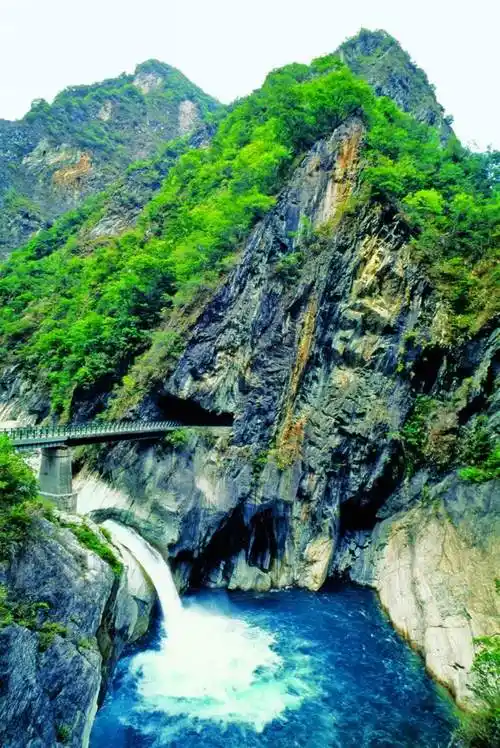 The Liwu Creek begins its journey on the northern slopes of Mount Qilai at roughly 3,440 meters elevation, plunging through a 20-kilometer canyon where the gradient ratio reaches a staggering 59‰. Over millions of years, the torrent has carved 1,660 meters down into the mountainside, exposing some of the world's purest marble — geologically comparable to Italy's Carrara quarries but formed in a much younger tectonic setting. The rate of erosion rivals the Colorado River's work in the American Southwest, yet here the rock is gleaming white rather than red sandstone. The result is a tropical Alpine-style canyon where waterfalls spill from sheer cliffs into jade-green pools, recognized globally as one of the planet's most spectacular marble gorges.
A network of well-maintained trails traces both banks of the Liwu, each offering a different perspective on the gorge. The Swallow Grotto showcases pothole formations carved into folded marble, while the Nine-Turn Tunnel — a series of short tunnels blasted into the cliff face — ranks among the most dramatic pedestrian routes in Asia. The Zhuilu Cliff trail climbs to a dizzying vantage point 500 meters above the river, rivaling Norway's Trolltunga for sheer exposure. Across the gorge, the Bulowan Suspension Bridge frames the canyon like a steel harp. The Changchun Shrine, built into the cliff behind a waterfall, echoes Japanese mountain temples, blending Shinto-inspired aesthetics with Buddhist dedication.
The gorge is the ancestral homeland of the Taroko people, one of Taiwan's officially recognized indigenous groups, whose name literally means "human" in their Austronesian language. They harvested the canyon for game, medicinal plants, and silver-grey marble that historically supplied Taiwan's most prized building stone. The opening of the Central Cross-Island Highway in 1960 — a mountain road comparable in ambition to Austria's Brenner Pass route — transformed the gorge from an isolated fastness into a national symbol. The road's construction cost over 200 lives, mostly veterans, whose memorial at Changchun Shrine bears witness to the human cost of opening the mountains.
Access to the Liwu Creek canyon is free as part of Taroko National Park, though the experience depends entirely on trail conditions. From Hualien City, travelers can take the Hualien Bus or hire a taxi for the 30-minute drive to the Taroko Visitor Center, where complimentary hard hats are distributed for use along exposed cliff sections. Hard hats are mandatory on the Swallow Grotto and Nine-Turn Tunnel trails, where falling rocks are a real hazard. Sturdy hiking shoes, rain gear, and at least two liters of water per person are essential. Swimming, camping, and wading in the river are strictly prohibited.
For European travelers accustomed to the gentler contours of the Alps or the Rhine Gorge, the Liwu offers a thrilling counterpoint: a tropical canyon where marble walls rise vertically from subtropical jungle. Arrive at 7 or 8 a.m. for the best light on the white cliffs and to avoid crowds; afternoon thunderstorms are common, and August typhoons bring flash floods and rockfalls. Allow half a day to a full day. Due to earthquakes between 2024 and 2026, the Swallow Grotto, Nine-Turn Tunnel, and several core trails remain under repair with restricted access — check the Taroko National Park Headquarters website for current conditions before departing. The gorge's beauty is undiminished, but flexibility is essential.
The Liwu Creek begins its journey on the northern slopes of Mount Qilai at roughly 3,440 meters elevation, plunging through a 20-kilometer canyon where the gradient ratio reaches a staggering 59‰. Over millions of years, the torrent has carved 1,660 meters down into the mountainside, exposing some of the world's purest marble — geologically comparable to Italy's Carrara quarries but formed in a much younger tectonic setting. The rate of erosion rivals the Colorado River's work in the American Southwest, yet here the rock is gleaming white rather than red sandstone. The result is a tropical Alpine-style canyon where waterfalls spill from sheer cliffs into jade-green pools, recognized globally as one of the planet's most spectacular marble gorges.
A network of well-maintained trails traces both banks of the Liwu, each offering a different perspective on the gorge. The Swallow Grotto showcases pothole formations carved into folded marble, while the Nine-Turn Tunnel — a series of short tunnels blasted into the cliff face — ranks among the most dramatic pedestrian routes in Asia. The Zhuilu Cliff trail climbs to a dizzying vantage point 500 meters above the river, rivaling Norway's Trolltunga for sheer exposure. Across the gorge, the Bulowan Suspension Bridge frames the canyon like a steel harp. The Changchun Shrine, built into the cliff behind a waterfall, echoes Japanese mountain temples, blending Shinto-inspired aesthetics with Buddhist dedication.
The gorge is the ancestral homeland of the Taroko people, one of Taiwan's officially recognized indigenous groups, whose name literally means "human" in their Austronesian language. They harvested the canyon for game, medicinal plants, and silver-grey marble that historically supplied Taiwan's most prized building stone. The opening of the Central Cross-Island Highway in 1960 — a mountain road comparable in ambition to Austria's Brenner Pass route — transformed the gorge from an isolated fastness into a national symbol. The road's construction cost over 200 lives, mostly veterans, whose memorial at Changchun Shrine bears witness to the human cost of opening the mountains.
Access to the Liwu Creek canyon is free as part of Taroko National Park, though the experience depends entirely on trail conditions. From Hualien City, travelers can take the Hualien Bus or hire a taxi for the 30-minute drive to the Taroko Visitor Center, where complimentary hard hats are distributed for use along exposed cliff sections. Hard hats are mandatory on the Swallow Grotto and Nine-Turn Tunnel trails, where falling rocks are a real hazard. Sturdy hiking shoes, rain gear, and at least two liters of water per person are essential. Swimming, camping, and wading in the river are strictly prohibited.
For European travelers accustomed to the gentler contours of the Alps or the Rhine Gorge, the Liwu offers a thrilling counterpoint: a tropical canyon where marble walls rise vertically from subtropical jungle. Arrive at 7 or 8 a.m. for the best light on the white cliffs and to avoid crowds; afternoon thunderstorms are common, and August typhoons bring flash floods and rockfalls. Allow half a day to a full day. Due to earthquakes between 2024 and 2026, the Swallow Grotto, Nine-Turn Tunnel, and several core trails remain under repair with restricted access — check the Taroko National Park Headquarters website for current conditions before departing. The gorge's beauty is undiminished, but flexibility is essential.