Mazhan Ancient Village
⭐ 3.80
Mazhan Ancient Village, Mazhan Township, Tengchong City, Baoshan City, Yunnan Province, China
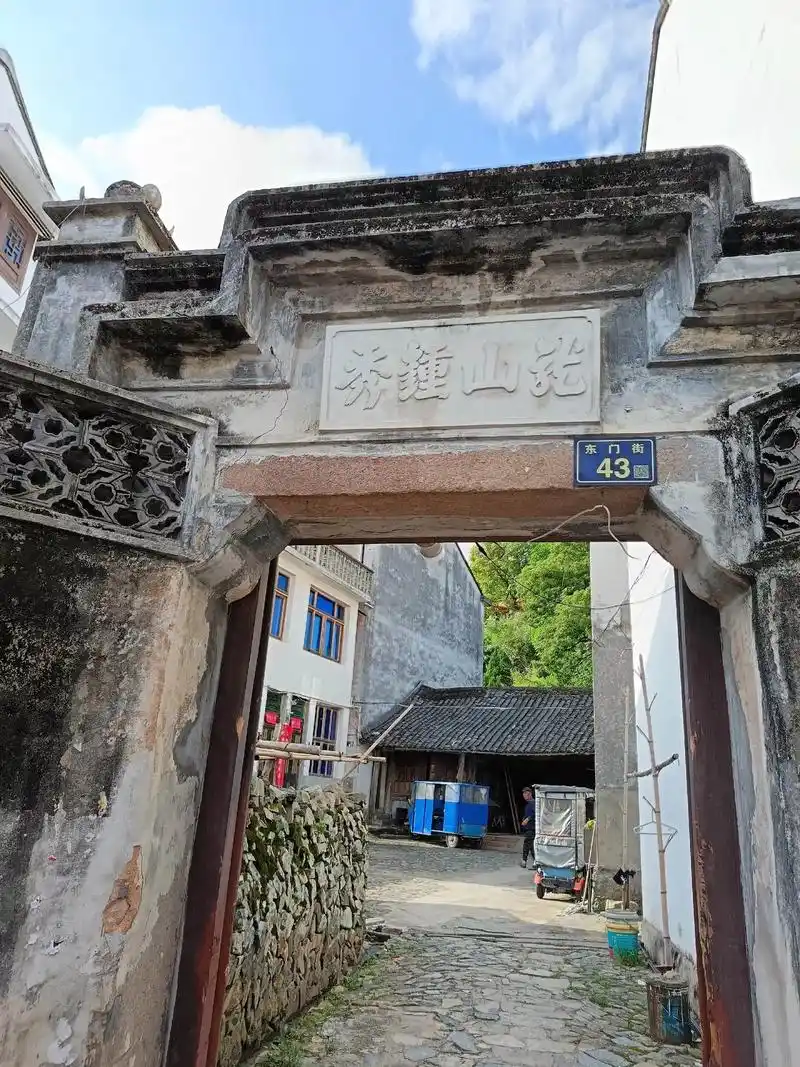 Mazhan sits on a spur of the Southern Silk Road, the ancient caravan route that once linked Yunnan to Burma, India, and beyond—roughly analogous to the Via Appia in its role as a long-distance trade artery. The villages occupy the eastern rim of the Tengchong volcanic field, an active landscape whose last major eruptions blanketed the region in black basalt and fertile ash, much like the slopes around Mount Vesuvius shaped Campanian agriculture. This marriage of trade and geology gave rise to a distinctive highland culture: caravan inns, cobbled mule tracks, and stone farmsteads built directly from the cooled lava beneath their feet.
The building vocabulary here is volcanic vernacular at its most honest. House walls are dry-stacked from rough basalt blocks, often set with a mortar of the same ash that nourished the surrounding fields, and capped with simple grey clay tiles. The effect is heavier and more primal than the timber-framed courtyard homes of central China, recalling instead the dark stone villages of Italy's Mount Etna or the Azores. Hemu and Sanlian have preserved the old caravan lanes as flagged stone paths threading between low eaves and wooden doors, and many compounds still follow the centuries-old plan of courtyard, stable, and workshop under one roof.
Hemu Camellia Village was inscribed on China's Traditional Villages register in 2013 and revolves around an extraordinary living grove of more than forty thousand Camellia reticulata trees, the emblematic flower of Yunnan and a species cultivated here longer than almost anywhere else on earth. The standout is the so-called Camellia King, an eight-hundred-year-old specimen whose crimson blossoms, blooming from the winter solstice into early spring, can turn whole hillsides scarlet against occasional snow. The grove is both an agricultural asset—producing prized cold-pressed camellia oil—and a magnet for photographers who find in its layered canopy a worthy cousin to Japan's cherry-blossom rituals, set on a grander, wilder scale.
A short drive away, Sanlian Bowl Kiln Village carries an equally rare inheritance: a six-hundred-year tradition of throwing and firing pottery from the very volcanic earth beneath the village. Designated a Traditional Village in 2014 and recognized as a provincial-level intangible cultural heritage, Sanlian still practices the old family division of labor—one clan per craft stage—and marks each firing with a communal kiln-opening ceremony. Visitors are invited to take a turn at the wheel, trimming a small bowl from a lump of local clay. The finished pieces are deliberately humble, much closer in spirit to Portuguese blackware or Tuscan terracotta than to polished factory porcelain.
Both villages are open to the public free of charge and remain lightly commercialized; expect farm-stay guesthouses and simple family-run restaurants rather than hotels, with capacity limited to a handful of vehicles at peak times. The most reliable access is by self-drive or hired car from Tengchong city, about thirty to forty minutes over good asphalt, with sparse public buses that do not run late. Signage is almost entirely in Chinese, so a translation app and offline map are strongly recommended, and modest dress and respectful behavior toward villagers and shrines are appreciated. Bring cash, as card acceptance is rare.
The best season is winter through early spring, when the camellias are in bloom and the volcanic landscape wears its most dramatic contrast of red, black, and white; summer trades blossoms for cool green shade and steady pottery workshops, ideal for slow travelers seeking a quieter visit. Mazhan pairs naturally with two of Tengchong's headline sights: the Tengchong Volcano Geopark, where you can stand on a still-warm crater rim, and the Beihai Wetland, a high-altitude marsh of floating mats and migrant birds. Together they form a compact loop of fire, water, flora, and craft—perhaps the most physically layered introduction to western Yunnan available in a single weekend.
Mazhan sits on a spur of the Southern Silk Road, the ancient caravan route that once linked Yunnan to Burma, India, and beyond—roughly analogous to the Via Appia in its role as a long-distance trade artery. The villages occupy the eastern rim of the Tengchong volcanic field, an active landscape whose last major eruptions blanketed the region in black basalt and fertile ash, much like the slopes around Mount Vesuvius shaped Campanian agriculture. This marriage of trade and geology gave rise to a distinctive highland culture: caravan inns, cobbled mule tracks, and stone farmsteads built directly from the cooled lava beneath their feet.
The building vocabulary here is volcanic vernacular at its most honest. House walls are dry-stacked from rough basalt blocks, often set with a mortar of the same ash that nourished the surrounding fields, and capped with simple grey clay tiles. The effect is heavier and more primal than the timber-framed courtyard homes of central China, recalling instead the dark stone villages of Italy's Mount Etna or the Azores. Hemu and Sanlian have preserved the old caravan lanes as flagged stone paths threading between low eaves and wooden doors, and many compounds still follow the centuries-old plan of courtyard, stable, and workshop under one roof.
Hemu Camellia Village was inscribed on China's Traditional Villages register in 2013 and revolves around an extraordinary living grove of more than forty thousand Camellia reticulata trees, the emblematic flower of Yunnan and a species cultivated here longer than almost anywhere else on earth. The standout is the so-called Camellia King, an eight-hundred-year-old specimen whose crimson blossoms, blooming from the winter solstice into early spring, can turn whole hillsides scarlet against occasional snow. The grove is both an agricultural asset—producing prized cold-pressed camellia oil—and a magnet for photographers who find in its layered canopy a worthy cousin to Japan's cherry-blossom rituals, set on a grander, wilder scale.
A short drive away, Sanlian Bowl Kiln Village carries an equally rare inheritance: a six-hundred-year tradition of throwing and firing pottery from the very volcanic earth beneath the village. Designated a Traditional Village in 2014 and recognized as a provincial-level intangible cultural heritage, Sanlian still practices the old family division of labor—one clan per craft stage—and marks each firing with a communal kiln-opening ceremony. Visitors are invited to take a turn at the wheel, trimming a small bowl from a lump of local clay. The finished pieces are deliberately humble, much closer in spirit to Portuguese blackware or Tuscan terracotta than to polished factory porcelain.
Both villages are open to the public free of charge and remain lightly commercialized; expect farm-stay guesthouses and simple family-run restaurants rather than hotels, with capacity limited to a handful of vehicles at peak times. The most reliable access is by self-drive or hired car from Tengchong city, about thirty to forty minutes over good asphalt, with sparse public buses that do not run late. Signage is almost entirely in Chinese, so a translation app and offline map are strongly recommended, and modest dress and respectful behavior toward villagers and shrines are appreciated. Bring cash, as card acceptance is rare.
The best season is winter through early spring, when the camellias are in bloom and the volcanic landscape wears its most dramatic contrast of red, black, and white; summer trades blossoms for cool green shade and steady pottery workshops, ideal for slow travelers seeking a quieter visit. Mazhan pairs naturally with two of Tengchong's headline sights: the Tengchong Volcano Geopark, where you can stand on a still-warm crater rim, and the Beihai Wetland, a high-altitude marsh of floating mats and migrant birds. Together they form a compact loop of fire, water, flora, and craft—perhaps the most physically layered introduction to western Yunnan available in a single weekend.