Ginkgo Village
⭐ 1.00
Ginkgo Village, Malong District, Qujing City, Baoshan City, Yunnan Province, China
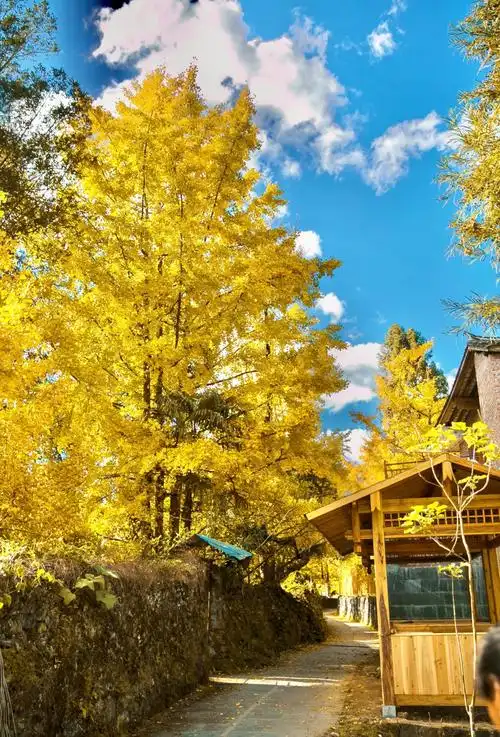 Ginkgo Village traces its roots to the Song Dynasty (960–1279), when it flourished as a key waypoint on the Tea Horse Road, the legendary southern Silk Route linking Yunnan to Tibet and beyond. The ginkgo itself is a botanical marvel: a living fossil whose lineage stretches back 270 million years, surviving long after the dinosaurs. Walking beneath these ancient trees is akin to strolling through a European cathedral of nature—except here the pillars are golden, and the congregation has been gathering each autumn for centuries.
The village architecture reflects classic western Yunnan vernacular style, with grey-tiled roofs, whitewashed walls, and upturned eaves reminiscent of rural Hampshire villages or the sun-bleached hamlets of inland Tuscany. Many homes are built right around mature ginkgo trees, with trunks rising through courtyards—an organic relationship between dwelling and woodland that recalls the sacred groves venerated across Celtic Europe.
Beyond its visual splendor, the village safeguards distinctive frontier folk traditions. Shadow puppet performances—staged beneath the ginkgos themselves—are a beloved regional art form, comparable to the Sicilian puppet opera or the Czech marionette heritage. The villagers also maintain ancient tree-worship rituals, treating their oldest ginkgos as protective deities. No visit is complete without sampling the local "Ginkgo Feast," featuring dishes like chicken stewed with ginkgo nuts, ginkgo flower omelettes, and roasted seeds—a distinctive culinary experience rooted in centuries of harvest tradition.
Practical access is straightforward but requires planning. The village sits roughly 37 kilometers from Tengchong city center, about an hour by chartered vehicle, as public transport is limited. Parking, family-run guesthouses, and restaurants are available on-site. Entry fees are modest, and visitors typically spend three to four hours exploring, though photographers should reserve a full day. Accommodations fill quickly in peak season, so advance booking is essential.
Timing is everything. The golden spectacle runs from approximately November 15 to December 10, when leaves turn fully yellow and drift onto rooftops and stone paths. Visiting outside this narrow window means missing the village's defining glory—think of arriving at Japan's Kyoto in July hoping for cherry blossoms. Travelers with fixed non-autumn dates should prioritize Tengchong's Hot Sea geothermal park or the volcanic geological park instead, which shine year-round. For those who can adjust their itinerary, however, this borderland gem rewards visitors with one of Asia's most unforgettable autumn displays.
Ginkgo Village traces its roots to the Song Dynasty (960–1279), when it flourished as a key waypoint on the Tea Horse Road, the legendary southern Silk Route linking Yunnan to Tibet and beyond. The ginkgo itself is a botanical marvel: a living fossil whose lineage stretches back 270 million years, surviving long after the dinosaurs. Walking beneath these ancient trees is akin to strolling through a European cathedral of nature—except here the pillars are golden, and the congregation has been gathering each autumn for centuries.
The village architecture reflects classic western Yunnan vernacular style, with grey-tiled roofs, whitewashed walls, and upturned eaves reminiscent of rural Hampshire villages or the sun-bleached hamlets of inland Tuscany. Many homes are built right around mature ginkgo trees, with trunks rising through courtyards—an organic relationship between dwelling and woodland that recalls the sacred groves venerated across Celtic Europe.
Beyond its visual splendor, the village safeguards distinctive frontier folk traditions. Shadow puppet performances—staged beneath the ginkgos themselves—are a beloved regional art form, comparable to the Sicilian puppet opera or the Czech marionette heritage. The villagers also maintain ancient tree-worship rituals, treating their oldest ginkgos as protective deities. No visit is complete without sampling the local "Ginkgo Feast," featuring dishes like chicken stewed with ginkgo nuts, ginkgo flower omelettes, and roasted seeds—a distinctive culinary experience rooted in centuries of harvest tradition.
Practical access is straightforward but requires planning. The village sits roughly 37 kilometers from Tengchong city center, about an hour by chartered vehicle, as public transport is limited. Parking, family-run guesthouses, and restaurants are available on-site. Entry fees are modest, and visitors typically spend three to four hours exploring, though photographers should reserve a full day. Accommodations fill quickly in peak season, so advance booking is essential.
Timing is everything. The golden spectacle runs from approximately November 15 to December 10, when leaves turn fully yellow and drift onto rooftops and stone paths. Visiting outside this narrow window means missing the village's defining glory—think of arriving at Japan's Kyoto in July hoping for cherry blossoms. Travelers with fixed non-autumn dates should prioritize Tengchong's Hot Sea geothermal park or the volcanic geological park instead, which shine year-round. For those who can adjust their itinerary, however, this borderland gem rewards visitors with one of Asia's most unforgettable autumn displays.