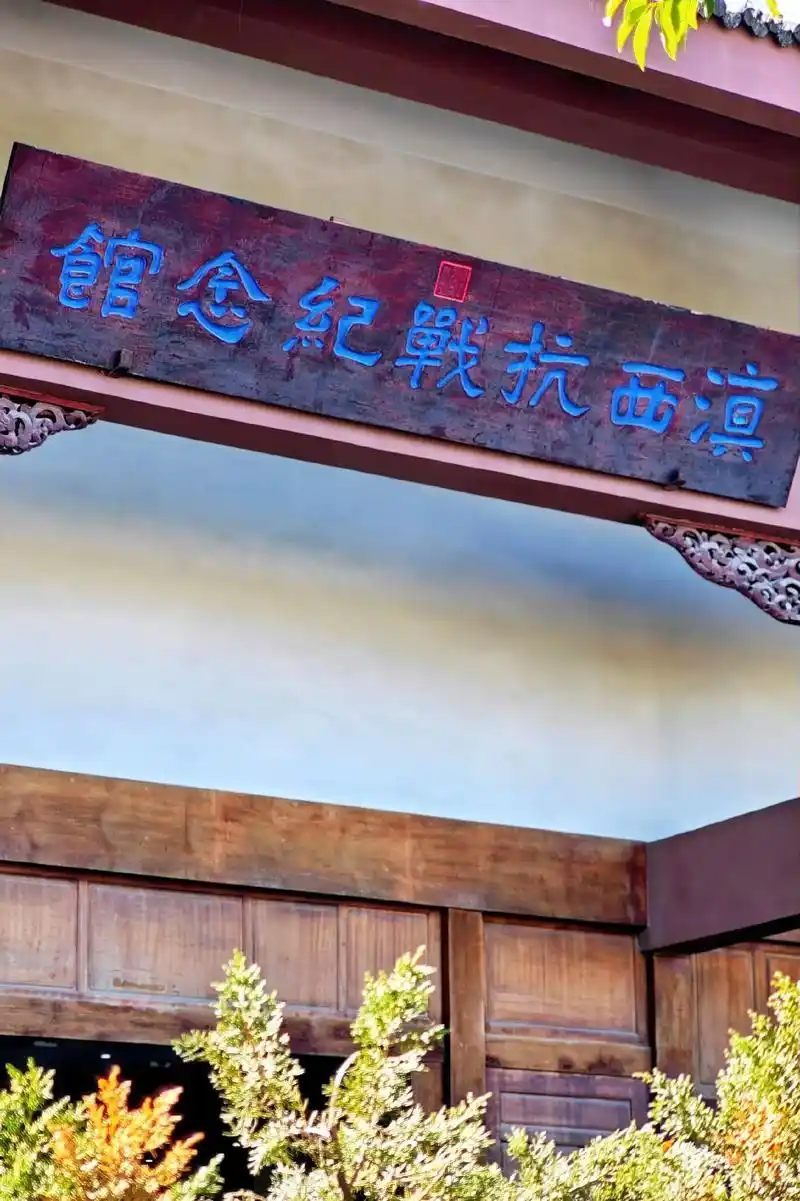
Western Yunnan Anti-Japanese War Memorial Hall
⭐ 3.50
Baoshan City, Yunnan Province, China
 Tucked into the highlands near Myanmar's border, Tengchong was a critical battlefield in the war that most Westerners associate primarily with Normandy, Stalingrad, or Pearl Harbor. Yet the China-Burma-India Theater was equally decisive: the Japanese seizure of Burma in 1942 severed China's only overland supply route, forcing American engineers and Chinese laborers to build the Ledo (Stilwell) Road while Chinese Expeditionary Forces fought their way south through terrain even harsher than the Ardennes. The 1944 Western Yunnan counter-offensive—featuring the devastating Battle of Songshan, comparable in attrition to Tarawa—cost thousands of lives before finally restoring the Burma Road. Visiting this memorial fills a significant gap in the Western understanding of WWII's truly global scope.
The memorial building itself is a deliberate piece of commemorative architecture. Stepped into the hillside with views over the surrounding valleys, its broad modernist massing is softened by sweeping tiled roofs that quote Tengchong's traditional courtyard houses, creating a visual bridge between contemporary China and its wartime past. The most arresting feature appears immediately at the entrance: a towering wall installation composed of hundreds of replica combat helmets, an image as haunting as the field of crosses at Normandy American Cemetery. The building is not merely a container for exhibits—it actively shapes the visitor's emotional entry into the story.
Inside, ten themed galleries unfold the full Western Yunnan campaign in meticulous detail, from the original construction of the Burma Road through the departure of the Expeditionary Force, the Songshan siege, and the final liberation of Tengchong in September 1944. Displays combine period weapons, uniforms, diaries, photographs, and immersive battle dioramas. Most moving is the Roll of Honor wall, where the names of more than 10,000 known fallen soldiers are inscribed—an experience that resonates powerfully with visitors familiar with the Vietnam Veterans Memorial in Washington. Multimedia presentations and bilingual interpretive panels (English available) help contextualize the human cost of each campaign phase.
The memorial's direct physical and symbolic link with the neighboring National Martyrs' Cemetery creates a layered experience unavailable at most war sites worldwide. After exploring the galleries, visitors can walk directly into the hillside necropolis, where ranks of identical stone tombs follow the contours of the mountain in solemn formation. Together, the two sites function as both museum and shrine, dedicated to preserving an episode of history that Chinese authorities now position alongside the better-known battles of Shanghai and Nanjing as central to the national抗战 narrative. For international travelers, this is a rare opportunity to engage directly with the human dimension of a front where British, American, and Chinese soldiers fought shoulder to shoulder.
Practical planning is straightforward. The memorial operates Tuesday through Sunday from 9:00 AM, closing on Mondays; allow two to three hours for a meaningful visit, longer if you wish to walk to the cemetery afterward. A combined ticket covers both sites. Free guided tours in Mandarin run periodically, while English-speaking guides can be reserved in advance for an additional fee. Tickets should be booked via the "You Yunnan" (游云南) WeChat mini-program, ideally a day ahead during peak travel seasons (March–May, September–November). The site lies about 5 kilometers from Tengchong's old town and is easily reached by taxi or rideshare.
Tucked into the highlands near Myanmar's border, Tengchong was a critical battlefield in the war that most Westerners associate primarily with Normandy, Stalingrad, or Pearl Harbor. Yet the China-Burma-India Theater was equally decisive: the Japanese seizure of Burma in 1942 severed China's only overland supply route, forcing American engineers and Chinese laborers to build the Ledo (Stilwell) Road while Chinese Expeditionary Forces fought their way south through terrain even harsher than the Ardennes. The 1944 Western Yunnan counter-offensive—featuring the devastating Battle of Songshan, comparable in attrition to Tarawa—cost thousands of lives before finally restoring the Burma Road. Visiting this memorial fills a significant gap in the Western understanding of WWII's truly global scope.
The memorial building itself is a deliberate piece of commemorative architecture. Stepped into the hillside with views over the surrounding valleys, its broad modernist massing is softened by sweeping tiled roofs that quote Tengchong's traditional courtyard houses, creating a visual bridge between contemporary China and its wartime past. The most arresting feature appears immediately at the entrance: a towering wall installation composed of hundreds of replica combat helmets, an image as haunting as the field of crosses at Normandy American Cemetery. The building is not merely a container for exhibits—it actively shapes the visitor's emotional entry into the story.
Inside, ten themed galleries unfold the full Western Yunnan campaign in meticulous detail, from the original construction of the Burma Road through the departure of the Expeditionary Force, the Songshan siege, and the final liberation of Tengchong in September 1944. Displays combine period weapons, uniforms, diaries, photographs, and immersive battle dioramas. Most moving is the Roll of Honor wall, where the names of more than 10,000 known fallen soldiers are inscribed—an experience that resonates powerfully with visitors familiar with the Vietnam Veterans Memorial in Washington. Multimedia presentations and bilingual interpretive panels (English available) help contextualize the human cost of each campaign phase.
The memorial's direct physical and symbolic link with the neighboring National Martyrs' Cemetery creates a layered experience unavailable at most war sites worldwide. After exploring the galleries, visitors can walk directly into the hillside necropolis, where ranks of identical stone tombs follow the contours of the mountain in solemn formation. Together, the two sites function as both museum and shrine, dedicated to preserving an episode of history that Chinese authorities now position alongside the better-known battles of Shanghai and Nanjing as central to the national抗战 narrative. For international travelers, this is a rare opportunity to engage directly with the human dimension of a front where British, American, and Chinese soldiers fought shoulder to shoulder.
Practical planning is straightforward. The memorial operates Tuesday through Sunday from 9:00 AM, closing on Mondays; allow two to three hours for a meaningful visit, longer if you wish to walk to the cemetery afterward. A combined ticket covers both sites. Free guided tours in Mandarin run periodically, while English-speaking guides can be reserved in advance for an additional fee. Tickets should be booked via the "You Yunnan" (游云南) WeChat mini-program, ideally a day ahead during peak travel seasons (March–May, September–November). The site lies about 5 kilometers from Tengchong's old town and is easily reached by taxi or rideshare.