Jiangxi Provincial Art Museum
⭐ 4.50
Donghu District, Nanchang City, Jiangxi Province, China
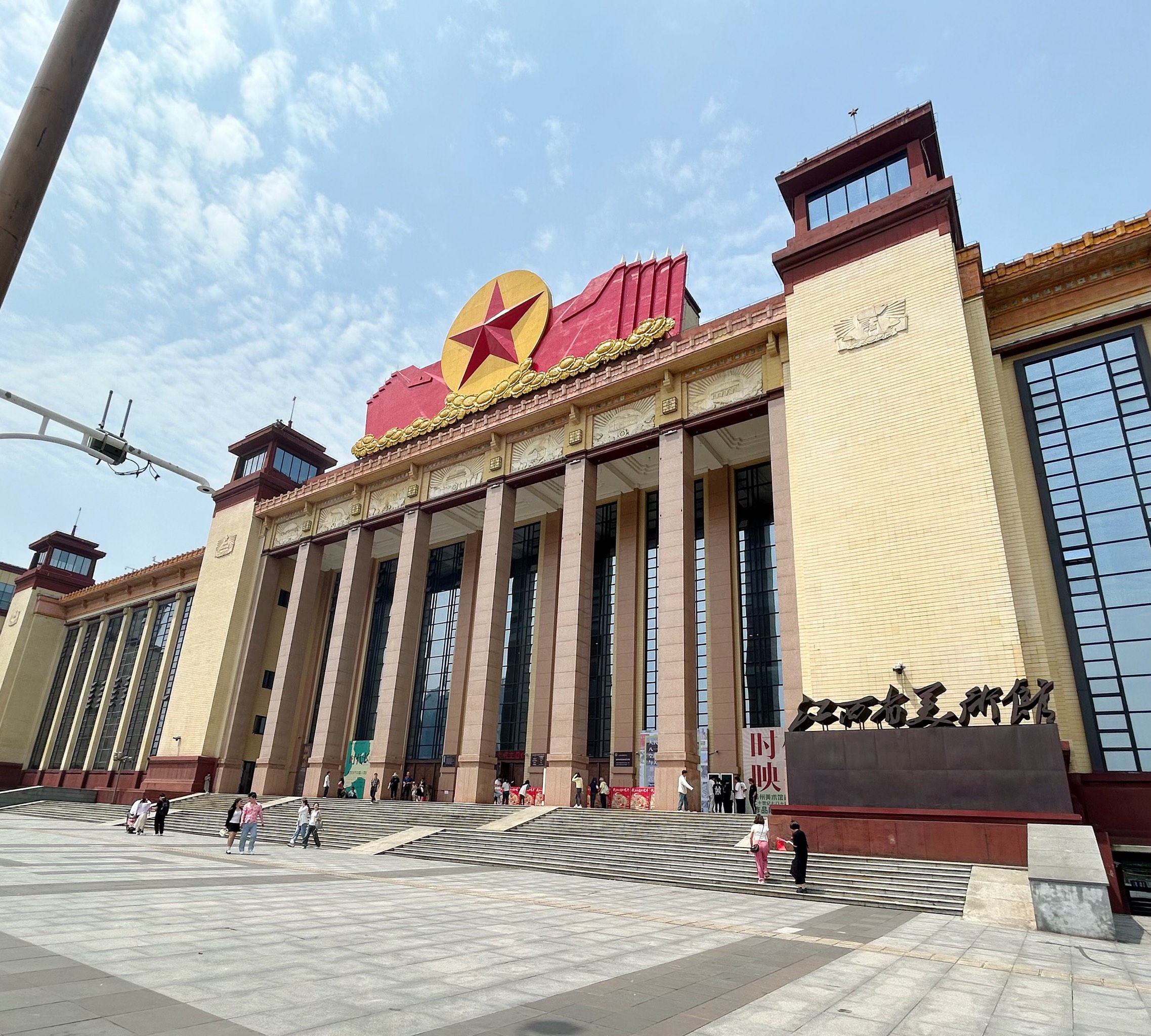 The museum occupies the former "Long Live Victory Hall," a structure that emerged during the height of the Sino-Soviet alliance, when Nanchang was still vibrating with memories of the 1927 Nanchang Uprising—the military event that planted the seeds of the Red Army. Completed in 1968, the building embodies an era when socialist nations across the Eastern Bloc erected civic monuments in a shared architectural vocabulary, much like Warsaw's Palace of Culture and Science or the workers' palaces along Karl-Marx-Allee in Berlin. After half a century of shifting purposes, it was lovingly restored and rechristened as Jiangxi's flagship art museum in 2020.
Architecturally, the museum is a textbook example of Stalinist-Soviet classicism translated to a southern Chinese context. Its distinctive "mountain"-shaped footprint, symmetrical massing, and cream-colored walls trimmed with red accents recall the grand civic theatres and palaces of culture built throughout the communist world in the 1950s and 60s. The interior is equally theatrical, with sweeping spiral staircases, soaring central atrium, and gallery halls that feel almost palatial. Both day and night, the building commands attention from Bayi Square—its illuminated silhouette after dark rivaling the visual drama of Moscow's Seven Sisters skyscrapers.
As Jiangxi's premier provincial art institution, the museum carries the weight of showcasing the region's creative output from the modern era. Its permanent collection surveys Jiangxi's oil paintings, woodblock prints, sculpture, and the politically resonant "red-themed" works that trace the province's revolutionary heritage. Beyond its permanent holdings, the venue regularly imports blockbuster touring exhibitions from across China and abroad, and hosts workshops, stamp-collecting activities, and public lectures designed to make art accessible to ordinary citizens—reminiscent of the educational mission of London's Tate Modern or the Louvre.
Admission is entirely free, though visitors must reserve a timed entry slot in advance through the museum's WeChat mini-program or official account. Bring a passport or ID card for entry verification. Doors are open Tuesday through Sunday from 9 a.m. to 5 p.m. (last entry 4:30 p.m.), with extended Saturday hours until 9 p.m. (last entry 8:30 p.m.). The museum closes on Mondays. Eating, drinking, smoking, and touching artworks are prohibited, and pets are not admitted inside. Plan on spending roughly 1.5 to 2 hours for a comfortable visit.
The museum is wonderfully accessible via Metro Lines 1 and 2 at Bayi Square Station, just a five-minute walk from Exits 3 or 5. For the best experience, time your visit for a Saturday evening—daytime crowds thin out and the building glows dramatically under floodlights. Pair your museum trip with the neighboring Jiangxi Provincial Museum just across the square, or continue to the lantern-lit alleys of Wanshou Palace Historic District and the legendary Tengwang Pavilion, immortalized in a Tang-dynasty preface as celebrated in China as any Romantic-era verse is in the West.
The museum occupies the former "Long Live Victory Hall," a structure that emerged during the height of the Sino-Soviet alliance, when Nanchang was still vibrating with memories of the 1927 Nanchang Uprising—the military event that planted the seeds of the Red Army. Completed in 1968, the building embodies an era when socialist nations across the Eastern Bloc erected civic monuments in a shared architectural vocabulary, much like Warsaw's Palace of Culture and Science or the workers' palaces along Karl-Marx-Allee in Berlin. After half a century of shifting purposes, it was lovingly restored and rechristened as Jiangxi's flagship art museum in 2020.
Architecturally, the museum is a textbook example of Stalinist-Soviet classicism translated to a southern Chinese context. Its distinctive "mountain"-shaped footprint, symmetrical massing, and cream-colored walls trimmed with red accents recall the grand civic theatres and palaces of culture built throughout the communist world in the 1950s and 60s. The interior is equally theatrical, with sweeping spiral staircases, soaring central atrium, and gallery halls that feel almost palatial. Both day and night, the building commands attention from Bayi Square—its illuminated silhouette after dark rivaling the visual drama of Moscow's Seven Sisters skyscrapers.
As Jiangxi's premier provincial art institution, the museum carries the weight of showcasing the region's creative output from the modern era. Its permanent collection surveys Jiangxi's oil paintings, woodblock prints, sculpture, and the politically resonant "red-themed" works that trace the province's revolutionary heritage. Beyond its permanent holdings, the venue regularly imports blockbuster touring exhibitions from across China and abroad, and hosts workshops, stamp-collecting activities, and public lectures designed to make art accessible to ordinary citizens—reminiscent of the educational mission of London's Tate Modern or the Louvre.
Admission is entirely free, though visitors must reserve a timed entry slot in advance through the museum's WeChat mini-program or official account. Bring a passport or ID card for entry verification. Doors are open Tuesday through Sunday from 9 a.m. to 5 p.m. (last entry 4:30 p.m.), with extended Saturday hours until 9 p.m. (last entry 8:30 p.m.). The museum closes on Mondays. Eating, drinking, smoking, and touching artworks are prohibited, and pets are not admitted inside. Plan on spending roughly 1.5 to 2 hours for a comfortable visit.
The museum is wonderfully accessible via Metro Lines 1 and 2 at Bayi Square Station, just a five-minute walk from Exits 3 or 5. For the best experience, time your visit for a Saturday evening—daytime crowds thin out and the building glows dramatically under floodlights. Pair your museum trip with the neighboring Jiangxi Provincial Museum just across the square, or continue to the lantern-lit alleys of Wanshou Palace Historic District and the legendary Tengwang Pavilion, immortalized in a Tang-dynasty preface as celebrated in China as any Romantic-era verse is in the West.