Tengchong Volcanic Cluster
⭐ 4.60
Tengchong Volcanic Cluster, Tengchong City, Baoshan City, Yunnan Province, China
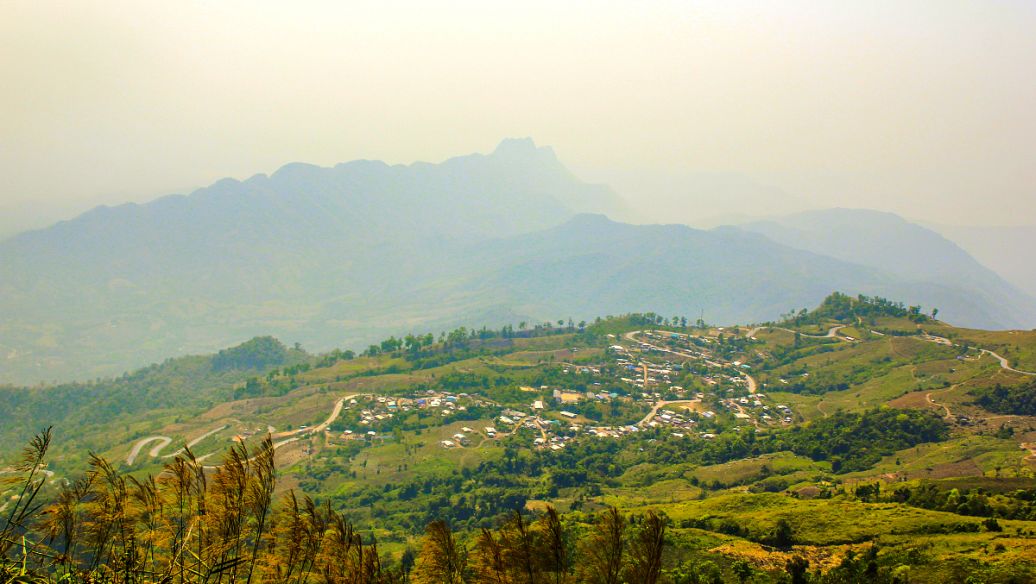 Tengchong sits directly atop the grinding seam where the Indian Plate slams northward into the Eurasian Plate — the same colossal collision that built the Himalayas and, further west, fuels Italy's Vesuvius and the volcanoes of the Aegean. This stretch belongs to the Mediterranean–Himalayan volcanic belt, sometimes called the "sister chain" to the Pacific Ring of Fire. For geologists, Tengchong is essentially an open-air laboratory: its 97 Cenozoic cones, formed over millions of years and including truncated-cone, shield, and dome-shaped varieties, document almost every stage of continental volcanism in a single landscape. The youngest eruptions here occurred a mere 4,000 to 7,000 years ago — contemporary with the Bronze Age civilizations of the Mediterranean — so what looks "ancient" is, in geological terms, yesterday.
The park's showpiece is the so-called "Big Dipper" (Beidou Qixing) chain, where seven volcanic cones march across the highlands in the unmistakable shape of the constellation. Comparable in drama to the Phlegraean Fields near Naples or the crater lakes of Iceland's Krafla, but arranged with almost mathematical precision, the alignment has fascinated visitors and astronomers alike. A short drive away, the Black Fish River (Heiyu He) tumbles through a gorge lined with hexagonal basalt columns — a formation strikingly reminiscent of Northern Ireland's Giant's Causeway or the organ-pipes of Staffa in Scotland.
Hiking is the most rewarding way to experience the field. Both Dakongshan ("Big Empty Mountain") and its smaller sibling Xiaokongshan can be climbed in under an hour, and from their rims you peer directly into yawning green craters that look more like jungle-swallowed moonscapes than anything in Europe. The adjacent Volcanic Geopark Museum adds context with interactive displays on magma origins, local lava types, and the region's ongoing geothermal research, making the site especially attractive for families and school groups.
Tengchong's volcanic pedigree also fuels an extraordinary side attraction: its hot springs. The same deep faults that once channelled lava now pipe mineral-rich water to the surface, and the nearby Hot Sea (Rehai) offers boiling pools, steam vents, and even rivers where locals famously cook eggs in the bubbling flow. For Western visitors used to Iceland's Blue Lagoon or Japan's onsen, this is the Yunnan equivalent — set against a backdrop of subtropical forest rather than tundra.
Practicalities for the traveler: Tengchong is reached by a one-hour flight from Kunming or by a scenic long-distance bus from Dali. The volcanic park lies about 25 km north of town and is best explored with a hired car or local guide; entrance fees are modest, and a hot-air balloon flight (weather permitting, usually March–May and September–November) should be booked a day ahead. Most visitors combine the volcanoes with the Hot Sea springs and the nearby border town of Heshun, allowing two to three full days to take in the geology, soak in the thermal baths, and absorb the slow, subtropical rhythm of China's far southwest.
Tengchong sits directly atop the grinding seam where the Indian Plate slams northward into the Eurasian Plate — the same colossal collision that built the Himalayas and, further west, fuels Italy's Vesuvius and the volcanoes of the Aegean. This stretch belongs to the Mediterranean–Himalayan volcanic belt, sometimes called the "sister chain" to the Pacific Ring of Fire. For geologists, Tengchong is essentially an open-air laboratory: its 97 Cenozoic cones, formed over millions of years and including truncated-cone, shield, and dome-shaped varieties, document almost every stage of continental volcanism in a single landscape. The youngest eruptions here occurred a mere 4,000 to 7,000 years ago — contemporary with the Bronze Age civilizations of the Mediterranean — so what looks "ancient" is, in geological terms, yesterday.
The park's showpiece is the so-called "Big Dipper" (Beidou Qixing) chain, where seven volcanic cones march across the highlands in the unmistakable shape of the constellation. Comparable in drama to the Phlegraean Fields near Naples or the crater lakes of Iceland's Krafla, but arranged with almost mathematical precision, the alignment has fascinated visitors and astronomers alike. A short drive away, the Black Fish River (Heiyu He) tumbles through a gorge lined with hexagonal basalt columns — a formation strikingly reminiscent of Northern Ireland's Giant's Causeway or the organ-pipes of Staffa in Scotland.
Hiking is the most rewarding way to experience the field. Both Dakongshan ("Big Empty Mountain") and its smaller sibling Xiaokongshan can be climbed in under an hour, and from their rims you peer directly into yawning green craters that look more like jungle-swallowed moonscapes than anything in Europe. The adjacent Volcanic Geopark Museum adds context with interactive displays on magma origins, local lava types, and the region's ongoing geothermal research, making the site especially attractive for families and school groups.
Tengchong's volcanic pedigree also fuels an extraordinary side attraction: its hot springs. The same deep faults that once channelled lava now pipe mineral-rich water to the surface, and the nearby Hot Sea (Rehai) offers boiling pools, steam vents, and even rivers where locals famously cook eggs in the bubbling flow. For Western visitors used to Iceland's Blue Lagoon or Japan's onsen, this is the Yunnan equivalent — set against a backdrop of subtropical forest rather than tundra.
Practicalities for the traveler: Tengchong is reached by a one-hour flight from Kunming or by a scenic long-distance bus from Dali. The volcanic park lies about 25 km north of town and is best explored with a hired car or local guide; entrance fees are modest, and a hot-air balloon flight (weather permitting, usually March–May and September–November) should be booked a day ahead. Most visitors combine the volcanoes with the Hot Sea springs and the nearby border town of Heshun, allowing two to three full days to take in the geology, soak in the thermal baths, and absorb the slow, subtropical rhythm of China's far southwest.