Zhaoqing Ancient City Wall
⭐ 3.80
Zhaoqing Ancient City Wall, Duanzhou District, Zhaoqing, Guangdong, China
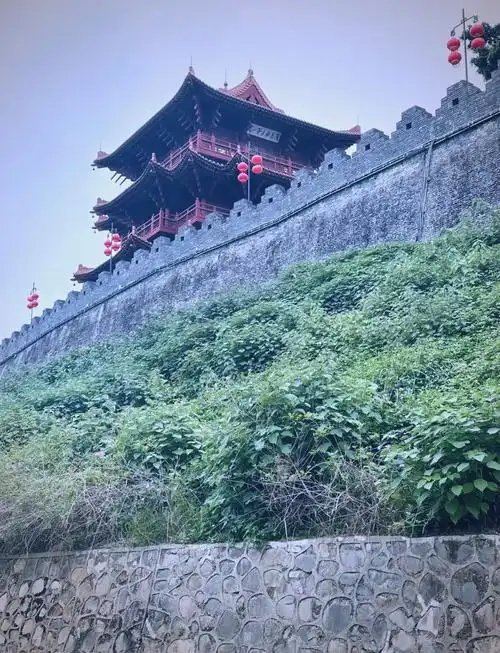 Zhaoqing's ancient walls trace their origins to 1053 CE, during the Northern Song Dynasty under Emperor Renzong's reign—a period contemporary with Edward the Confessor's England and the late Byzantine Renaissance. Originally built as a rammed-earth defensive perimeter, the structure was upgraded to fired brick in 1113 CE to withstand both military threats and seasonal flooding from the Xi River. Successive Song, Yuan, Ming, and Qing restorations preserved a distinctive masonry technique known as "exposed-joint bricklaying," making it an invaluable case study for scholars of pre-modern Asian urban defense, much as Carcassonne in France illuminates European medieval fortification.
The wall's rectangular plan stretches 2,801.2 meters, with the northern section rising notably higher than the south to address hydraulic and tactical concerns. Builders laid a strip-stone foundation, faced the exterior with kiln-fired green bricks, and packed the interior with rammed earth and gravel—a tripartite construction method comparable to Roman opus mixtum techniques. Embedded within the masonry are more than forty inscribed brick varieties bearing reign names such as "Kangzhou" and "Chunyou," arranged chronologically like a stonemason's ledger of every major restoration. This unusual archive prompted Chinese scholars to christen the wall a "Museum of Bricks," and in 2001 it was designated a National Key Cultural Relics Protection Unit.
Perched at the wall's apex, Piyun Tower—literally "Cloud-Cloaking Tower"—soams approximately ten meters above the ramparts and serves as the panoramic heart of the site. Visitors who climb its upper galleries are rewarded with a painter's composition: the jade-green Xi River unspooling westward, the tiled rooftops of old Duanzhou cascading below, and the limestone pinnacles of Seven Star Crags shimmering on the horizon. After dusk, warm uplighting transforms the battlements into a stage set where Song-era silhouette meets modern chiaroscuro, making it one of southern China's most photogenic fortifications.
The entire circuit is open free of charge twenty-four hours a day, though Piyun Tower keeps more limited hours of 08:00 to 17:30. Most visitors enter through the imposing Chaotian Gate on the south side or the North Gate, then follow the restored walkway for a one- to two-hour loop. Three worthwhile neighbors lie within easy walking distance: the elegant Liqiao Tower, the ancient plum-tree-shaded Mei'an Temple, and the Zhaoqing Museum, which together extend any historical stroll into a full half-day immersion in Duanzhou's layered past.
A few practical courtesies will smooth the visit. Several rampart sections remain uneven from ongoing conservation work, so sturdy flat-soled shoes are strongly advisable. Guangdong summers can be punishing at midday, and the unshaded brick surface radiates heat; early morning or the golden hour before sunset offer cooler footing and softer light for photography. Because the wall threads directly through inhabited lanes and neighborhood alleys, travelers will encounter everyday market life—laundry drying on stone benches, grandmothers selling lychees, children cycling to lessons—an atmosphere that brings the eight-hundred-year-old ramparts thrillingly into the present.
Zhaoqing's ancient walls trace their origins to 1053 CE, during the Northern Song Dynasty under Emperor Renzong's reign—a period contemporary with Edward the Confessor's England and the late Byzantine Renaissance. Originally built as a rammed-earth defensive perimeter, the structure was upgraded to fired brick in 1113 CE to withstand both military threats and seasonal flooding from the Xi River. Successive Song, Yuan, Ming, and Qing restorations preserved a distinctive masonry technique known as "exposed-joint bricklaying," making it an invaluable case study for scholars of pre-modern Asian urban defense, much as Carcassonne in France illuminates European medieval fortification.
The wall's rectangular plan stretches 2,801.2 meters, with the northern section rising notably higher than the south to address hydraulic and tactical concerns. Builders laid a strip-stone foundation, faced the exterior with kiln-fired green bricks, and packed the interior with rammed earth and gravel—a tripartite construction method comparable to Roman opus mixtum techniques. Embedded within the masonry are more than forty inscribed brick varieties bearing reign names such as "Kangzhou" and "Chunyou," arranged chronologically like a stonemason's ledger of every major restoration. This unusual archive prompted Chinese scholars to christen the wall a "Museum of Bricks," and in 2001 it was designated a National Key Cultural Relics Protection Unit.
Perched at the wall's apex, Piyun Tower—literally "Cloud-Cloaking Tower"—soams approximately ten meters above the ramparts and serves as the panoramic heart of the site. Visitors who climb its upper galleries are rewarded with a painter's composition: the jade-green Xi River unspooling westward, the tiled rooftops of old Duanzhou cascading below, and the limestone pinnacles of Seven Star Crags shimmering on the horizon. After dusk, warm uplighting transforms the battlements into a stage set where Song-era silhouette meets modern chiaroscuro, making it one of southern China's most photogenic fortifications.
The entire circuit is open free of charge twenty-four hours a day, though Piyun Tower keeps more limited hours of 08:00 to 17:30. Most visitors enter through the imposing Chaotian Gate on the south side or the North Gate, then follow the restored walkway for a one- to two-hour loop. Three worthwhile neighbors lie within easy walking distance: the elegant Liqiao Tower, the ancient plum-tree-shaded Mei'an Temple, and the Zhaoqing Museum, which together extend any historical stroll into a full half-day immersion in Duanzhou's layered past.
A few practical courtesies will smooth the visit. Several rampart sections remain uneven from ongoing conservation work, so sturdy flat-soled shoes are strongly advisable. Guangdong summers can be punishing at midday, and the unshaded brick surface radiates heat; early morning or the golden hour before sunset offer cooler footing and softer light for photography. Because the wall threads directly through inhabited lanes and neighborhood alleys, travelers will encounter everyday market life—laundry drying on stone benches, grandmothers selling lychees, children cycling to lessons—an atmosphere that brings the eight-hundred-year-old ramparts thrillingly into the present.