Seven Star Crags
⭐ 4.30
Seven Star Crags Scenic Area, Duanzhou District, Zhaoqing City, Guangdong Province, China
 The Seven Star Crags have drawn literati, officials, and poets since the Tang dynasty (618–907 CE), placing them in a comparable historical orbit to Europe's great medieval pilgrimage landscapes. The most celebrated inscription is the "Record of Duanzhou Stone Chamber," authored by Li Yong, a prominent Tang court minister, around 730 CE—an era almost contemporary with the rise of the Carolingian Renaissance in Europe. This single inscription effectively anchors Zhaoqing (historically called Duanzhou) on the cultural map of southern China, giving the site a layered literary pedigree that countless calligraphy enthusiasts and historians still come to study today.
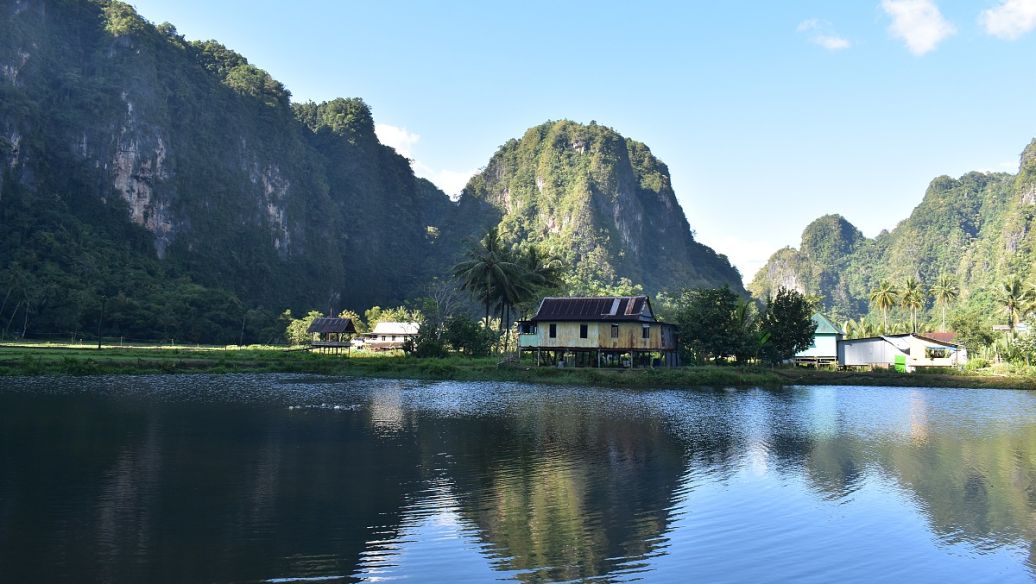
Geologically, the park is a textbook example of karst topography, comparable in scale and beauty to Vietnam's Ha Long Bay or Croatia's Plitvice Lakes. Spanning 8.23 square kilometers, the landscape is composed of five lakes, six ridges, seven peaks, and eight caves, creating a layered environment where mountains rise from water, caves hide rivers, and rivers flow within mountains. The star-shaped peaks—Langfeng, Yuping, Shishi, and Tianzhu—each present a distinct silhouette, while the underground grottoes drip with fantastical stalactite and stalagmite formations. Some cave passages are navigated by small boat, lending explorers a Jules Verne sense of subterranean adventure.
The cliff-face inscriptions, numbering more than 600 and spanning the Tang, Song, Yuan, Ming, Qing, and Republican eras, function as an open-air museum of Chinese calligraphy. Comparable in cultural weight to the inscribed stones of ancient Egypt or the medieval graffiti of European cathedrals, these carvings showcase every major script style—seal, clerical, regular, running, and cursive. Visitors can essentially trace the evolution of Chinese writing across a millennium while strolling a single lakeside path, making it one of the most accessible—and visually striking—historical collections in the region.
Although the scenery is the main attraction, the extensive grounds make planning essential. The North Gate is the most efficient entry point; from there, visitors can climb Tianzhu Peak for panoramic views, descend to explore the Dragon Cave by boat, walk through the Shishi caves to admire the cliff inscriptions, and finally exit via the East Gate after visiting Yuping Rock. The full loop takes roughly four to five hours, and electric shuttle carts are available to shorten distances between scenic clusters. Summer evenings feature illuminated night tours that transform the lake into a glittering stage.
Tickets cost around 70 RMB, and the park is open daily from 08:00 to 18:00. Travelers should pack sunscreen and hats for the strong subtropical sun, a light jacket for the noticeable temperature drop inside caves and on boat rides, and their own water and snacks. The East Gate sits far from the main attractions and is best avoided as a primary entry point. Whether for geology, calligraphy, photography, or simply a peaceful lakeside escape, the Seven Star Crags offer a deeply rewarding detour from the more crowded circuits of southern China.
The Seven Star Crags have drawn literati, officials, and poets since the Tang dynasty (618–907 CE), placing them in a comparable historical orbit to Europe's great medieval pilgrimage landscapes. The most celebrated inscription is the "Record of Duanzhou Stone Chamber," authored by Li Yong, a prominent Tang court minister, around 730 CE—an era almost contemporary with the rise of the Carolingian Renaissance in Europe. This single inscription effectively anchors Zhaoqing (historically called Duanzhou) on the cultural map of southern China, giving the site a layered literary pedigree that countless calligraphy enthusiasts and historians still come to study today.
Geologically, the park is a textbook example of karst topography, comparable in scale and beauty to Vietnam's Ha Long Bay or Croatia's Plitvice Lakes. Spanning 8.23 square kilometers, the landscape is composed of five lakes, six ridges, seven peaks, and eight caves, creating a layered environment where mountains rise from water, caves hide rivers, and rivers flow within mountains. The star-shaped peaks—Langfeng, Yuping, Shishi, and Tianzhu—each present a distinct silhouette, while the underground grottoes drip with fantastical stalactite and stalagmite formations. Some cave passages are navigated by small boat, lending explorers a Jules Verne sense of subterranean adventure.
The cliff-face inscriptions, numbering more than 600 and spanning the Tang, Song, Yuan, Ming, Qing, and Republican eras, function as an open-air museum of Chinese calligraphy. Comparable in cultural weight to the inscribed stones of ancient Egypt or the medieval graffiti of European cathedrals, these carvings showcase every major script style—seal, clerical, regular, running, and cursive. Visitors can essentially trace the evolution of Chinese writing across a millennium while strolling a single lakeside path, making it one of the most accessible—and visually striking—historical collections in the region.
Although the scenery is the main attraction, the extensive grounds make planning essential. The North Gate is the most efficient entry point; from there, visitors can climb Tianzhu Peak for panoramic views, descend to explore the Dragon Cave by boat, walk through the Shishi caves to admire the cliff inscriptions, and finally exit via the East Gate after visiting Yuping Rock. The full loop takes roughly four to five hours, and electric shuttle carts are available to shorten distances between scenic clusters. Summer evenings feature illuminated night tours that transform the lake into a glittering stage.
Tickets cost around 70 RMB, and the park is open daily from 08:00 to 18:00. Travelers should pack sunscreen and hats for the strong subtropical sun, a light jacket for the noticeable temperature drop inside caves and on boat rides, and their own water and snacks. The East Gate sits far from the main attractions and is best avoided as a primary entry point. Whether for geology, calligraphy, photography, or simply a peaceful lakeside escape, the Seven Star Crags offer a deeply rewarding detour from the more crowded circuits of southern China.