Dinghu Mountain
⭐ 4.40
Dinghu Mountain Scenic Area, Dinghu District, Zhaoqing City, Guangdong Province, China
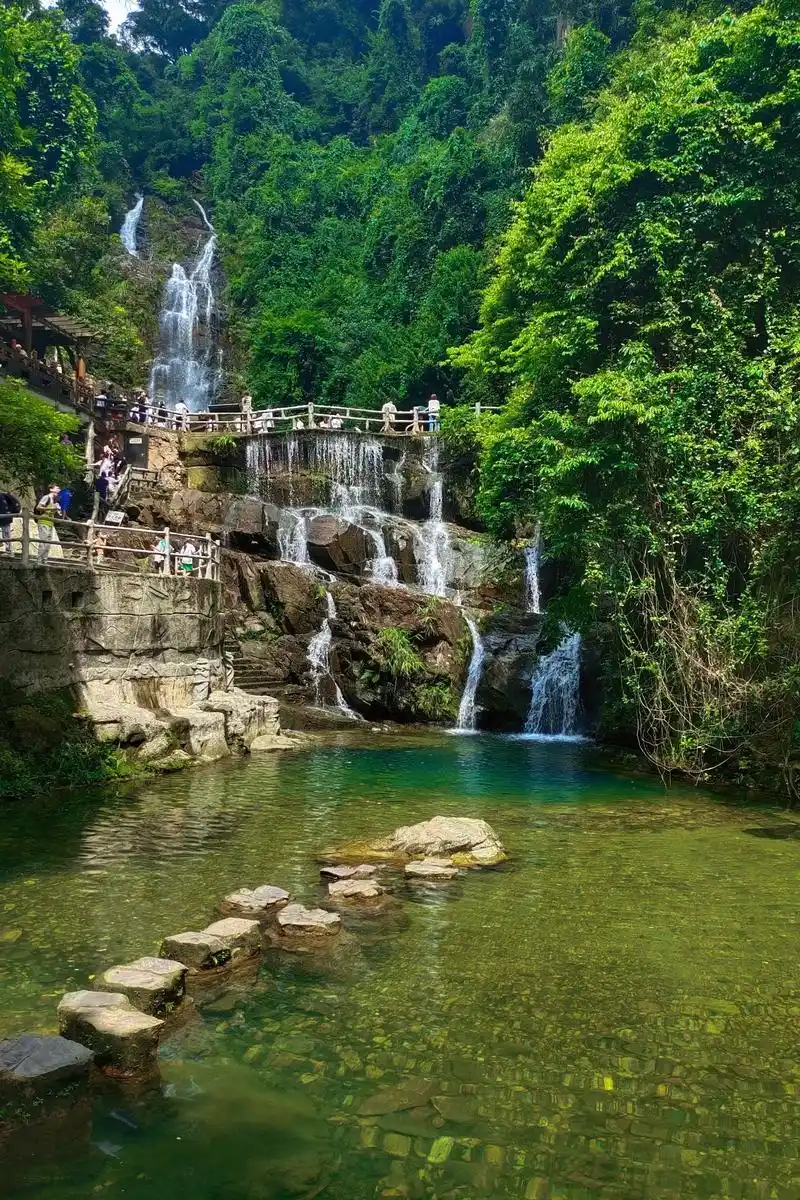 Designated in 1956, Dinghu Mountain holds a monumental place in history as the inaugural site of China's National Nature Reserve system, establishing the blueprint for modern ecological protection in Asia. In a Western context, its status as a pristine protected wilderness mirrors ancient European reserves like Germany's Bavarian Forest National Park. Stretching directly across the Tropic of Cancer, the reserve protects a rare, 400-year-old south subtropical secondary forest. Visitors breathe in exceptionally clean air, with localized negative oxygen ion levels frequently surpassing 100,000 ions per cubic centimeter—making a casual hike here as refreshing as retreating to a high-altitude alpine meadow.
Nestled deep within the dense woodlands is Qingyun Temple, a sacred sanctuary founded during the Ming Dynasty. As one of the four great Buddhist temples of the Lingnan region, its origins stretch back to the era of the European Renaissance and the Age of Discovery. The temple's architecture echoes this enduring legacy, with solemn, classical halls constructed seamlessly into the sloping mountainside. Towering ancient trees shelter the complex, where visitors can listen to the resonant sounds of bells and stone chimes, absorbing an atmosphere reminiscent of a centuries-old European monastery hidden deep within the Carpathian Mountains.
Adding a layer of monumental history to the visit, Baoding Garden celebrates China's profound bronze civilization. The park's centerpiece is the colossal Nine-Dragon Treasure Ding, an immense ceremonial cauldron officially recognized by the Guinness World Records. Much like how the Column of Trajan anchors a Roman piazza, this massive bronze vessel dominates the landscape, blending intricate dynastic artistry with staggering modern engineering scale. Beyond admiring the historical exhibits, visitors can actively engage with the culture by participating in traditional ball-throwing rituals for good fortune.
The sprawling park is divided into three distinct, highly scenic zones. Tianxi features the spectacular Feishui Waterfall and its crystalline plunge pools, while Yunxi contains the famous Butterfly Valley—an ethereal ecosystem accessible only by a short, scenic boat ride where colorful wings flutter through the forest canopy. To fully experience the landscape without exhaustion, travelers are advised to take the inexpensive sightseeing shuttle bus up the mountain. From there, they can enjoy a gentle downhill hike through the shaded forests toward the lower elevations.
Dinghu Mountain operates daily from 8:00 AM to 6:00 PM, though the gates close for new entries at 5:30 PM. Standard adult admission is approximately 70 RMB, with round-trip sightseeing bus tickets adding around 20 RMB. University students holding valid ID from Guangdong Province enter free of charge. Because the dense forest environment hosts an active insect population, tourists must pack high-strength mosquito repellent. During the hot summer months, bringing a swimsuit allows for refreshing dips beside the chilly mountain pools, offering a blissful natural escape from the city heat.
Designated in 1956, Dinghu Mountain holds a monumental place in history as the inaugural site of China's National Nature Reserve system, establishing the blueprint for modern ecological protection in Asia. In a Western context, its status as a pristine protected wilderness mirrors ancient European reserves like Germany's Bavarian Forest National Park. Stretching directly across the Tropic of Cancer, the reserve protects a rare, 400-year-old south subtropical secondary forest. Visitors breathe in exceptionally clean air, with localized negative oxygen ion levels frequently surpassing 100,000 ions per cubic centimeter—making a casual hike here as refreshing as retreating to a high-altitude alpine meadow.
Nestled deep within the dense woodlands is Qingyun Temple, a sacred sanctuary founded during the Ming Dynasty. As one of the four great Buddhist temples of the Lingnan region, its origins stretch back to the era of the European Renaissance and the Age of Discovery. The temple's architecture echoes this enduring legacy, with solemn, classical halls constructed seamlessly into the sloping mountainside. Towering ancient trees shelter the complex, where visitors can listen to the resonant sounds of bells and stone chimes, absorbing an atmosphere reminiscent of a centuries-old European monastery hidden deep within the Carpathian Mountains.
Adding a layer of monumental history to the visit, Baoding Garden celebrates China's profound bronze civilization. The park's centerpiece is the colossal Nine-Dragon Treasure Ding, an immense ceremonial cauldron officially recognized by the Guinness World Records. Much like how the Column of Trajan anchors a Roman piazza, this massive bronze vessel dominates the landscape, blending intricate dynastic artistry with staggering modern engineering scale. Beyond admiring the historical exhibits, visitors can actively engage with the culture by participating in traditional ball-throwing rituals for good fortune.
The sprawling park is divided into three distinct, highly scenic zones. Tianxi features the spectacular Feishui Waterfall and its crystalline plunge pools, while Yunxi contains the famous Butterfly Valley—an ethereal ecosystem accessible only by a short, scenic boat ride where colorful wings flutter through the forest canopy. To fully experience the landscape without exhaustion, travelers are advised to take the inexpensive sightseeing shuttle bus up the mountain. From there, they can enjoy a gentle downhill hike through the shaded forests toward the lower elevations.
Dinghu Mountain operates daily from 8:00 AM to 6:00 PM, though the gates close for new entries at 5:30 PM. Standard adult admission is approximately 70 RMB, with round-trip sightseeing bus tickets adding around 20 RMB. University students holding valid ID from Guangdong Province enter free of charge. Because the dense forest environment hosts an active insect population, tourists must pack high-strength mosquito repellent. During the hot summer months, bringing a swimsuit allows for refreshing dips beside the chilly mountain pools, offering a blissful natural escape from the city heat.