Daocheng Museum
⭐ 3.80
No. 1, Tuanjie Road, Shangri-La Town, Daocheng County, Ganzi Tibetan Autonomous Prefecture, Sichuan, China
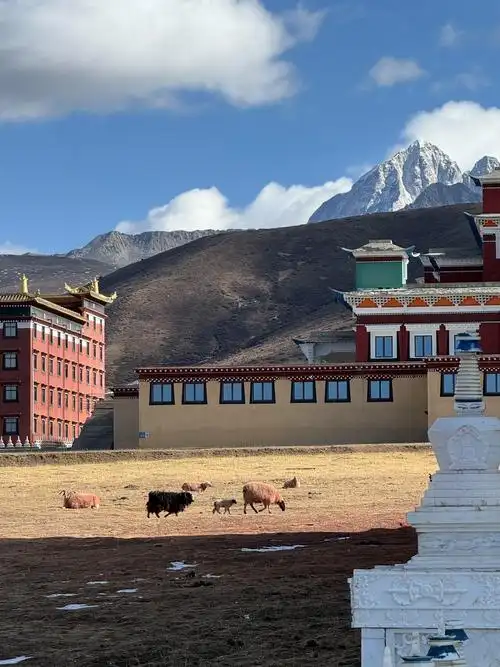 The name "Shambhala" draws from Tibetan Buddhist cosmology, referring to a mythical pure land of peace and wisdom—akin to the Christian Eden or the Elysian Fields of Greco-Roman tradition. Tibetan scholar-traditions have long described this Himalayan region as a physical embodiment of that paradise, a notion that captivated Western imagination after Hilton's 1933 novel Lost Horizon popularised the term "Shangri-La." The museum's collections trace Daocheng's human story from Stone Age Pilo relics through the flowering of Khampa Tibetan culture, with particular emphasis on Joseph Rock's 1920s botanical expeditions—work that essentially introduced the Western world to the mysteries of eastern Tibet. For travellers, this offers rare context that transforms a scenic hike into a deeper encounter with one of Asia's most storied landscapes.
The architecture itself is a statement piece. Rising three stories over roughly 3,000 square metres, the museum's flowing white form mimics the right-turning white conch (dungkar), one of Buddhism's Eight Auspicious Symbols representing the proclamation of dharma. Inside, curators have blended contemporary museography with traditional Tibetan aesthetics—exposed timber, prayer-flag motifs, and warm earthen tones—creating spaces that feel both modern and unmistakably Himalayan. The design philosophy recalls how Alpine European museums like Switzerland's Mount Pilatus or Austria's Grossglockner centres use architecture to mediate between visitors and sublime natural surroundings.
Culturally, the museum functions as a living classroom rather than a static repository. Visitors can watch artisans at work on thangka painting—the painstaking mineral-pigment religious art comparable in intricacy to medieval European illuminated manuscripts—and even try their hand under guided instruction. Displays explore nomadic pastoralism, high-altitude agriculture, and intangible heritage traditions that risk fading as modernity encroaches on the plateau. The on-site cultural-creative shop stocks locally made crafts, while a small post office allows visitors to mail postcards bearing a Yading postmark—a charming ritual that harks back to the golden age of exploratory travel.
Practical planning is essential at this altitude. Allow 40 to 60 minutes for a comfortable visit; the museum is compact and contemplative rather than vast. There are no thrill rides or child-oriented exhibits, so it best suits culturally curious adults, photographers drawn to the peak views from the Yading Balcony, and trekkers seeking a restorative indoor break before or after the demanding long-route hike to Milk Lake and Five-Colour Lake. The on-site café and rest areas are genuinely welcome at 3,900 metres, where altitude sickness is a real concern—arrive hydrated, acclimatised, and avoid alcohol beforehand.
Timing matters. Clear mornings deliver the most theatrical mountain reveal from the third-floor balcony; fog or rain will obscure the peaks entirely, reducing the museum's signature payoff to its interior displays alone. The smartest strategy is to schedule a visit during an overnight stay in Yading Village, pairing it with the nearby Rock Cottage—Joseph Rock's former residence turned mini-museum—to create a coherent cultural loop. As a standalone destination, the museum doesn't quite justify the long haul to Daocheng, but woven into a broader Yading itinerary, it provides the intellectual and spiritual context that elevates a spectacular trek into an unforgettable journey into the heart of legendary Tibet.
The name "Shambhala" draws from Tibetan Buddhist cosmology, referring to a mythical pure land of peace and wisdom—akin to the Christian Eden or the Elysian Fields of Greco-Roman tradition. Tibetan scholar-traditions have long described this Himalayan region as a physical embodiment of that paradise, a notion that captivated Western imagination after Hilton's 1933 novel Lost Horizon popularised the term "Shangri-La." The museum's collections trace Daocheng's human story from Stone Age Pilo relics through the flowering of Khampa Tibetan culture, with particular emphasis on Joseph Rock's 1920s botanical expeditions—work that essentially introduced the Western world to the mysteries of eastern Tibet. For travellers, this offers rare context that transforms a scenic hike into a deeper encounter with one of Asia's most storied landscapes.
The architecture itself is a statement piece. Rising three stories over roughly 3,000 square metres, the museum's flowing white form mimics the right-turning white conch (dungkar), one of Buddhism's Eight Auspicious Symbols representing the proclamation of dharma. Inside, curators have blended contemporary museography with traditional Tibetan aesthetics—exposed timber, prayer-flag motifs, and warm earthen tones—creating spaces that feel both modern and unmistakably Himalayan. The design philosophy recalls how Alpine European museums like Switzerland's Mount Pilatus or Austria's Grossglockner centres use architecture to mediate between visitors and sublime natural surroundings.
Culturally, the museum functions as a living classroom rather than a static repository. Visitors can watch artisans at work on thangka painting—the painstaking mineral-pigment religious art comparable in intricacy to medieval European illuminated manuscripts—and even try their hand under guided instruction. Displays explore nomadic pastoralism, high-altitude agriculture, and intangible heritage traditions that risk fading as modernity encroaches on the plateau. The on-site cultural-creative shop stocks locally made crafts, while a small post office allows visitors to mail postcards bearing a Yading postmark—a charming ritual that harks back to the golden age of exploratory travel.
Practical planning is essential at this altitude. Allow 40 to 60 minutes for a comfortable visit; the museum is compact and contemplative rather than vast. There are no thrill rides or child-oriented exhibits, so it best suits culturally curious adults, photographers drawn to the peak views from the Yading Balcony, and trekkers seeking a restorative indoor break before or after the demanding long-route hike to Milk Lake and Five-Colour Lake. The on-site café and rest areas are genuinely welcome at 3,900 metres, where altitude sickness is a real concern—arrive hydrated, acclimatised, and avoid alcohol beforehand.
Timing matters. Clear mornings deliver the most theatrical mountain reveal from the third-floor balcony; fog or rain will obscure the peaks entirely, reducing the museum's signature payoff to its interior displays alone. The smartest strategy is to schedule a visit during an overnight stay in Yading Village, pairing it with the nearby Rock Cottage—Joseph Rock's former residence turned mini-museum—to create a coherent cultural loop. As a standalone destination, the museum doesn't quite justify the long haul to Daocheng, but woven into a broader Yading itinerary, it provides the intellectual and spiritual context that elevates a spectacular trek into an unforgettable journey into the heart of legendary Tibet.