Qinhuangdao Museum
⭐ 4.20
No. 115, Wenhua Road, Haigang District, Qinhuangdao City, Hebei Province, China
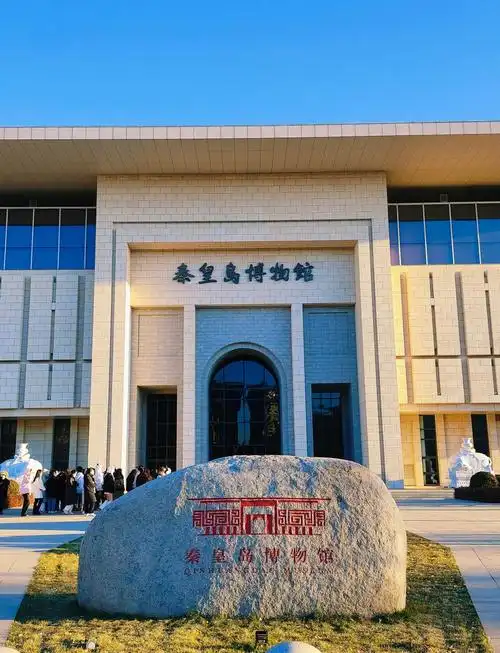 The name Qinhuangdao—"Island of the Qin Emperor"—carries imperial weight, evoking the same dynasty that unified China in 221 BC and commissioned the famed Terracotta Army buried near Xi'an. Though the city lies far from those western battlegrounds, it guards the strategic eastern gateway where the Great Wall meets the sea at Shanhaiguan, often called the "First Pass Under Heaven." The museum's permanent exhibition, *Sea Mountain Pearl*, weaves this "mountain-sea spirit" into a sweeping narrative, from prehistoric settlements and the Han-era imperial palace ruins to Yuanying Temple Pagoda, a striking Liao-dynody relic reminiscent of Europe's medieval bell towers.
Opened in 2024, the museum occupies a modern 26,600-square-meter complex beside the Civic Center on Hebei Avenue West. Its layout mirrors classical museum logic—ground-floor café and gift shop, second-floor modern history and temporary galleries, third-floor ancient history—yet feels refreshingly uncluttered, comparable in clarity to a well-curated regional museum like London's Horniman or Copenhagen's Nationalmuseet. Digital technology is the standout feature: visitors watch history unfold through naked-eye 3D projections, AI-restored artifacts, and atmospheric immersive rooms that translate dusty chronicles into vivid visual storytelling.
Culturally, the museum serves as both a primer and a love letter to a city better known for seaside resorts than scholarly depth. For Western travelers familiar with Mediterranean or Baltic coastal towns, Qinhuangdao offers a parallel blend of maritime heritage and imperial history—without the crowds of Beijing's blockbuster museums. It works beautifully as a morning warm-up before exploring the Ming-dynasty fortifications of Shanhaiguan, just a short drive east.
Practical planning is essential. The museum opens Tuesday through Sunday, 9:00 to 17:00, with last entry at 16:30; Mondays are reserved for maintenance except during public holidays. Free admission requires real-name registration via the museum's WeChat account, ideally a day ahead. Visitors under 1.2 meters need no reservation, but accompanying adults must book. Allow two to three hours. Expect crowds after 11:00 on weekends and during July-August, so an early arrival (before 10:00) is wise. Public transport is recommended since parking is tight in summer.
Air conditioning runs cool—pack a light jacket—and the onsite café makes a comfortable mid-visit break. Family programming is excellent, with hands-on workshops, DIY crafts, and educational classes suitable for children aged six and up. While seasoned antiquities enthusiasts may find the national-treasure count modest (just four first-grade pieces), the museum compensates through technological flair and accessibility. Pair it with the Shanhaiguan Great Wall Museum for a fuller historical picture, and you have one of northern China's most underrated cultural day trips.
The name Qinhuangdao—"Island of the Qin Emperor"—carries imperial weight, evoking the same dynasty that unified China in 221 BC and commissioned the famed Terracotta Army buried near Xi'an. Though the city lies far from those western battlegrounds, it guards the strategic eastern gateway where the Great Wall meets the sea at Shanhaiguan, often called the "First Pass Under Heaven." The museum's permanent exhibition, *Sea Mountain Pearl*, weaves this "mountain-sea spirit" into a sweeping narrative, from prehistoric settlements and the Han-era imperial palace ruins to Yuanying Temple Pagoda, a striking Liao-dynody relic reminiscent of Europe's medieval bell towers.
Opened in 2024, the museum occupies a modern 26,600-square-meter complex beside the Civic Center on Hebei Avenue West. Its layout mirrors classical museum logic—ground-floor café and gift shop, second-floor modern history and temporary galleries, third-floor ancient history—yet feels refreshingly uncluttered, comparable in clarity to a well-curated regional museum like London's Horniman or Copenhagen's Nationalmuseet. Digital technology is the standout feature: visitors watch history unfold through naked-eye 3D projections, AI-restored artifacts, and atmospheric immersive rooms that translate dusty chronicles into vivid visual storytelling.
Culturally, the museum serves as both a primer and a love letter to a city better known for seaside resorts than scholarly depth. For Western travelers familiar with Mediterranean or Baltic coastal towns, Qinhuangdao offers a parallel blend of maritime heritage and imperial history—without the crowds of Beijing's blockbuster museums. It works beautifully as a morning warm-up before exploring the Ming-dynasty fortifications of Shanhaiguan, just a short drive east.
Practical planning is essential. The museum opens Tuesday through Sunday, 9:00 to 17:00, with last entry at 16:30; Mondays are reserved for maintenance except during public holidays. Free admission requires real-name registration via the museum's WeChat account, ideally a day ahead. Visitors under 1.2 meters need no reservation, but accompanying adults must book. Allow two to three hours. Expect crowds after 11:00 on weekends and during July-August, so an early arrival (before 10:00) is wise. Public transport is recommended since parking is tight in summer.
Air conditioning runs cool—pack a light jacket—and the onsite café makes a comfortable mid-visit break. Family programming is excellent, with hands-on workshops, DIY crafts, and educational classes suitable for children aged six and up. While seasoned antiquities enthusiasts may find the national-treasure count modest (just four first-grade pieces), the museum compensates through technological flair and accessibility. Pair it with the Shanhaiguan Great Wall Museum for a fuller historical picture, and you have one of northern China's most underrated cultural day trips.