Pigeon Nest Park
⭐ 4.50
Pigeon Nest Park, Beidaihe District, Qinhuangdao, Hebei, China
 **History and Cultural Significance**
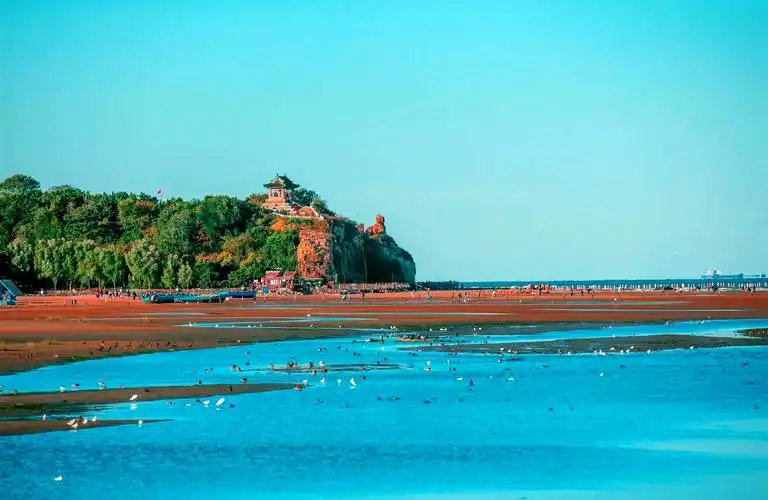
The park takes its dramatic character from the jagged "Eagle Beak Rock" (鹰角石) crowning its cliff, a natural monument that has witnessed pivotal chapters of modern Chinese history. A statue of Chairman Mao Zedong stands alongside the poetic stele inscribed with his celebrated 1954 poem "Lang Tao Sha · Beidaihe," written during a working holiday here—an event comparable to Churchill sketching the White Cliffs of Dover, capturing a leader's contemplation before the sea. The Sea-View Promenade links these cultural landmarks with the vast horizon, offering a contemplative walk where history and nature converge.
**The Legendary Sunrise Spectacle**
Renowned as one of the finest coastal sunrise viewpoints in China—on par with the cliffs of Étretat in Normandy—the park draws hundreds of thousands of visitors each year who arrive before dawn to claim a spot at Eagle Beak Pavilion or Sunrise Bathing Pavilion. When the first crimson orb breaks the Bohai Sea horizon, the sky ignites in gold and vermilion, a transcendent moment reminiscent of Japan's Mount Kaimon or Bali's Tanah Lot. Arrive by 4 a.m. in peak season; check sunrise times and weather forecasts in advance, and bring a warm jacket, even in summer.
**Beachcombing and Family Fun**
At low tide, vast tidal flats emerge, transforming the shoreline into a natural playground. Families can dig for clams, catch tiny crabs, and collect shells in the shallow pools—a joy that echoes the tradition of French pêche à pied along Brittany's coast. The golden window runs from one hour before low tide to half an hour after; bring a small bucket, spade, and non-slip water shoes for safety. Pigeon Square, where hundreds of pigeons wander freely, delights younger children who can purchase feed and interact with the gentle birds.
**A Wetland Sanctuary for Birdwatchers**
Yuanyang Lake and the surrounding marshes form a critical refueling stop on the East Asian–Australasian Flyway, one of the world's great migratory bird corridors. Each spring and autumn, thousands of waterbirds pause here to rest and feed amid swaying reed beds and drifting wild ducks—an ecological spectacle akin to Britain's RSPB Minsmere or the Camargue in southern France. The park's dedicated Bird Museum offers deeper insight into these remarkable journeys, making it a paradise for birders and nature photographers alike.
**Practical Information**
Entry is a steal at 35 yuan in peak season and just 5 yuan in the off-season, with opening hours varying by month. Allow three to four hours for a leisurely visit, longer if chasing the sunrise. Parking is tight during summer; public buses or ride-hailing apps (such as DiDi) are far more convenient. Most signage is in Chinese, so foreign visitors should download a translation app beforehand. Sturdy footwear, sunscreen, and layered clothing for cool coastal breezes are essential—Pigeon Nest Park rewards those who come prepared.
**History and Cultural Significance**
The park takes its dramatic character from the jagged "Eagle Beak Rock" (鹰角石) crowning its cliff, a natural monument that has witnessed pivotal chapters of modern Chinese history. A statue of Chairman Mao Zedong stands alongside the poetic stele inscribed with his celebrated 1954 poem "Lang Tao Sha · Beidaihe," written during a working holiday here—an event comparable to Churchill sketching the White Cliffs of Dover, capturing a leader's contemplation before the sea. The Sea-View Promenade links these cultural landmarks with the vast horizon, offering a contemplative walk where history and nature converge.
**The Legendary Sunrise Spectacle**
Renowned as one of the finest coastal sunrise viewpoints in China—on par with the cliffs of Étretat in Normandy—the park draws hundreds of thousands of visitors each year who arrive before dawn to claim a spot at Eagle Beak Pavilion or Sunrise Bathing Pavilion. When the first crimson orb breaks the Bohai Sea horizon, the sky ignites in gold and vermilion, a transcendent moment reminiscent of Japan's Mount Kaimon or Bali's Tanah Lot. Arrive by 4 a.m. in peak season; check sunrise times and weather forecasts in advance, and bring a warm jacket, even in summer.
**Beachcombing and Family Fun**
At low tide, vast tidal flats emerge, transforming the shoreline into a natural playground. Families can dig for clams, catch tiny crabs, and collect shells in the shallow pools—a joy that echoes the tradition of French pêche à pied along Brittany's coast. The golden window runs from one hour before low tide to half an hour after; bring a small bucket, spade, and non-slip water shoes for safety. Pigeon Square, where hundreds of pigeons wander freely, delights younger children who can purchase feed and interact with the gentle birds.
**A Wetland Sanctuary for Birdwatchers**
Yuanyang Lake and the surrounding marshes form a critical refueling stop on the East Asian–Australasian Flyway, one of the world's great migratory bird corridors. Each spring and autumn, thousands of waterbirds pause here to rest and feed amid swaying reed beds and drifting wild ducks—an ecological spectacle akin to Britain's RSPB Minsmere or the Camargue in southern France. The park's dedicated Bird Museum offers deeper insight into these remarkable journeys, making it a paradise for birders and nature photographers alike.
**Practical Information**
Entry is a steal at 35 yuan in peak season and just 5 yuan in the off-season, with opening hours varying by month. Allow three to four hours for a leisurely visit, longer if chasing the sunrise. Parking is tight during summer; public buses or ride-hailing apps (such as DiDi) are far more convenient. Most signage is in Chinese, so foreign visitors should download a translation app beforehand. Sturdy footwear, sunscreen, and layered clothing for cool coastal breezes are essential—Pigeon Nest Park rewards those who come prepared.