Aranya Art Community
⭐ 4.20
Aranya Art Community, Beidaihe District, Qinhuangdao City, Hebei Province, China
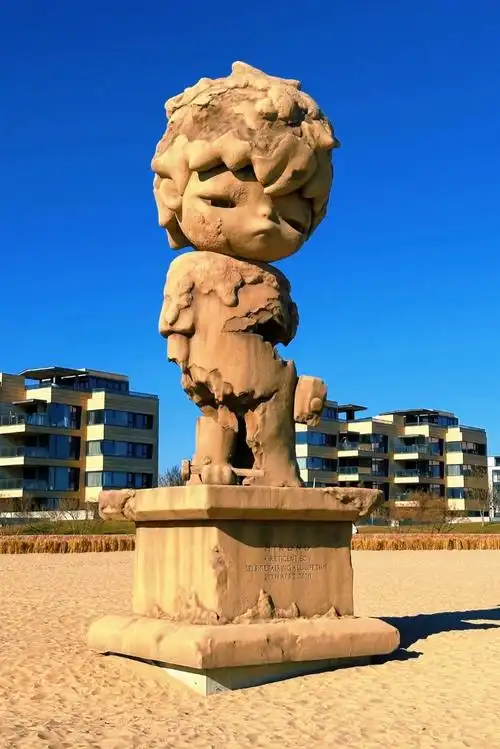 **A Modern Utopia on the Bohai Coast**
Aranya takes its name from the Sanskrit "aranya," meaning "a quiet place in the human world"—a phrase that echoes the contemplative ideals of ancient Indian hermitages and Europe's medieval monastic retreats. Founded in 2013 as an upscale resort, the community underwent a remarkable cultural metamorphosis during the 2010s, evolving into what Chinese media now call the country's most influential artistic enclave. Drawing hundreds of thousands of visitors annually, it represents a fascinating fusion of luxury resort, contemporary art incubator, and secular spiritual community—a 21st-century echo of the Belle Époque artist colonies that once flourished along the Normandy coast.
**Three Icons of Contemporary Architecture**
The community's visual identity is shaped by three signature structures, each a masterclass in restraint. The Seaside Chapel, a pure-white, steeply-pitched form rising against the sea, recalls both Norway's stave churches and Le Corbusier's Ronchamp in its elemental geometry—a perfect subject for sunset photography. The Lonely Library, built in exposed fair-faced concrete, channels the spiritual weight of Tadao Ando's Church of the Light while facing the ocean in monastic solitude. Most remarkable is the UCCA Dune Art Museum, designed by Beijing firm OPEN Architecture, which vanishes almost entirely into the sand dunes, creating cave-like galleries that recall the cave dwellings of Cappadocia or the troglodyte chapels of the Loire.
**A Living Cultural Laboratory**
Aranya functions less as a museum than as a year-round cultural ecosystem. The community hosts hundreds of events annually—theater festivals, classical concerts, contemporary art exhibitions, and literary salons—drawing China's most inventive artists, playwrights, and writers. Its brand philosophy, "Life can be more beautiful," articulates a pursuit of aestheticized daily ritual that resonates with global slow-living movements from Tuscany to Kyoto. Visitors often describe the atmosphere as a deliberate antidote to China's megacity pace, where strangers gather at sunset to share silence rather than selfies.
**Planning Your Visit: Practical Essentials**
Aranya operates as a gated community, meaning non-residents must either book on-site accommodation or purchase a ticket to the UCCA Dune Art Museum (approximately 100 RMB) for day access. The Lonely Library admits only 200 visitors daily through advance reservation, and photography is prohibited inside; the chapel also requires booking through the official Aranya app. Expect above-average food prices at tourist restaurants, though overnight guests enjoy access to the much more affordable owners' canteen (40-60 RMB per meal). Allow at least two days and one night to absorb the rhythm of the place.
**When to Go and Why It Matters**
The ideal windows are late spring (April-May) and early autumn (September-October), when temperatures are gentle and crowds manageable. A recommended itinerary: arrive mid-afternoon, capture the chapel at golden hour, browse the evening seaside market and outdoor cinema, wake for a 6 a.m. sunrise, visit the Dune Museum mid-morning, then cycle the coastline or simply sit in the Dionysus Theatre and let the sea do the rest. Aranya is ultimately not a destination to rush through but a quiet stage set where the Pacific edge of China meets the timeless human longing for beauty, solitude, and meaning.
**A Modern Utopia on the Bohai Coast**
Aranya takes its name from the Sanskrit "aranya," meaning "a quiet place in the human world"—a phrase that echoes the contemplative ideals of ancient Indian hermitages and Europe's medieval monastic retreats. Founded in 2013 as an upscale resort, the community underwent a remarkable cultural metamorphosis during the 2010s, evolving into what Chinese media now call the country's most influential artistic enclave. Drawing hundreds of thousands of visitors annually, it represents a fascinating fusion of luxury resort, contemporary art incubator, and secular spiritual community—a 21st-century echo of the Belle Époque artist colonies that once flourished along the Normandy coast.
**Three Icons of Contemporary Architecture**
The community's visual identity is shaped by three signature structures, each a masterclass in restraint. The Seaside Chapel, a pure-white, steeply-pitched form rising against the sea, recalls both Norway's stave churches and Le Corbusier's Ronchamp in its elemental geometry—a perfect subject for sunset photography. The Lonely Library, built in exposed fair-faced concrete, channels the spiritual weight of Tadao Ando's Church of the Light while facing the ocean in monastic solitude. Most remarkable is the UCCA Dune Art Museum, designed by Beijing firm OPEN Architecture, which vanishes almost entirely into the sand dunes, creating cave-like galleries that recall the cave dwellings of Cappadocia or the troglodyte chapels of the Loire.
**A Living Cultural Laboratory**
Aranya functions less as a museum than as a year-round cultural ecosystem. The community hosts hundreds of events annually—theater festivals, classical concerts, contemporary art exhibitions, and literary salons—drawing China's most inventive artists, playwrights, and writers. Its brand philosophy, "Life can be more beautiful," articulates a pursuit of aestheticized daily ritual that resonates with global slow-living movements from Tuscany to Kyoto. Visitors often describe the atmosphere as a deliberate antidote to China's megacity pace, where strangers gather at sunset to share silence rather than selfies.
**Planning Your Visit: Practical Essentials**
Aranya operates as a gated community, meaning non-residents must either book on-site accommodation or purchase a ticket to the UCCA Dune Art Museum (approximately 100 RMB) for day access. The Lonely Library admits only 200 visitors daily through advance reservation, and photography is prohibited inside; the chapel also requires booking through the official Aranya app. Expect above-average food prices at tourist restaurants, though overnight guests enjoy access to the much more affordable owners' canteen (40-60 RMB per meal). Allow at least two days and one night to absorb the rhythm of the place.
**When to Go and Why It Matters**
The ideal windows are late spring (April-May) and early autumn (September-October), when temperatures are gentle and crowds manageable. A recommended itinerary: arrive mid-afternoon, capture the chapel at golden hour, browse the evening seaside market and outdoor cinema, wake for a 6 a.m. sunrise, visit the Dune Museum mid-morning, then cycle the coastline or simply sit in the Dionysus Theatre and let the sea do the rest. Aranya is ultimately not a destination to rush through but a quiet stage set where the Pacific edge of China meets the timeless human longing for beauty, solitude, and meaning.