Beidaihe National Coastal Park
⭐ 4.20
Beidaihe National Coastal Park, Beidaihe District, Qinhuangdao City, Hebei Province, China
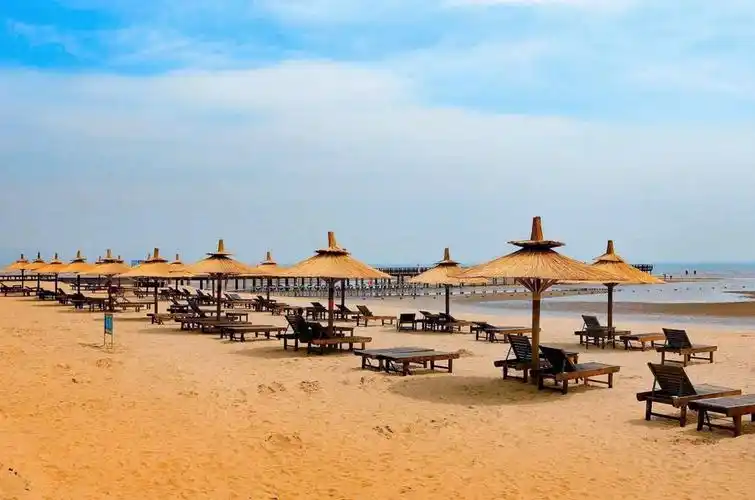 Long before package holidays existed, Beidaihe was already on the map. In the 1890s the Imperial Qing court opened the village to foreign legations, and within a decade British missionaries had built sandstone villas beside the surf. Western diplomats continued retreating here through the Republican era; Mao and other central leaders later kept summer compounds here, giving the resort a curtain-of-states pedigree reminiscent of Crimea or the Côte d'Azur in its heyday. That dual legacy, missionary-era villas set against Communist-era state guesthouses, makes a stroll through the older lanes feel like flipping through two chapters of world history.
Ecologically, the park is one of the most intact coastal habitats in North China. Forest cover exceeds 90 percent, and the Ramsar-listed tidal flats host more than 380 bird species, including the rare Relict Gull. Dawn at the wetland boardwalks brings wheeling clouds of shorebirds, evoking the kind of spectacle associated with Camargue or the Wadden Sea. Birders should bring binoculars and a field guide; a small avifauna museum inside Pigeon Nest Park provides an accessible primer for novices travelling with family.
Each sub-park has a distinct flavour. Pigeon Nest Park is the classic sunrise perch, where the sun climbs over rust-coloured rocks and fishing boats that recall the Bay of Naples, lit every summer by photographers chasing the same composition. Tiger Rock Sea Park lives up to its name with sculpted granite outcrops said to resemble prowling tigers and a broad, gently shelving beach ideal for swimming. The Olympic Avenue Park threads from the central beach to Pigeon Nest, threading in marble reliefs and sculptures celebrating the 2008 Beijing Games. Above it all, Lianfeng Mountain offers shaded hiking and bay-wide panoramas, while the eccentric Qielou (Strange House) garden invites an after-dark wander through optical-illusion architecture.
Practicalities are refreshingly relaxed. The forest park and most beaches are free and open year-round; Pigeon Nest, the Strange House and a small bird museum charge a modest entrance fee. Cruise ships shuttle in summer from Tianjin and Tang ports, while high-speed rail puts Qinhuangdao within three hours of Beijing. Hotels range from boutique villas in restored Republican-era residences to international chains, and seafood restaurants along Heping Street serve fresh octopus, clams and mantis shrimp by lantern light.
Timing matters more than anywhere else on China's coast. May to June and early September bring warm water, blooming acacias and noticeably thinner crowds than July-August, when domestic tourism peaks. Travellers seeking a contemplative escape akin to the Italian or Portuguese Atlantic should aim for shoulder seasons; families with children, however, will find the peak summer buzz lively and manageable, especially with morning swims at Tiger Rock and evening promenades along the Esplanade.
Long before package holidays existed, Beidaihe was already on the map. In the 1890s the Imperial Qing court opened the village to foreign legations, and within a decade British missionaries had built sandstone villas beside the surf. Western diplomats continued retreating here through the Republican era; Mao and other central leaders later kept summer compounds here, giving the resort a curtain-of-states pedigree reminiscent of Crimea or the Côte d'Azur in its heyday. That dual legacy, missionary-era villas set against Communist-era state guesthouses, makes a stroll through the older lanes feel like flipping through two chapters of world history.
Ecologically, the park is one of the most intact coastal habitats in North China. Forest cover exceeds 90 percent, and the Ramsar-listed tidal flats host more than 380 bird species, including the rare Relict Gull. Dawn at the wetland boardwalks brings wheeling clouds of shorebirds, evoking the kind of spectacle associated with Camargue or the Wadden Sea. Birders should bring binoculars and a field guide; a small avifauna museum inside Pigeon Nest Park provides an accessible primer for novices travelling with family.
Each sub-park has a distinct flavour. Pigeon Nest Park is the classic sunrise perch, where the sun climbs over rust-coloured rocks and fishing boats that recall the Bay of Naples, lit every summer by photographers chasing the same composition. Tiger Rock Sea Park lives up to its name with sculpted granite outcrops said to resemble prowling tigers and a broad, gently shelving beach ideal for swimming. The Olympic Avenue Park threads from the central beach to Pigeon Nest, threading in marble reliefs and sculptures celebrating the 2008 Beijing Games. Above it all, Lianfeng Mountain offers shaded hiking and bay-wide panoramas, while the eccentric Qielou (Strange House) garden invites an after-dark wander through optical-illusion architecture.
Practicalities are refreshingly relaxed. The forest park and most beaches are free and open year-round; Pigeon Nest, the Strange House and a small bird museum charge a modest entrance fee. Cruise ships shuttle in summer from Tianjin and Tang ports, while high-speed rail puts Qinhuangdao within three hours of Beijing. Hotels range from boutique villas in restored Republican-era residences to international chains, and seafood restaurants along Heping Street serve fresh octopus, clams and mantis shrimp by lantern light.
Timing matters more than anywhere else on China's coast. May to June and early September bring warm water, blooming acacias and noticeably thinner crowds than July-August, when domestic tourism peaks. Travellers seeking a contemplative escape akin to the Italian or Portuguese Atlantic should aim for shoulder seasons; families with children, however, will find the peak summer buzz lively and manageable, especially with morning swims at Tiger Rock and evening promenades along the Esplanade.