Wild Man Valley
⭐ 4.00
Asang Village, Xia Yadong Township, Yadong County, Shigatse City, Tibet Autonomous Region, China
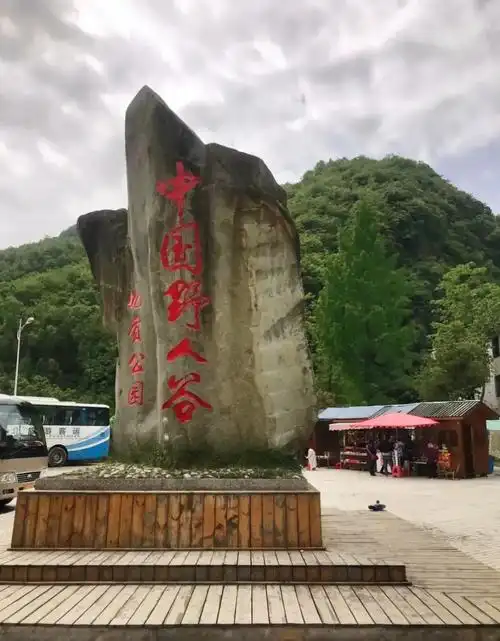 **A Himalayan Counterintuitive Landscape**
While most travelers associate Tibet with stark, treeless high-altitude plateaus reminiscent of the Pamirs or the Andean altiplano, Wild Man Valley sits on the windward southern flank of the Himalayas, where monsoon moisture from the Indian Ocean creates a startlingly temperate microclimate. Comparable in feel to the cloud forests of the Colombian Andes or the lower valleys of Nepal's Annapurna region, this ecological transition zone supports sub-tropical to temperate vegetation at altitudes that elsewhere on the plateau would be barren rock. The result is a forest ecosystem that feels closer to the Black Forest of Germany than to Lhasa, just 400 kilometers north yet a world apart.
**The Waterfalls and Forest**
The valley's signature feature is its tiered cascade system, where mountain streams tumble down a natural staircase of rock ledges. The centerpiece, Dragon Whisker Falls, is most spectacular in summer when snowmelt and monsoon rains swell the flow into a veiled curtain of mist that mingles with forest fog—a scene reminiscent of the Plitvice Lakes of Croatia in miniature. The boardwalk threads through towering fir and pine, past hanging vines and seasonal rhododendron blooms in spring, with crystal-clear creek crossings requiring only steady footing rather than technical climbing skills.
**Folklore and the "Wild Man" Legend**
The valley's evocative name derives from centuries-old Tibetan oral traditions of elusive forest-dwelling hominids, tales that locals share with the same amused seriousness that Himalayan communities across the border recount yeti sightings. Some researchers have speculated these accounts may stem from misidentifications of the endangered Assam macaque or even the red panda, both still found in these forests. Whether you come as a cryptozoology enthusiast or a skeptic, the legends lend a wonderfully atmospheric quality to the hike, much as the sprites and fairies of the Black Forest shaped European Romantic literature.
**Practical Trail and Visitor Information**
The circular wooden boardwalk covers approximately 2.7 kilometers one-way, with a round trip of about 5.5 kilometers requiring three to four hours at a moderate pace. The path narrows in places and becomes slick after rain—proper hiking shoes with grip are essential. There are no restaurants, vending machines, shuttle services, or extensive restroom facilities within the valley; visitors should carry all water, snacks, and rain gear. Unlike the cable cars and visitor centers of more developed Chinese scenic areas, this remains a genuine wilderness walk where preparation and self-sufficiency matter.
**Access, Border Considerations, and Best Timing**
Located near Pangda Village in Lower Yadong Township, the valley sits in a sensitive frontier zone close to the historic Nathu La Pass—the very route that reopened Sino-Indian trade in 2006 after decades of closure following the 1962 border conflict. No public transport reaches the site; visitors must arrange a private car or driver from Yadong town, and roads can be rough. Carry your passport at all times, respect military and border regulations, and never stray from the marked boardwalk into the restricted forest. The optimal season runs from May through October; winter snow often closes sections of the trail entirely.
**Why Visit**
For Western hikers, Wild Man Valley offers something increasingly rare in modern China: an under-commercialized natural experience where the trail, the waterfalls, and the ancient forest remain the main attractions. It pairs well with visits to the historic Pelkor Chode Monastery in Gyantse or the Everest approach road from Shigatse, rewarding travelers who venture beyond Tibet's marquee sites with a glimpse of the region's softer, greener, and more mysterious side. Manage your expectations for amenities, embrace the adventure, and you'll find a corner of the Himalayas that feels genuinely undiscovered.
**A Himalayan Counterintuitive Landscape**
While most travelers associate Tibet with stark, treeless high-altitude plateaus reminiscent of the Pamirs or the Andean altiplano, Wild Man Valley sits on the windward southern flank of the Himalayas, where monsoon moisture from the Indian Ocean creates a startlingly temperate microclimate. Comparable in feel to the cloud forests of the Colombian Andes or the lower valleys of Nepal's Annapurna region, this ecological transition zone supports sub-tropical to temperate vegetation at altitudes that elsewhere on the plateau would be barren rock. The result is a forest ecosystem that feels closer to the Black Forest of Germany than to Lhasa, just 400 kilometers north yet a world apart.
**The Waterfalls and Forest**
The valley's signature feature is its tiered cascade system, where mountain streams tumble down a natural staircase of rock ledges. The centerpiece, Dragon Whisker Falls, is most spectacular in summer when snowmelt and monsoon rains swell the flow into a veiled curtain of mist that mingles with forest fog—a scene reminiscent of the Plitvice Lakes of Croatia in miniature. The boardwalk threads through towering fir and pine, past hanging vines and seasonal rhododendron blooms in spring, with crystal-clear creek crossings requiring only steady footing rather than technical climbing skills.
**Folklore and the "Wild Man" Legend**
The valley's evocative name derives from centuries-old Tibetan oral traditions of elusive forest-dwelling hominids, tales that locals share with the same amused seriousness that Himalayan communities across the border recount yeti sightings. Some researchers have speculated these accounts may stem from misidentifications of the endangered Assam macaque or even the red panda, both still found in these forests. Whether you come as a cryptozoology enthusiast or a skeptic, the legends lend a wonderfully atmospheric quality to the hike, much as the sprites and fairies of the Black Forest shaped European Romantic literature.
**Practical Trail and Visitor Information**
The circular wooden boardwalk covers approximately 2.7 kilometers one-way, with a round trip of about 5.5 kilometers requiring three to four hours at a moderate pace. The path narrows in places and becomes slick after rain—proper hiking shoes with grip are essential. There are no restaurants, vending machines, shuttle services, or extensive restroom facilities within the valley; visitors should carry all water, snacks, and rain gear. Unlike the cable cars and visitor centers of more developed Chinese scenic areas, this remains a genuine wilderness walk where preparation and self-sufficiency matter.
**Access, Border Considerations, and Best Timing**
Located near Pangda Village in Lower Yadong Township, the valley sits in a sensitive frontier zone close to the historic Nathu La Pass—the very route that reopened Sino-Indian trade in 2006 after decades of closure following the 1962 border conflict. No public transport reaches the site; visitors must arrange a private car or driver from Yadong town, and roads can be rough. Carry your passport at all times, respect military and border regulations, and never stray from the marked boardwalk into the restricted forest. The optimal season runs from May through October; winter snow often closes sections of the trail entirely.
**Why Visit**
For Western hikers, Wild Man Valley offers something increasingly rare in modern China: an under-commercialized natural experience where the trail, the waterfalls, and the ancient forest remain the main attractions. It pairs well with visits to the historic Pelkor Chode Monastery in Gyantse or the Everest approach road from Shigatse, rewarding travelers who venture beyond Tibet's marquee sites with a glimpse of the region's softer, greener, and more mysterious side. Manage your expectations for amenities, embrace the adventure, and you'll find a corner of the Himalayas that feels genuinely undiscovered.