Dajiuhu
⭐ 4.40
Dajiuhu Scenic Area, Shennongjia, Hubei Province, China
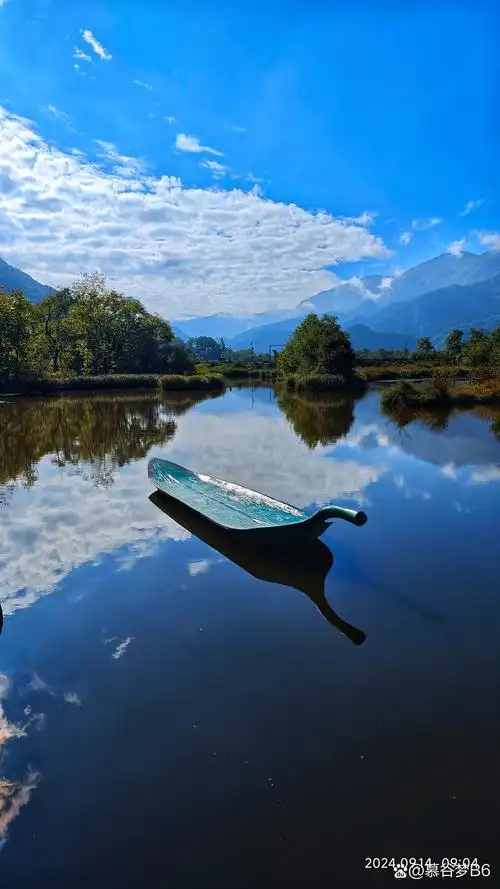 Dajiuhu's nine lakes were carved into a high mountain basin by ancient glaciers and later shaped by karst sinkholes and slow peat accumulation—processes familiar to anyone who has walked the blanket bogs of Scotland's Flow Country or the post-glacial moorlands of Austria's Salzkammergut. The surrounding Shennongjia massif takes its name from Shennong, the mythical "Divine Farmer" credited in Chinese legend with teaching humankind agriculture and herbal medicine. At roughly the same latitude as Rome and just below the treeline, the plateau feels less like subtropical China and more like a slice of northern Europe transplanted into the Yangtze basin.
Unlike most Chinese scenic areas, Dajiuhu has no temples, palaces, or grand historical monuments. Its human story is quieter, woven into the mountain communities of the Shennongjia highlands and the nearby Pingqian old town, where Tujia and Han families have farmed, herded, and fished for centuries. The broader region is celebrated in folklore as the place where Shennong tasted a hundred herbs—a tradition that predates written history, much as Highland clearances or Alpine transhumance shaped their landscapes. Today the valley's identity rests on conservation: protecting a Ramsar-listed wetland that ranks among Asia's most significant.
The architecture here is deliberately restrained, designed to vanish into the wetland rather than dominate it. Low-slung timber cabins, boardwalks, footbridges, and viewing platforms hug the lake edges in muted wooden tones, echoing the eco-lodges of Scandinavia or the discreet visitor infrastructure of Norway's Jotunheimen National Park. Private vehicles are banned from the core zone; visitors transfer to electric shuttle buses or small sightseeing trains at the entrance, which preserves silence and clean air. Trails are short and well-marked, rewarding rather than exhausting travelers who want to absorb the scenery without long hikes.
Beyond its scenery, Dajiuhu carries deep ecological meaning. It is one of central China's key Ramsar wetlands, hosting sphagnum moss and the dove tree (Davidia involucrata)—known in the West as the handkerchief tree, discovered for science by the French missionary Père Armand David in the nineteenth century. Conservationists compare its compact mosaic of lakes, bogs, meadows, and forests to Scotland's Cairngorms or Finland's wetland reserves, places where visitors come as much for rare wildlife as for views. The local tradition of protecting wetlands—never feeding, picking, or wading—gives the site an ethical dimension rarely matched at busier Chinese attractions.
Reaching Dajiuhu requires planning. Most travelers fly or train to Wuhan, then continue to Shennongjia Station or Badong Station on the Zhengzhou–Wanzhou high-speed line, followed by a shuttle or hired car to Pingqian old town. From Enshi city, the drive takes about 2.5 to 3 hours. Tickets and maps should reference "Shennongjia Dajiuhu" to avoid confusion. Plan at least a full day; the entry fee plus mandatory shuttle keeps the visit relaxed. Facilities are basic but adequate: simple guesthouses in Pingqian, a few restaurants serving local Tujia dishes, and clean restrooms near the visitor center.
The magic of Dajiuhu lives in light and season. Arrive between 5:30 and 7:30 a.m. for the legendary cloud seas and mirror-still lake reflections; by midday the mist usually burns off and the scene flattens. June through September offers cool summer meadows ideal for escaping the Yangtze basin's heat, while mid-to-late October paints the surrounding forests in red and gold. Bring windproof layers, sunscreen, and sturdy non-slip shoes, and respect wetland rules: no feeding wildlife, no picking plants, no entering the water. For travelers seeking China's quieter natural wonders, Dajiuhu rivals any European highland reserve.
Dajiuhu's nine lakes were carved into a high mountain basin by ancient glaciers and later shaped by karst sinkholes and slow peat accumulation—processes familiar to anyone who has walked the blanket bogs of Scotland's Flow Country or the post-glacial moorlands of Austria's Salzkammergut. The surrounding Shennongjia massif takes its name from Shennong, the mythical "Divine Farmer" credited in Chinese legend with teaching humankind agriculture and herbal medicine. At roughly the same latitude as Rome and just below the treeline, the plateau feels less like subtropical China and more like a slice of northern Europe transplanted into the Yangtze basin.
Unlike most Chinese scenic areas, Dajiuhu has no temples, palaces, or grand historical monuments. Its human story is quieter, woven into the mountain communities of the Shennongjia highlands and the nearby Pingqian old town, where Tujia and Han families have farmed, herded, and fished for centuries. The broader region is celebrated in folklore as the place where Shennong tasted a hundred herbs—a tradition that predates written history, much as Highland clearances or Alpine transhumance shaped their landscapes. Today the valley's identity rests on conservation: protecting a Ramsar-listed wetland that ranks among Asia's most significant.
The architecture here is deliberately restrained, designed to vanish into the wetland rather than dominate it. Low-slung timber cabins, boardwalks, footbridges, and viewing platforms hug the lake edges in muted wooden tones, echoing the eco-lodges of Scandinavia or the discreet visitor infrastructure of Norway's Jotunheimen National Park. Private vehicles are banned from the core zone; visitors transfer to electric shuttle buses or small sightseeing trains at the entrance, which preserves silence and clean air. Trails are short and well-marked, rewarding rather than exhausting travelers who want to absorb the scenery without long hikes.
Beyond its scenery, Dajiuhu carries deep ecological meaning. It is one of central China's key Ramsar wetlands, hosting sphagnum moss and the dove tree (Davidia involucrata)—known in the West as the handkerchief tree, discovered for science by the French missionary Père Armand David in the nineteenth century. Conservationists compare its compact mosaic of lakes, bogs, meadows, and forests to Scotland's Cairngorms or Finland's wetland reserves, places where visitors come as much for rare wildlife as for views. The local tradition of protecting wetlands—never feeding, picking, or wading—gives the site an ethical dimension rarely matched at busier Chinese attractions.
Reaching Dajiuhu requires planning. Most travelers fly or train to Wuhan, then continue to Shennongjia Station or Badong Station on the Zhengzhou–Wanzhou high-speed line, followed by a shuttle or hired car to Pingqian old town. From Enshi city, the drive takes about 2.5 to 3 hours. Tickets and maps should reference "Shennongjia Dajiuhu" to avoid confusion. Plan at least a full day; the entry fee plus mandatory shuttle keeps the visit relaxed. Facilities are basic but adequate: simple guesthouses in Pingqian, a few restaurants serving local Tujia dishes, and clean restrooms near the visitor center.
The magic of Dajiuhu lives in light and season. Arrive between 5:30 and 7:30 a.m. for the legendary cloud seas and mirror-still lake reflections; by midday the mist usually burns off and the scene flattens. June through September offers cool summer meadows ideal for escaping the Yangtze basin's heat, while mid-to-late October paints the surrounding forests in red and gold. Bring windproof layers, sunscreen, and sturdy non-slip shoes, and respect wetland rules: no feeding wildlife, no picking plants, no entering the water. For travelers seeking China's quieter natural wonders, Dajiuhu rivals any European highland reserve.