Milu Deer Nature Reserve
⭐ 4.70
Inside Yellow Sea Forest Park, Yandu District, Yancheng City, Jiangsu Province, China
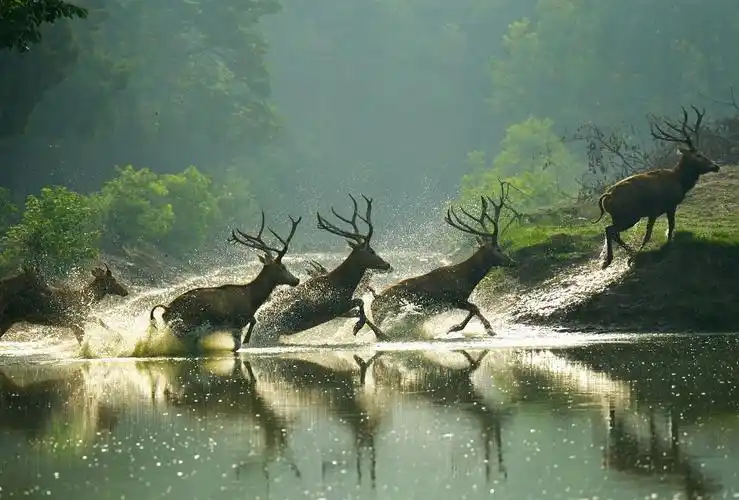 The story of Yancheng's milu is one of the most remarkable rescue sagas in modern conservation history. Once abundant across the Yangtze floodplains, Père David's deer vanished from the Chinese wild around 1900, surviving only inside the Imperial Hunting Park near Beijing. The herd's near-destruction during the Boxer Rebellion and its subsequent salvation by European zoologists—including the famous herd established at Woburn Abbey in England—makes this animal a true icon of cross-continental wildlife cooperation. Beginning in 1986, when China designated the coastal reserve, descendants of those European-bred deer were reintroduced here. From a founding population of just 39 animals, the herd has grown into the thousands, earning Yancheng its reputation as a global benchmark for rewilding endangered species.
The reserve sits within the broader Yellow Sea-Bohai Gulf tidal flat system, designated a UNESCO World Heritage Site in 2019 for its ecological importance. Comparable in scale to France's Camargue or the Wadden Sea straddling the Netherlands and Germany, these mudflats form a critical rest stop on the East Asian–Australasian Flyway, one of the world's most vital bird migration corridors. Meandering waterways weave through swaying reed beds, creating a seasonal landscape: lush and green in spring and summer, then transforming each autumn and winter into a stage for thousands of migratory waterbirds.
Beyond their ecological value, milu deer carry deep cultural resonance in Chinese tradition, where they are considered emblems of longevity, prosperity, and harmony between humanity and nature. Ancient bronze vessels and imperial carvings portray them alongside cranes and turtles as auspicious symbols. The reserve's success therefore reads not just as a scientific achievement but as a reaffirmation of ancient cultural values through modern environmental stewardship, making a visit here both ecologically meaningful and culturally enriching.
The signature experience is the guided safari tour into the central free-range zone, where visitors board open-air vehicles and, under staff supervision, hand-feed the herd. Calm individuals may even allow a gentle touch. Several free viewing platforms line Lake Juxian and County Road 202 for self-guided spotting; drivers are frequently treated to the magical sight of deer crossing the road at dawn or dusk. The park generally operates from 8:30 a.m. to 5:30 p.m., with a modest entrance fee and an additional charge for the safari bus. Booking through official channels in advance is recommended.
Autumn and winter are widely considered the prime seasons, when deer are most active and the skies fill with flocks of cranes and geese. Bring binoculars, layered clothing for coastal winds, and waterproof shoes for the muddy boardwalks. After exploring, nearby restaurants serve freshly caught Yellow Sea seafood—swimming crabs, hairtail, and pomfret—alongside hearty Dafeng farmhouse dishes featuring free-range chicken and seasonal vegetables. A single day comfortably covers the core deer zone and main birding hides, while travelers with more time can extend to two days, combining the reserve with the spectacular tidal landscapes of Tiaozini Wetland and a sunrise at Riyue Bay, completing an unforgettable journey along China's living coast.
The story of Yancheng's milu is one of the most remarkable rescue sagas in modern conservation history. Once abundant across the Yangtze floodplains, Père David's deer vanished from the Chinese wild around 1900, surviving only inside the Imperial Hunting Park near Beijing. The herd's near-destruction during the Boxer Rebellion and its subsequent salvation by European zoologists—including the famous herd established at Woburn Abbey in England—makes this animal a true icon of cross-continental wildlife cooperation. Beginning in 1986, when China designated the coastal reserve, descendants of those European-bred deer were reintroduced here. From a founding population of just 39 animals, the herd has grown into the thousands, earning Yancheng its reputation as a global benchmark for rewilding endangered species.
The reserve sits within the broader Yellow Sea-Bohai Gulf tidal flat system, designated a UNESCO World Heritage Site in 2019 for its ecological importance. Comparable in scale to France's Camargue or the Wadden Sea straddling the Netherlands and Germany, these mudflats form a critical rest stop on the East Asian–Australasian Flyway, one of the world's most vital bird migration corridors. Meandering waterways weave through swaying reed beds, creating a seasonal landscape: lush and green in spring and summer, then transforming each autumn and winter into a stage for thousands of migratory waterbirds.
Beyond their ecological value, milu deer carry deep cultural resonance in Chinese tradition, where they are considered emblems of longevity, prosperity, and harmony between humanity and nature. Ancient bronze vessels and imperial carvings portray them alongside cranes and turtles as auspicious symbols. The reserve's success therefore reads not just as a scientific achievement but as a reaffirmation of ancient cultural values through modern environmental stewardship, making a visit here both ecologically meaningful and culturally enriching.
The signature experience is the guided safari tour into the central free-range zone, where visitors board open-air vehicles and, under staff supervision, hand-feed the herd. Calm individuals may even allow a gentle touch. Several free viewing platforms line Lake Juxian and County Road 202 for self-guided spotting; drivers are frequently treated to the magical sight of deer crossing the road at dawn or dusk. The park generally operates from 8:30 a.m. to 5:30 p.m., with a modest entrance fee and an additional charge for the safari bus. Booking through official channels in advance is recommended.
Autumn and winter are widely considered the prime seasons, when deer are most active and the skies fill with flocks of cranes and geese. Bring binoculars, layered clothing for coastal winds, and waterproof shoes for the muddy boardwalks. After exploring, nearby restaurants serve freshly caught Yellow Sea seafood—swimming crabs, hairtail, and pomfret—alongside hearty Dafeng farmhouse dishes featuring free-range chicken and seasonal vegetables. A single day comfortably covers the core deer zone and main birding hides, while travelers with more time can extend to two days, combining the reserve with the spectacular tidal landscapes of Tiaozini Wetland and a sunrise at Riyue Bay, completing an unforgettable journey along China's living coast.