Yuzhang Former Prefecture
⭐ 4.00
Yuzhang Former Prefecture Scenic Area, Donghu District, Nanchang City, Jiangxi Province, China
 **A City Older Than Rome's Republic**
Nanchang's history stretches back to the Western Han dynasty, when it was established as Yuzhang Commandery around 200 BCE—roughly contemporary with Rome's late Republic era. The city served as a vital administrative hub through the Tang dynasty, when the great poet Wang Bo immortalized it in his legendary "Preface to the Prince of Teng's Pavilion." Like Verona preserves its Roman amphitheater, Nanchang preserves its literary identity: every schoolchild in China still memorizes Wang Bo's words, and reciting the entire 773-character poem earns you free entry to the pavilion today.
**The Pavilion That Refuses to Die**
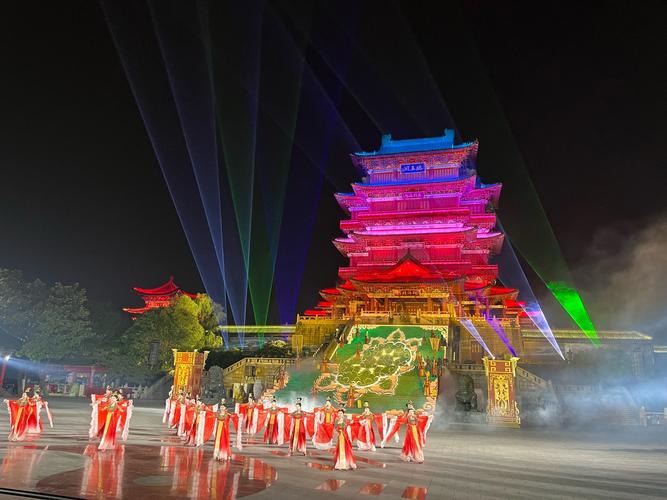
Tengwang Pavilion stands 57.5 meters tall, comparable to a 15-story building, dominating the riverfront like Florence's Palazzo Vecchio dominates its piazza. The current structure was reconstructed in 1989 from Tang-era sketches drafted by the renowned architect Liang Sicheng (whose wife Lin Huiyin helped save Beijing's ancient walls). Built in the "bright three, hidden seven" style—appearing three stories outside but containing seven within—its interlocking wooden brackets, vermillion columns, and jade-green tiles recall the grandeur of imperial Tang architecture that influenced structures across East Asia, including Japan's ancient capitals.
**A Poem as Living Monument**
Beyond its architecture, Tengwang Pavilion is a monument to Chinese literary culture itself. The pavilion's famous line "Sunset clouds and a lone wild duck fly together; autumn waters merge with the endless sky" has been admired for over 1,300 years, comparable in cultural weight to Keats's odes or Shakespeare's sonnets. Inside, scholars debate fascinating variations on the inscription "Nanchang Old Commandery," where dynastic naming taboos created one of Chinese literature's intriguing textual puzzles. The building functions less as a museum and more as a pilgrimage site for lovers of Chinese literature.
**Exploring the Surrounding District**
The pavilion anchors a vibrant cultural quarter. Adjacent Wanshou Palace Historical District showcases traditional Gan-style architecture alongside trendy shops and teahouses—a scene reminiscent of Kyoto's preserved merchant quarters. Hungry visitors should head to Dashiyuan Food Street for authentic Nanchang mixed rice noodles and clay-pot soup, local staples as essential to Jiangxi identity as pasta is to Italy. Across the river, Qiushui Square hosts one of Asia's largest musical fountains, best experienced after dark when its choreographed water shows dance in harmony with the illuminated pavilion.
**Practical Tips for Western Visitors**
Plan at least two full days. Spring and autumn offer the most comfortable weather (March–May and September–November). The optimal itinerary: arrive mid-afternoon to tour the pavilion and its views, explore the historic district and sample street food at dusk, then watch the fountain show after sunset. English signage exists at major sites but remains limited, so download a translation app or hire a guide. The pavilion sits about 20 minutes by taxi from Nanchang Railway Station; high-speed trains connect Nanchang to Shanghai (3 hours), Wuhan (2 hours), and Guangzhou (4 hours), making it an easy addition to any southern China circuit.
**Beyond the City Center**
History enthusiasts should venture an hour north to the Marquis of Haihun Tomb Museum, where astonishing 2011 excavations revealed a 2,000-year-old gold-threaded jade burial suit and a Confucian lacquer screen—discoveries ranking among China's most significant archaeological finds of the century. In the city itself, the August First Uprising Memorial commemorates the 1927 founding event of the People's Liberation Army, while Jiangxi Provincial Museum's modern new building offers comprehensive context on regional civilization. Together with the older Shengjin Pagoda and the Buddhist Youmin Temple, these sites complete a portrait of a city where imperial past and revolutionary present coexist gracefully.
**A City Older Than Rome's Republic**
Nanchang's history stretches back to the Western Han dynasty, when it was established as Yuzhang Commandery around 200 BCE—roughly contemporary with Rome's late Republic era. The city served as a vital administrative hub through the Tang dynasty, when the great poet Wang Bo immortalized it in his legendary "Preface to the Prince of Teng's Pavilion." Like Verona preserves its Roman amphitheater, Nanchang preserves its literary identity: every schoolchild in China still memorizes Wang Bo's words, and reciting the entire 773-character poem earns you free entry to the pavilion today.
**The Pavilion That Refuses to Die**
Tengwang Pavilion stands 57.5 meters tall, comparable to a 15-story building, dominating the riverfront like Florence's Palazzo Vecchio dominates its piazza. The current structure was reconstructed in 1989 from Tang-era sketches drafted by the renowned architect Liang Sicheng (whose wife Lin Huiyin helped save Beijing's ancient walls). Built in the "bright three, hidden seven" style—appearing three stories outside but containing seven within—its interlocking wooden brackets, vermillion columns, and jade-green tiles recall the grandeur of imperial Tang architecture that influenced structures across East Asia, including Japan's ancient capitals.
**A Poem as Living Monument**
Beyond its architecture, Tengwang Pavilion is a monument to Chinese literary culture itself. The pavilion's famous line "Sunset clouds and a lone wild duck fly together; autumn waters merge with the endless sky" has been admired for over 1,300 years, comparable in cultural weight to Keats's odes or Shakespeare's sonnets. Inside, scholars debate fascinating variations on the inscription "Nanchang Old Commandery," where dynastic naming taboos created one of Chinese literature's intriguing textual puzzles. The building functions less as a museum and more as a pilgrimage site for lovers of Chinese literature.
**Exploring the Surrounding District**
The pavilion anchors a vibrant cultural quarter. Adjacent Wanshou Palace Historical District showcases traditional Gan-style architecture alongside trendy shops and teahouses—a scene reminiscent of Kyoto's preserved merchant quarters. Hungry visitors should head to Dashiyuan Food Street for authentic Nanchang mixed rice noodles and clay-pot soup, local staples as essential to Jiangxi identity as pasta is to Italy. Across the river, Qiushui Square hosts one of Asia's largest musical fountains, best experienced after dark when its choreographed water shows dance in harmony with the illuminated pavilion.
**Practical Tips for Western Visitors**
Plan at least two full days. Spring and autumn offer the most comfortable weather (March–May and September–November). The optimal itinerary: arrive mid-afternoon to tour the pavilion and its views, explore the historic district and sample street food at dusk, then watch the fountain show after sunset. English signage exists at major sites but remains limited, so download a translation app or hire a guide. The pavilion sits about 20 minutes by taxi from Nanchang Railway Station; high-speed trains connect Nanchang to Shanghai (3 hours), Wuhan (2 hours), and Guangzhou (4 hours), making it an easy addition to any southern China circuit.
**Beyond the City Center**
History enthusiasts should venture an hour north to the Marquis of Haihun Tomb Museum, where astonishing 2011 excavations revealed a 2,000-year-old gold-threaded jade burial suit and a Confucian lacquer screen—discoveries ranking among China's most significant archaeological finds of the century. In the city itself, the August First Uprising Memorial commemorates the 1927 founding event of the People's Liberation Army, while Jiangxi Provincial Museum's modern new building offers comprehensive context on regional civilization. Together with the older Shengjin Pagoda and the Buddhist Youmin Temple, these sites complete a portrait of a city where imperial past and revolutionary present coexist gracefully.